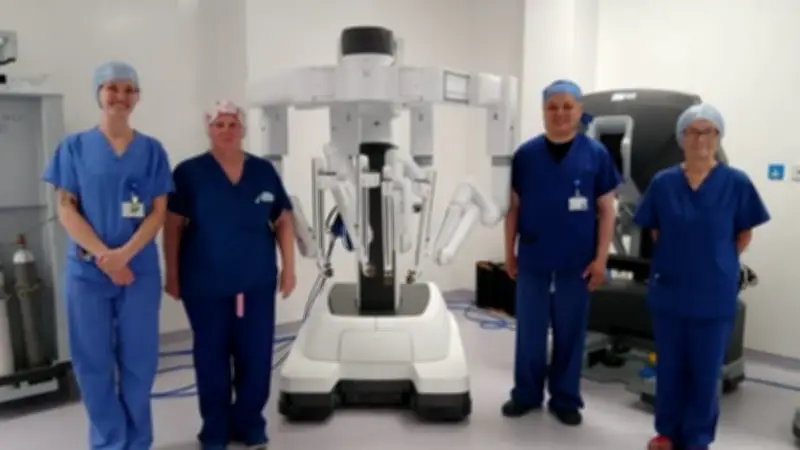
Stockport NHS Foundation Trust has taken delivery of a state-of-the-art dual console Da Vinci Xi Surgical System, a robotic platform designed to make prostate and bowel operations safer and more efficient. The technology will allow surgeons at Stepping Hill Hospital to perform complex, minimally invasive procedures with greater precision, leading to less blood loss, shorter hospital stays, and faster initial recovery for patients compared with traditional surgical methods.
The robot is operated by a surgeon from a console, which controls robotic arms equipped with scalpels, scissors, and other surgical instruments. A separate arm manages high-definition 3D cameras that provide a magnified view of the surgical site, offering unprecedented visual clarity during operations.
Boosting Surgical Capacity and Reducing Waiting Times
With the ability to perform procedures more swiftly, robotic-assisted surgery is expected to enable the Stockport surgical team to deliver more operations and cut patient waiting lists. Faster recovery times and fewer complications will also help free up hospital beds across the facility, improving overall patient flow and hospital efficiency.

Increasing the number of robotic-assisted procedures is a key component of the National Cancer Plan for England, and Stockport’s investment aligns with national priorities to enhance cancer care outcomes.
Expanding Prostate Cancer Surgery
One of the primary uses for the new Da Vinci robot will be surgery to remove prostate cancer, the most common cancer among men in the UK. Approximately one in eight men will be diagnosed with prostate cancer in their lifetime, with around 55,000 to 63,000 new cases identified annually. With the robot’s assistance, the trust expects prostate cancer operations to rise from roughly 450–500 per year to about 1,000 per year, nearly doubling surgical capacity.
Benefits for Bowel Cancer Patients
Patients with bowel cancer will also benefit from robotic-assisted surgery. Bowel cancer is the fourth most common cancer in the UK, with 46,000 to 49,000 new cases diagnosed each year, affecting roughly 1 in 17 men and 1 in 20 women during their lifetime. The enhanced precision of the robot is expected to improve outcomes and recovery for these patients as well.
Clinical Leaders Applaud the Innovation
Hospital leaders have welcomed the arrival of the technology. Nigel Roberts, Associate Divisional Director for Theatres, Critical Care, Anaesthetics and Pain, said: “This technology is a huge step forward for our patients. The robot gives us incredible precision and control, which means safer operations, fewer complications and much faster recovery times. We’re proud to be bringing this level of innovation to Stockport.”
General and Upper GI Surgeon and Associate Medical Director Natasha Henley added: “Robotic surgery allows us to operate with a much higher level of precision. For patients, that means smaller incisions and a much quicker return to normal life. Being able to offer this technology here in Stockport is a huge step forward for cancer care, and we’re excited about the difference it will make for the thousands of people we treat every year.”
Stepping Hill Hospital at the Forefront
Stepping Hill Hospital, located in Stockport, Greater Manchester, is the site where the Da Vinci robot is now operational. The trust’s commitment to adopting cutting-edge surgical technology underscores its dedication to improving patient outcomes and positioning Stockport as a centre of excellence for robotic-assisted cancer surgery.