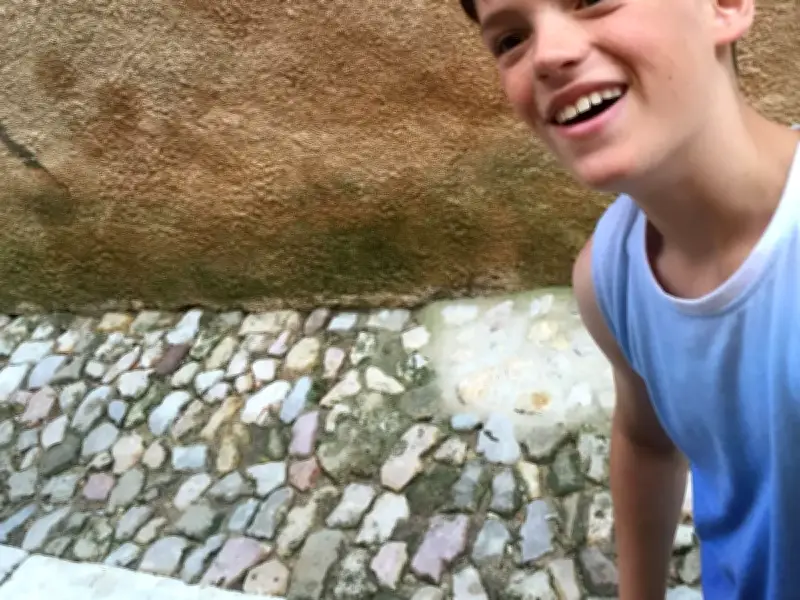
A 14-year-old boy died from leukaemia after his family initially put his fatigue and loss of appetite down to "typical teenage changes". Fred Bennett, from Rugby, Warwickshire, was diagnosed with acute lymphoblastic leukaemia (ALL) in July 2019, when he was 13. Despite undergoing a three-year chemotherapy programme and a novel CAR T-cell therapy, he died in May 2020, just nine months after diagnosis.
His mother, Louise Bennett, 50, is now urging parents to learn the warning signs of childhood cancer. She said: "When he began to feel tired and was off his food, we thought it was just typical 13-year-old changes, and the end of the school year. He had recently broken his shoulder in an ill-advised rugby tackle so we thought he just needed rest."
Symptoms mistaken for teenage behaviour
Fred's initial symptoms were exhaustion and a lack of interest in food, which his family attributed to normal adolescent behaviour and end-of-term tiredness. When his glands began to swell, they took him to their GP, suspecting glandular fever. Louise said: "When his glands began to swell, we suspected glandular fever and took him to the GP, who recommended a blood test to confirm. Within hours, we were in A&E being told that it was leukaemia. He was immediately transferred to Birmingham Children's Hospital to begin his treatment."

Fred started a three-year chemotherapy regimen, but after his first six-week course, leukaemia cells remained in his bone marrow. Louise said: "He was moved onto a stronger course of treatment but this was still not effective." Early in 2020, because his leukaemia was refractory, he became eligible for CAR T-cell therapy, a newer treatment using the body's own cells. "Even though there were complications along the way, including a seizure and a positive COVID diagnosis, we continued to be hopeful that this treatment would work where chemotherapy had failed," Louise added.
Tragic outcome and call for awareness
Fred passed away in May 2020, aged 14. Louise said: "Fred died shortly after he had received the CAR T-cells, nine months after diagnosis. They proved to be no match for the leukaemia, which suddenly picked up speed and overwhelmed him. It all happened so quickly that he never knew he was dying."
Louise, who works in marketing, said she was familiar with the warning signs of meningitis and sepsis but had not considered cancer. "I didn't know anything about childhood cancer in terms of what to look for. I had memorised all the symptoms of meningitis. I knew about sepsis. I actually sent my husband a list of sepsis symptoms the day before we took him to the GP because that was in my mind. But a cancer diagnosis was completely off our radar," she said.
Childhood cancer risk and patterns to watch
A study published in the British Journal of General Practice found that a child's risk of developing cancer is comparable to the risks of other childhood conditions such as diabetes, epilepsy and bacterial meningitis. The Children and Young People's Cancer Association reports that approximately 1,900 children aged 0-14 receive a cancer diagnosis in the UK annually, with cancer remaining the leading cause of death from disease among children.
Dr Sharna Shanmugavadivel, a paediatric emergency medicine doctor, said: "While childhood cancer is uncommon, it is important that families understand it is not as rare as many people may think. Many people will be surprised to learn that the risk of a child developing cancer is comparable to the risks of other childhood conditions. Unfortunately, childhood cancer can be difficult to recognise because many symptoms, such as headache, vomiting or changes in behaviour, are also common in everyday childhood illnesses."
She advised parents to look for patterns of change rather than a single symptom. "Rather than focusing on a single symptom, we are encouraging parents and carers to look out for patterns of change in their child's health that may need investigating. Parents know their child better than anyone. Our aim is not to cause concern, but to empower families with the knowledge and confidence to recognise when something feels different, speak to a healthcare professional when needed, and support earlier diagnosis that can improve outcomes for children with cancer. If symptoms don't go away after two weeks or something doesn't feel right, trust your instincts and see a doctor."

According to CCLG: The Children and Young People's Cancer Association, there are three patterns to monitor. Persistent symptoms are those that fail to improve or disappear as anticipated and repeatedly return after a child's illness. Parents should watch for symptoms lasting longer than expected or a child needing more time than usual to recover. Progressive symptoms deteriorate, occur more frequently, or evolve over time instead of improving. For example, a child might initially have a headache, but over time the pain intensifies or new symptoms emerge. Clustered symptoms are multiple symptoms appearing together rather than a single isolated symptom. For instance, a child experiencing ongoing tiredness along with unexplained bruising, persistent pain, fever, or a lump may need medical advice.
Common warning signs of childhood cancer include persistent tiredness or paleness, repeated infections, flu-like symptoms that don't go away, unexplained bruising or bleeding, ongoing fever or night sweats, persistent aches or pains, unexplained lumps or swelling, limping or leg weakness, changes in bowel habits, unexplained weight loss, slow growth, and changes in behaviour.