When Mel Erwin's body began failing her in the summer of 2020, she knew something was terribly wrong. But like many seeking help during the pandemic, her terrifying symptoms were brushed aside—a delay that allowed her cancer to progress to Stage 4.
From Healthy Lifestyle to Devastating Diagnosis
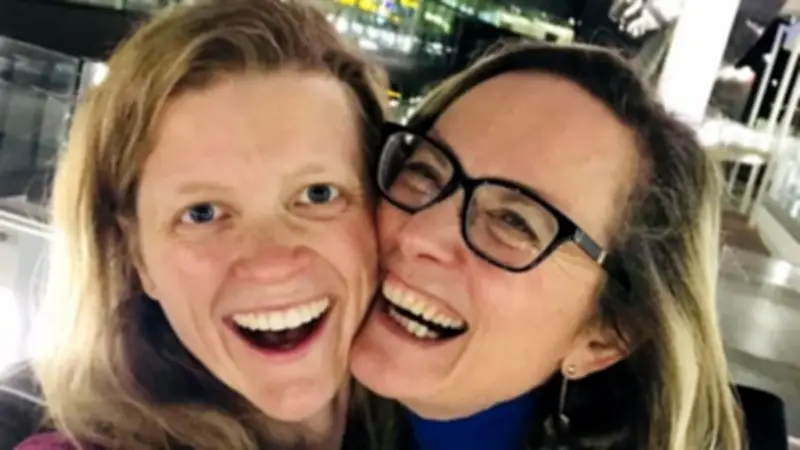
Mel, a 58-year-old retired literacy director from London, was a healthy vegetarian who practiced yoga regularly. 'I looked after myself, and I made sure that I always had my cervical smears or my breasts checked for lumps,' she says. After contracting Covid-19 in April 2020, her health declined rapidly. She fainted at home, and paramedics suspected Covid, later confirmed by an antibody test. By July, exhaustion left her unable to walk down her street.
Mel attempted to get help via a telephone appointment during lockdown, but her concerns were ignored. Trusting her gut, she persisted and found another doctor who immediately arranged blood tests and a chest X-ray. The results revealed a growth on her left lung.

The Diagnosis and Treatment Journey
'My instinct was that it must be to do with Covid... but I also asked if it could be cancer, and he said yes,' Mel recalls. 'It felt like an out-of-body experience, where my life felt suddenly shelved.' By August 2020, a specialist confirmed non-small cell lung cancer linked to an EGFR+ gene mutation, often found in non-smokers.
'Suddenly, a meteor drops out of the sky and bashes straight into your garden,' Mel says. 'It destroys everything, and you are right at the bottom of it, but everybody else is over the top, peering in. They can't reach you, and there's nothing anyone can do, so you're in this surreal, detached mental, emotional state.' In September 2020, surgeons removed part of her lung, followed by chemotherapy and radiation. Due to hospital rules, her partner, Sarah Richards, 41, could not attend scans.
Progression to Stage 4 and Current Status
A brief remission ended in December 2022 when scans spotted 10 tiny new nodules. Because of their size, doctors could not perform a biopsy, leaving Mel in limbo without active treatment for months. By May 2024, the nodules grew large enough to test, confirming Stage 4 cancer. Two months later, she qualified for a daily targeted pill to manage the spread. She was told the condition is incurable but treatable. 'The drug sometimes works for 18 months... or up to eight years. I prefer to think of it now as not-yet-curable cancer,' she says.
Fortunately, Mel's most recent scans on April 12 this year showed no evidence of active disease. 'I'm living in this moment and appreciating that I'm here because lots of people aren't. So I'm fortunate,' Mel says.
Advocacy and Call to Action
Mel's experience has driven her to advocate for others. 'It's important that our symptoms are listened to and that there is action decided upon between healthcare providers and patients. As a patient, I'm confident advocating for myself, but not everybody is. The more we share our stories, the more we can raise awareness that, if you feel like something isn't right, seek help.'
To help fund life-saving research, Mel is championing Cancer Research UK's Race for Life. You can join the fight at raceforlife.org.