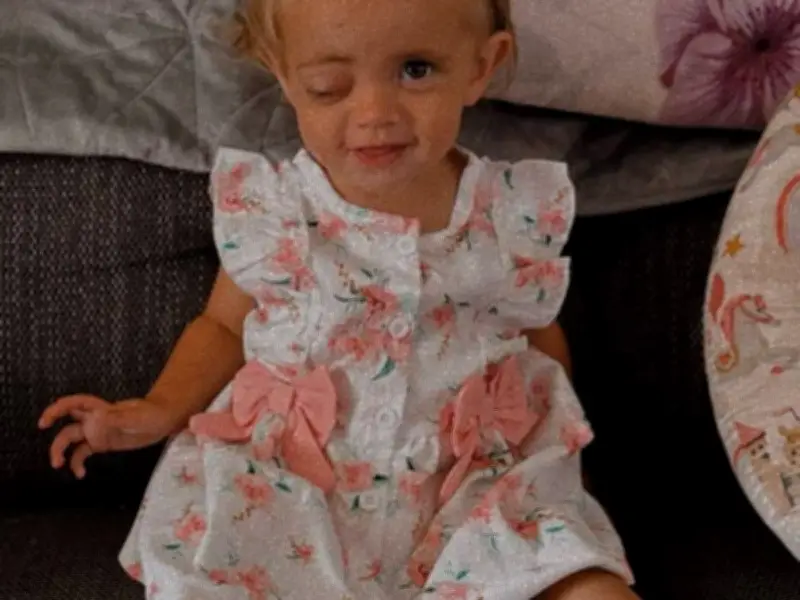
A one-year-old girl from Scunthorpe had to have her eye removed after her mother spotted a glare in her pupil on a baby monitor, which later proved to be a cancerous tumour. Grace Gravil first noticed the warning sign while watching her daughter, Athena Ingledew, lying in her cot on the monitor when she was around six months old.
Health visitor dismissed initial concerns
Grace claims a health visitor assured her there was nothing to be concerned about, but over the following months Athena's eye began to protrude, and a photograph revealing her cloudy eye prompted a visit to their GP. Athena was referred to Scunthorpe Hospital, where medics suggested she might have glaucoma, but sent her for additional tests at Sheffield Children's Hospital, where the substantial tumour was discovered.
The courageous toddler underwent life-saving surgery to remove both the tumour and her eye at Birmingham Children's Hospital on June 23, after doctors there diagnosed her with retinoblastoma. She is currently receiving four rounds of chemotherapy to reduce the risk of the cancer spreading to her remaining eye.

Mother's emotional rollercoaster
Mother-of-two Grace, from Scunthorpe, Lincs., said: "It all happened quickly and has been an emotional rollercoaster since because you don't expect it to happen to you. One of the first signs we noticed was a slight glare in her eye on the baby monitor. I showed a picture to my health visitor because I was concerned about it. She told me she wasn't worried and didn't really give me any advice about what to do next. If she had told me to take her to a doctor, I feel like we might have caught it sooner. They are healthcare professionals, so naturally you trust them."
Grace added: "She's always had one iris and pupil bigger than the other one but at the beginning of June her eye got really big. I thought maybe she was just blind in that eye but it became really noticeable on one photo where you can see the cloudiness in her eye. What people can actually see in that picture isn't a glare on the front of her eye. It's the tumour itself inside the eye."
Diagnosis and treatment at Birmingham Children's Hospital
Grace and her partner Charlie Ingledew initially arranged a GP consultation where a doctor observed elevated pressure in her eye and made a hospital referral. Grace, who is also mother to Issac, eight, and Amelia, five, said: "She was not really in pain, but it was bothering her. At Scunthorpe, they didn't initially think there was anything seriously wrong. They suggested it might be glaucoma. However, because of the pressure in her eye, they referred us to Sheffield for further investigations. When we got to Sheffield, they carried out proper photographs and scans of the back of her eye. That's when they discovered a large tumour."
"When doctors examined her, they initially planned to use eye drops to get a better look, but in the end they said they didn't need them because they could already see straight through. The tumour had spread throughout the eye. At that stage, they couldn't tell us exactly what it was. They explained that it could either be cancerous or benign, and that further testing would be needed. They then referred us to specialists in Birmingham. We were told that Birmingham and London are the only places in the country that treat this particular condition."
Fundraising for travel and future care
Grace continued: "She was put under anaesthetic so they could examine her eye properly, and that was when we were told she had retinoblastoma. Unfortunately, she had the most advanced group of the disease. In many cases, doctors can use laser treatment, freezing therapies or chemotherapy to shrink the tumour first. In her case, however, the only treatment option was to remove the eye. When you're suddenly learning all of this information, it's overwhelming. At first, I thought removing the eye would be the end of it, but then she needed chemotherapy as well."

A close friend of the family, Leah Milton, has launched a fundraising page, as the sheer volume of medical appointments is placing considerable financial strain on the household. Grace said: "There have been challenges along the way after surgery too. Shortly after her prosthesis was fitted, it came out. We hadn't been trained on how to put it back in, so we had to travel all the way to Sheffield to have it refitted, only for it to come out again the next day. Because we don't drive, every appointment means finding someone who can take us, which is difficult and expensive. That's one of the reasons for the fundraiser. The money will help towards travel costs, future treatments, a custom-made prosthetic eye and anything else she may need."
"She's had four rounds of chemo so far. We've got one more to go, and then we'll have to wait and see whether doctors feel she needs any further treatment. The removed eye was also sent away for testing. The results showed that the cancer was confined to the eye. Genetic testing came back negative, meaning it isn't inherited, but doctors found what they described as rogue cells. In practical terms, that means she still has a risk of developing the disease in her remaining eye. Some children only get retinoblastoma in one eye, while others develop it in both. Because of that risk, she now has to have her remaining eye checked every eight weeks."
Grace concluded: "She's taking it all in her stride, really. She has the occasional down day where she's not herself, but generally she's doing well. She's a little fighter. Even when she had her eye out, you'd think she'd be laid in bed, but no, it didn't bother her. I'd urge other parents to trust your instincts. If you feel something isn't right, keep pushing and seek another opinion if necessary."