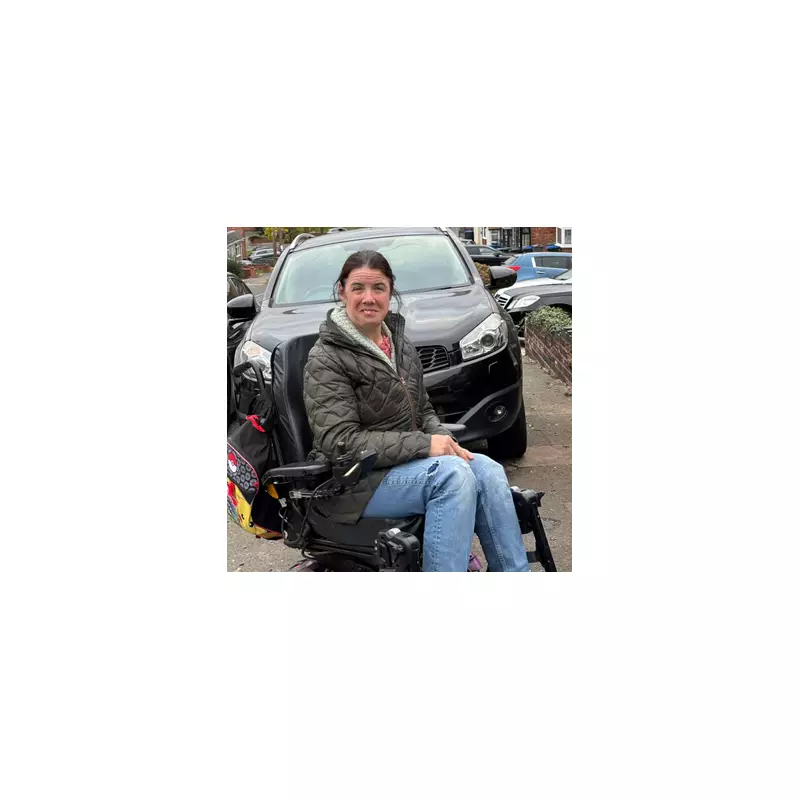
A Birmingham mother who uses a wheelchair has demanded an immediate ban on pavement parking after falling into the road while taking her child to school.
Terrible incident during school run
Aideen Blackborough, who has cerebral palsy, was left shaken and lying on the ground with her child watching after her wheelchair tipped over when she tried to manoeuvre around a car blocking the pavement in Great Barr last year.
The disabled mother explained that she faces similar dangerous situations regularly as drivers continue to park on pavements, forcing her into the road and into the path of oncoming traffic.

"I was just trying to take my child to school and get on with my day," Aideen said. "The car shouldn't have been there – I was so shaken and angry. As a mum and a wheelchair user, this practice puts me and my children in danger every day."
National campaign for change
Living Streets, the UK charity for everyday walking, has been campaigning against pavement parking for more than 50 years and is calling for government action.
The charity has created an interactive map showing pavement parking hotspots across the country, with over 1,500 people submitting photos of blocked pavements. The map reveals dozens of problem streets in Birmingham where vehicles regularly obstruct pedestrian pathways.
Catherine Woodhead, Chief Executive of Living Streets, stated: "We've been waiting for five years for the Government to respond to its consultation into pavement parking in England. That's five more years of people being pushed into the road and oncoming traffic."
Wider impact on community
While pavement parking is already illegal in London and Scotland, local councils elsewhere in England have limited powers to address the problem.
Folkert Veenstra, an accessibility campaigner and Living Streets Trustee, emphasised how pavement parking affects multiple groups: "Parents with prams, blind and partially sighted people, older people with walking aids – we're all being pushed into danger because pavements are blocked."
He added: "I've personally faced this countless times: cars parked across pavements and dropped kerbs, leaving me no choice but to navigate into oncoming traffic. It's frightening. It's wrong. And it needs to change."
The campaign highlights that pavement parking doesn't just cause immediate danger but also contributes to social isolation, with one person potentially missing out on approximately five million walking steps due to accessibility barriers.