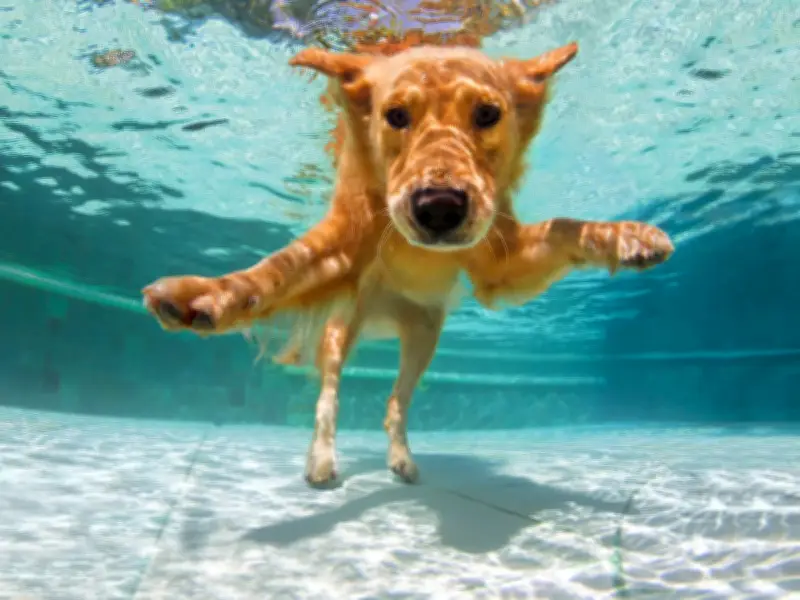
Vets are issuing urgent warnings to pet owners to be aware of potential dangers if they’re planning to take their dogs swimming during the upcoming heatwave, with temperatures expected to reach 40C in parts of the UK.
Blue-Green Algae: A Deadly Threat
The warning has been issued by Medivet & Partners, one of the UK’s leading veterinary care providers. Dr. Rhian Littlehales BSc (Hons) BVSc CertAVP PgCert (VBM) MRCVS, Clinical Governance Director at Medivet & Partners, highlights that blue-green algae is a type of bacteria that clumps together in bodies of standing freshwater like lakes and can be extremely harmful to dogs.
“The algae produce harmful toxins which can affect your pet’s liver or cause neurological signs if ingested. Exposure to this is often fatal and can cause long-term health problems in pets, even if they survive,” she said. Symptoms of blue-green algae poisoning include vomiting, diarrhoea, seizures, weakness, collapse, disorientation, excessive drooling, and breathing difficulties.
Safety Measures for Water Play
Dr. Littlehales advises keeping dogs well away from any lakes or ponds that you know or suspect to be contaminated. Providing an alternative water source, like a travel water bowl, can help prevent dogs from drinking from contaminated water. If you suspect your pet has been in contact with blue-green algae, or if they show any symptoms after entering water, you should see a vet straight away.
For dogs new to water, ensure they start in very shallow water. At the beach, monitor your dog to make sure the tide doesn’t pull them away. If your dog struggles in the sea, immediately contact lifeguards or coastguards. Remember the risks of jumping in to save your dog, including cold water shock, and that your dog can pull you underwater if struggling.
Ear Infections and Saltwater Risks
Dr. Littlehales also warns of swimmer's ear in dogs, which can be prevented by drying their ears after swimming and checking regularly for signs of infection, such as a foul odour, excessive head shaking, and itching. Additionally, be mindful of salty water: make sure your dog doesn’t drink too much seawater, as the high salt content can cause stomach problems, salt toxicosis, or hypernatremia. Offer fresh water before paddling and always have drinking water on hand.