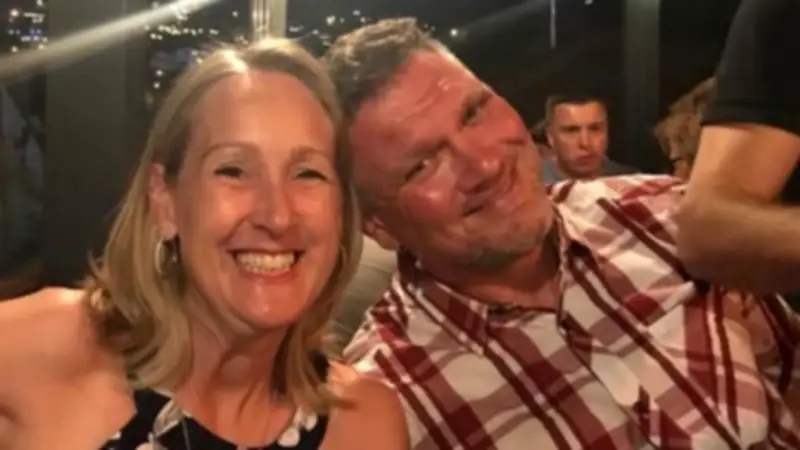
The wife of a man who died from a brain tumour has stressed the importance of greater awareness and research into the disease. Mick Laws, 55, who worked for Staffordshire-based Lovell Homes, passed away from a glioblastoma in January 2026, just 15 months after diagnosis. He was managing director for the London region of the national housing specialist, which has its headquarters in Tamworth. The company has announced a two-year partnership with the charity Brain Tumour Research, the only national charity dedicated to finding a cure for all types of brain tumours.
A devastating diagnosis
Mick’s wife, Jo, recalled the shocking moment their daughter Evie, then 19, alerted her to Mick making strange noises. “I found him slumped, and thought Mick was having a heart attack, so I gave him CPR but then he had three massive seizures,” she said. At the hospital, a doctor bluntly informed them that Mick had a brain tumour. “It was a bombshell moment,” Jo added. She researched tumour types overnight, hoping it wouldn’t be a Grade 4 tumour, but it was.
“It changes you for the rest of your life,” she said. “I am moved and extremely grateful for what Lovell have done to support us through Mick’s journey; the fact they are continuing to support Brain Tumour Research is just amazing.” Jo said she was honoured to be part of the partnership, as it aligns with what Mick would have wanted. “It’s so important to raise awareness of this devastating disease because we just didn’t have any idea about brain tumours. The money raised by Lovell will go into research to try to help other people, that’s got to be a good thing.”
The reality of brain tumours
Brain tumours kill more men under 70 than prostate cancer, yet only one per cent of the national spend on cancer research has been allocated to brain tumours since records began in 2002. There are more than 100 types of brain tumour, making them one of the most complex cancers to treat. Glioblastoma is a highly aggressive and rapidly growing tumour that is especially challenging to treat. It is the most common type of primary high-grade brain tumour in adults, with around 3,200 people diagnosed each year in the UK. For patients with glioblastoma, the tumour almost always recurs and when it does, options are extremely limited.
Research centres of excellence
The Brain Tumour Research Centre of Excellence at Queen Mary University of London is developing personalised treatments for glioblastoma in adults. The Scottish Brain Tumour Research Centre of Excellence is home to the UK’s largest group of glioblastoma researchers and is bridging the gap between the discovery of potential new treatments and getting these treatments to patients. The Brain Tumour Research Centre of Excellence at the University of Nottingham is home to researchers pushing the boundaries of scientific and medical technology to get closer to a cure for glioblastoma tumours in adults.
Mick’s journey
In December 2024, Mick, father to Mia, 23, Chloe, 21, and Evie, 19, had surgery at Queen’s Hospital in Romford. Jo said he was in surgery for 10 hours. “I remember having a conversation with the surgeon who said that they had managed to remove so much of the tumour. I thought then that we could get through it and that, maybe with chemotherapy and radiotherapy, it would work.” He had radiotherapy for six weeks and was scheduled for six months of chemotherapy, but it wasn’t working. “Mick always remained very positive. It was not about curing Mick but spending as much time as possible with him.” The oncologist advised them to go away for the summer and have a brilliant time, which they did.
Fundraising in memory
Mick’s former Lovell colleagues aim to raise more than £100,000 through a series of fundraising events across the country as part of The Big Lovell Brainwave, a two-year campaign to raise funds for vital research and awareness. The first event, The Big Golf Day Brainwave, was held at Whitchurch Golf Club in Wales. Steve Coleby, managing director at Lovell, said: “Mick’s death has been felt deeply by the people who worked alongside him every day, across Lovell and the wider sector. Our thoughts remain with Jo, their daughters and Mick’s wider family, and we are incredibly grateful to them for allowing us to honour Mick’s memory in this way.”
“He was an amazing colleague - he loved being part of the team as much as we loved working alongside him. We all really miss him. Brain tumours devastate lives and every diagnosis changes a family forever. The Big Lovell Brainwave has been created in Mick’s memory because we wanted to do something meaningful. This campaign is about turning grief into action, funding vital research and bringing hope to other families affected by brain tumours. Through fundraising and awareness, Mick’s legacy will live on by helping change the future for other people.”
Charity partnership
Dan Knowles, CEO of Brain Tumour Research, said: “We are delighted to welcome Lovell as a corporate fundraising partner. Partnerships like this are absolutely vital if we are to accelerate progress towards better treatments and a cure. Lovell’s commitment, inspired by Mick’s devastating story, demonstrates the powerful role businesses can play in driving change. By raising both funds and awareness, they are helping to shine a light on a disease that has been overlooked for far too long. Together, we can give hope to patients and families affected by brain tumours.”
Brain Tumour Research funds sustainable research at dedicated centres in the UK. It also campaigns for the Government and larger cancer charities to invest more in research into brain tumours to speed up new treatments and, ultimately, find a cure. The charity is driving the call for a national annual spend of £35 million to improve survival rates and patient outcomes in line with other cancers such as breast cancer and leukaemia.