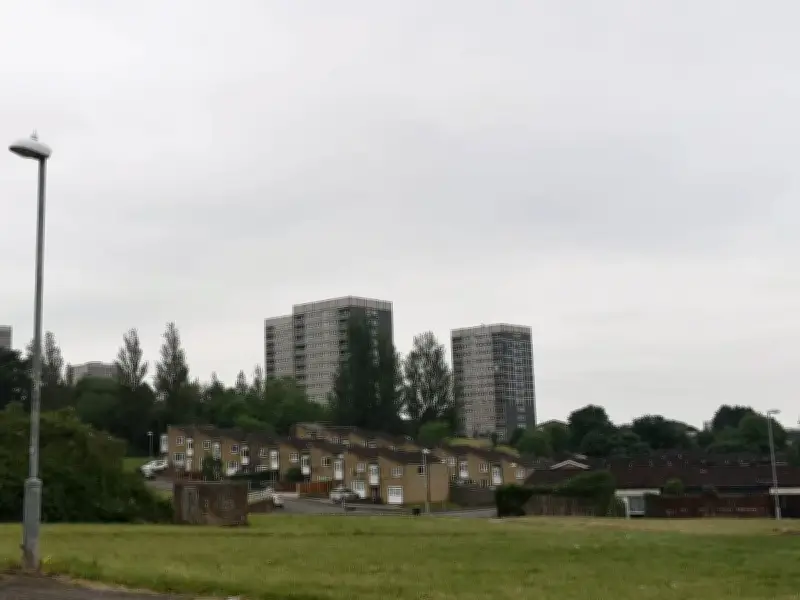
Men living in Druids Heath, Birmingham, can expect to enjoy good health only until the age of 53, according to new data on healthy life expectancy. For women in the same area, the figure is 55.4 years. This is the lowest rate for men in Birmingham and among the lowest in the country.
Healthy life expectancy in Birmingham
Healthy life expectancy measures how long a person can expect to live in good health before chronic or other medical conditions take hold. In Druids Heath, the figure falls well below the national average, and the area is not alone in the city.
Other Birmingham neighbourhoods with low healthy life expectancy include Sparkbrook North, where both men and women have a healthy life expectancy of 53.7 years, and Lozells West, where men can expect 54.1 years and women 53.7 years.

National picture: North-South divide
Across England and Wales, the lowest healthy life expectancy is found in the Central Stockton & Portrack area of Stockton-on-Tees in the North East. Men born there can expect just 47.7 years of good health. In total, there are 10 areas in England and Wales where men will have fewer than 50 years of good health, and all but two are in the North.
The North is also home to half of the 1,400 neighbourhoods where healthy life expectancy is less than 60 years. Lower healthy life expectancy rates tend to be concentrated in larger towns and cities, where lifestyles are often poorer and the general standard of living lower.
Deprivation and poverty as key drivers
Healthy lifestyles are directly linked to deprivation and poverty. Poorer families are less likely to afford nutritious meals, and there may also be issues with alcohol and drug use. A report by the Joseph Rowntree Foundation (JRF) found that poverty is the biggest driver in the gaps in healthy life expectancy.
The JRF report found that a woman living in the least deprived areas of the country will spend 82% of her life in good health, compared to just 65% in the most deprived areas – a gap of 20 fewer years of good health. For men, the gap is 19 years, with those in the least deprived areas spending 85% of their lives in good health versus 70% in the most deprived areas.
Scot Hunter, analyst at the JRF, said: “It isn’t right that where you live impacts how long you can expect to live in good health.”
Hunter added: “It’s striking but not surprising that people who spend more of their life in poor health are more likely to live in places that lost key industries: like manufacturing and mining towns as well as seaside towns and inner-city neighbourhoods. We know that as well as struggling economically, many of these areas have lost the community groups, places and activities that brought people together. Compared to similar places that still have their community centres, youth clubs and sports halls, people in these doubly disadvantaged areas are more likely to be living in poor health.”
The findings highlight a stark geographical divide in healthy life expectancy, with Birmingham's Druids Heath residents facing some of the worst outcomes in the country.