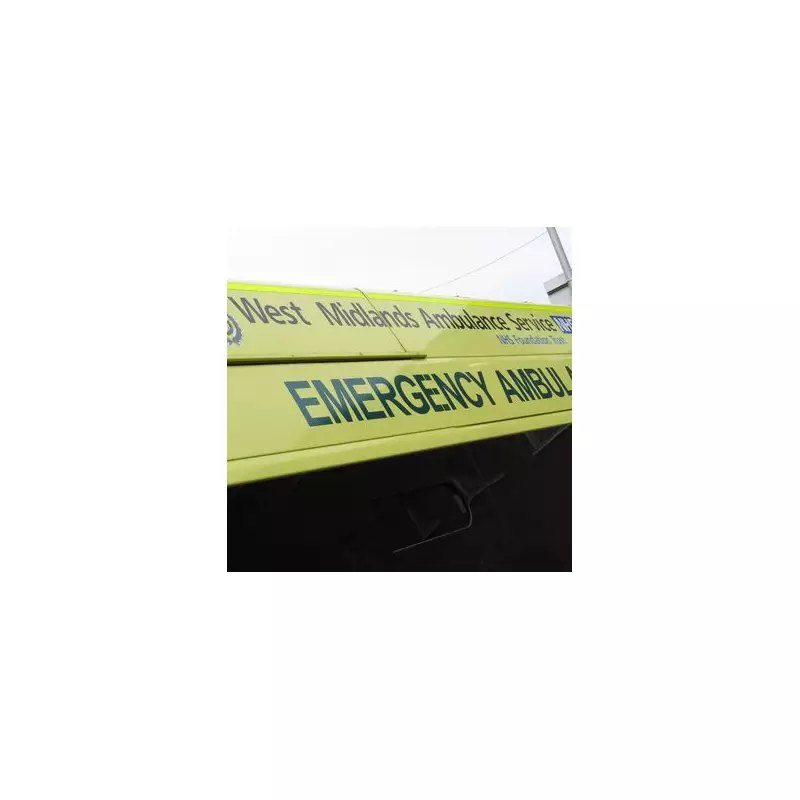
Ambulance crews in the West Midlands are facing the most severe hospital handover delays in the entire country, with senior officials confirming the region's performance is the worst 'by some margin'.
In a stark revelation to councillors, it was disclosed that crews spent a staggering 41,000 hours trapped outside hospitals in October 2024 alone, unable to transfer patients. This critical loss of time has more than doubled in recent months, signalling a deepening crisis as winter pressures mount on the NHS.
A System Under Immense Strain
Vivek Khashu, the Strategy and Engagement Director for West Midlands Ambulance Service (WMAS), delivered the sobering update to Staffordshire County Council's Health and Care Overview and Scrutiny Committee on Monday, November 10. He outlined a 'steep curve' of deterioration over the past three months, with lost hours jumping from 20,000 to 31,000, and then to 41,000 in October.

Mr Khashu provided a shocking comparison to illustrate the scale of the problem, stating: 'We have what is the worst handover delays in the country by some margin.' He revealed that the delays experienced by WMAS alone are equal to the combined delays of five other major ambulance services: North East, South Central, South East Coast, North West, and London.
Impact on Patients and Performance
While the service has managed to maintain improved response times for Category 2 calls, such as strokes and heart attacks, these gains are now eroding. The year-to-date performance has slipped from 21 minutes to 23 minutes, losing roughly a minute each month as winter begins.
The human cost of these delays was emphasised by Mr Khashu. He described the poor experience for patients, who can be 'stuck in an ambulance for five, 10 or 15 hours' outside a hospital, sometimes being moved between multiple vehicles.
The NHS mandates that patients should be handed over from ambulances to hospital care within a maximum of 45 minutes. However, in October alone, approximately 2,200 patients in the region did not meet this standard.
Local Hotspots and Calls for Action
The strain is not evenly distributed. The Staffordshire and Stoke-on-Trent area was highlighted as a particular hotspot. Of the 41,000 hours lost across the region in October, a significant 8,500 hours occurred in this area, with Royal Stoke University Hospital bearing the brunt.
To mitigate the crisis, WMAS has invested an additional £30 million in frontline resources over the last 18 months to offset the time ambulances are stuck at hospitals. However, officials argue this is a reactive measure.
WMAS is now renewing its call for an independent capacity review, a request the council committee had previously supported. This review would independently establish what resources are required and where, moving beyond what the service describes as a cycle of blame within the NHS system.
Mr Khashu concluded with a note of cautious optimism, pointing out that since other regions with similar challenges manage the situation better, 'it does show us that other parts can do it, so we can conceivably here as well.'