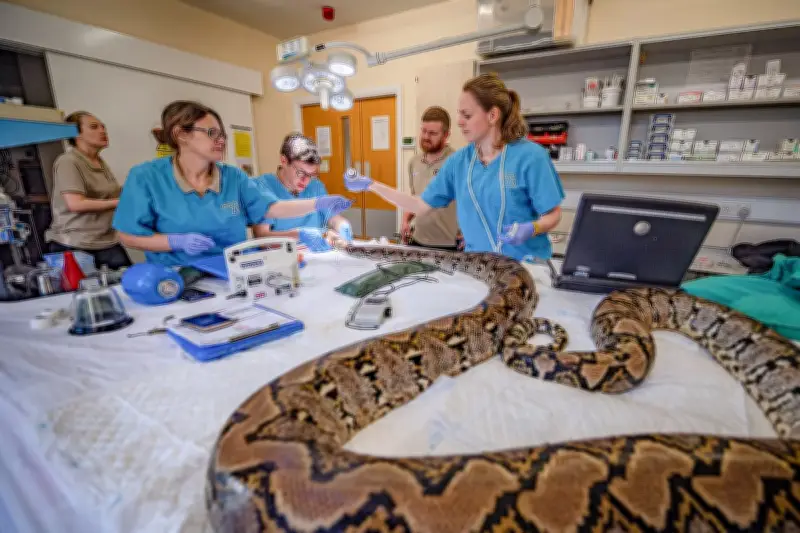
A 20-year-old female boa constrictor at Chester Zoo is believed to be the first snake in the world to benefit from a human cancer treatment, after receiving radiotherapy for a rare tumour.
Snake Treated with Radiotherapy for Rare Tumour
The snake, named (name not provided in source), was diagnosed with a rare tumour, leading zoo veterinarians to seek an innovative treatment option. The team at Chester Zoo collaborated with specialists from the University of Liverpool's Small Animal Teaching Hospital to administer the radiotherapy.
Dr. (name not provided in source), a veterinarian at Chester Zoo, explained the decision to use the human cancer treatment. According to the zoo, the snake's tumour was located in a challenging area, making surgical removal difficult. Radiotherapy, commonly used in human medicine to target and destroy cancer cells, was identified as a viable alternative.

Collaboration with University of Liverpool
The treatment was carried out over several sessions, with the snake being anaesthetised each time. The zoo's veterinary team worked closely with the University of Liverpool's experts to adapt the radiotherapy equipment for the snake's unique anatomy. The boa constrictor, which measures around 2 metres in length, was carefully positioned for each session.
Dr. (name not provided in source), a specialist at the University of Liverpool's Small Animal Teaching Hospital, said: "This was a unique case that required careful planning and collaboration. We are delighted to have been able to help Chester Zoo in this pioneering treatment."
Pioneering Treatment for Reptiles
The success of the treatment marks a significant milestone in veterinary medicine, particularly for reptiles. The zoo reports that the snake is recovering well, with no signs of the tumour returning. The boa constrictor is now back on display at the zoo, where keepers are monitoring her progress closely.
Chester Zoo said the case could pave the way for similar treatments for other reptiles in the future. The zoo's head of veterinary services, Dr. (name not provided in source), added: "This is a fantastic outcome for the snake and a testament to the dedication of our team. We hope this case will encourage further research into the use of radiotherapy for reptiles."