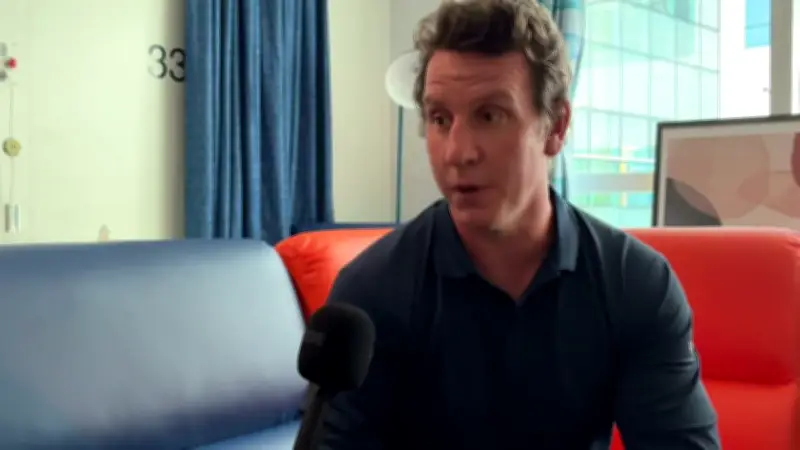
Former royal marine Jon White, who lost two legs and an arm when he stepped on an explosive device while serving in Afghanistan, blinked back tears as he met up with one of the medical team who helped save him at Birmingham's Queen Elizabeth Hospital.
First Return to QE Since Rescue and Rehabilitation
Jon, 43, was back at the QE for the first time since his rescue and rehabilitation 16 years ago. He was cared for in the hospital's then brand new intensive care unit and later at The Royal Centre for Defence Medicine centre, a joint NHS and military facility at the hospital.
Among those who cared for him was physio Jane Young. She was one of a wraparound team of surgeons, nurses and physios who helped him and dozens more like him who had been injured on the battlefields in Afghanistan.
The Moment Life Changed Forever
Jon recalled how he had been commanding a troop of men in June 2010 on an early morning, single file patrol in Sangin, at the time a Taliban stronghold and a deadly war zone, when his life changed forever.
"Suddenly I was flying through the air. I have a picture in my head of seeing the grey dawn sky and everything flying over me and realising, oh god, it's me (that had been hit) and then landing on the ground. Everything then went from slow motion to fast forward."
He recalls trying instinctively to reach for tourniquets with an arm that was now hanging off. He quickly fell unconscious but was brought back with a start when a rapid extraction team arrived on a quadbike. He remained conscious throughout the next hours, in agony, and acutely aware of his desperate predicament.
Critical Injuries and Evacuation
"At that point I was missing my right leg above the knee, my left leg below the knee, and my right arm was barely there, hanging by a thread. I felt that I couldn't allow myself to fall unconscious again, or I'd die."
Stabilised by medics at the force's hospital in Camp Bastion, he was then on a plane to Birmingham. He was one of the first military patients at the newly opened Queen Elizabeth Hospital. "I don't have any memories of arriving here, I remember getting on the Chinook in Helmand and waking up here four days later."
Intensive Rehabilitation at QE
"This was the place I had to get my head around what my life was going to look like," he said of the treatment facilities at the QE, where he spent three weeks after being stabilised in ITU. "The support from nurses allowed me each day to get a little bit better."
"I went from being unable to roll over in bed by myself to being able to get myself in and out of a wheelchair, up and down some stairs and in and out of a car, in that short time. That set me up for the rest of my rehabilitation, it let me know I was going to be okay."
Physio Jane Young Recalls Caring for Jon
Jane was one of the team overseeing Jon's care. "I remember it was a busy time with lots of casualties. He was not the only multiple limb loss casualty we had at the time," she said. "It was challenging work for us all to manage injuries like this and also to think of the impact (of the things they saw and experienced) would have had on these young men."
"I remember Jon, and other young marines like him, so motivated, and engaging, they never moaned or complained...every challenge we set, they would crack it in the end." For Jon these included rolling over in bed and being able to get in and out of a wheelchair, up off the floor or onto the toilet by himself. "Those seemingly small things were absolutely monumental goals," she said.
Emotional Reunion and Inspiring Progress
She said that at the time she recalled being moved by the determination shown by severely injured men like him. "It was so inspiring to see him and hear his hopes and goals for the future and how he was going to make the best out of an utterly dreadful situation."
Seeing him now was emotional, she said. "From the very depth of despair he is now living this life and still maintaining a good sense of humour and being a nice, normal bloke. We wondered sometimes what was going to happen with this generation of young men with these injuries - but Jon has gone on to achieve incredible things."
Support from Fellow Marine and MP Al Carns
Also at the event was Al Carns, former Royal Marine commander and now MP for Birmingham Selly Oak, who coordinated the visit. He has been friends with Jon since they underwent officer training together in the Marines early in their respective careers in the early 2000s.
They were later both deployed to Afghanistan, with different units. Carns was leading another operation and recalls seeing Jon's name on that day's casualty list and fearing for what had happened. "I later learned he had stood on an IED (improvised explosive device) and has lost an arm and two legs and was on and off from dying."
"He only survived because of the medics who sorted him out on the day, his whole team who got him back to Bastion (the armed force's base and hospital in Afghanistan) and saved his life there, and then he lost consciousness and woke up here in hospital in Birmingham, and the team here put the whole wraparound of support on him."
"He now has two kids, is a Paralympic rower, runs businesses, supports charities and is an inspirational speaker. It's an incredibly inspiring story."
Jon later visited Fisher House, on the QE site, which provides accommodation and support for the families of injured service personnel while they're receiving treatment in Birmingham.