Keeping your back and chest muscles strong could significantly reduce your risk of a heart attack, according to new data. Scientists used artificial intelligence to review scan images from 1,722 adults over a 10-year period for the study, which was published in the journal Radiology.
Muscle Mass and Heart Health
The study discovered that people with lower-than-average muscle mass experienced an 85% greater risk of dying and a 58% higher chance of health issues such as a heart attack during the monitoring timeframe. Many individuals neglect these specific areas during workouts, but keeping them fit is vital.
Professor Michelle Williams, senior author of the research, said: "It is fascinating that people's skeletal muscle could be linked to their risk of having a heart attack. The muscles which show up in the scans we used – coronary computed tomography angiogram scans – are principally the back muscles, part of the pectoral muscles (or pecs) and the intercostal muscles between the ribs."

Five Beginner Exercises for Back and Chest
Camilla Foster consulted Edwina Jenner, a personal trainer specialising in strength training at home for women over 40, who recommends five simple exercises for beginners.
Dumbbell Bent-Over Rows
"Stand with your feet hip-width apart and make sure that you have a nice soft bend in your knees and a nice tight core," says Jenner. "Then hinge forward by pushing your hips back. I often describe it as trying to shut a car door with your bum. Stay in that position and hang the weights down in front of you. Then pull the weights back towards your lower ribs, so you're squeezing your shoulder blades together. Then return your arms back down and repeat that movement pattern."
Chest Presses
Jenner recommends starting the chest press exercise by lying on your back with your feet flat and shoulder-width apart on the floor. "Hold a dumbbell in each hand over your chest and then lower your elbows down and lightly touch the floor. Then push the weights back up away from you and try to make an A-frame above your chest," explains Jenner.
Single-Arm Lunge Row
"You can do this a number of ways, but if you're at home, you can stand upright and take a big step back on your left leg, so you're in a deep lunge and are leaning forward. Lean your right hand on your right leg, and then hold a dumbbell in your left hand in a straight line. Then pull the dumbbell back towards your lower ribs, and then lower it until your arm is fully straight again," says Jenner.
Wall Press-Ups
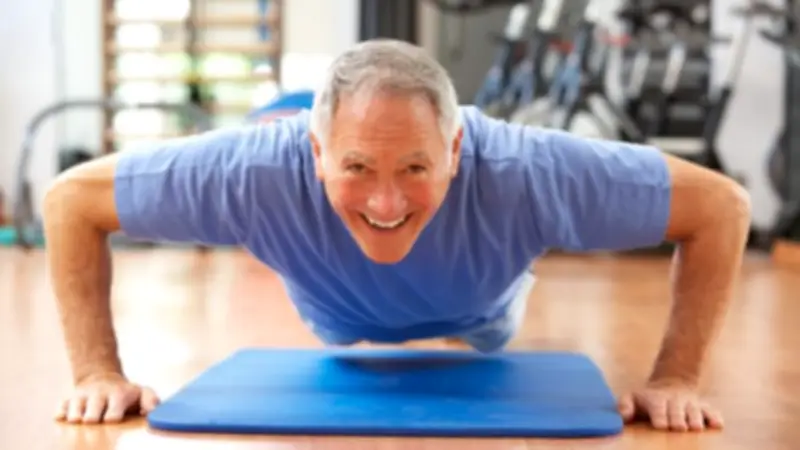
Many people have a love-hate relationship with press-ups, but there are several progressions you can try at home, with wall press-ups being a popular option. "For wall press-ups, put your hands onto a wall at chest height and make sure that your fingers are splayed (spread wide)," say Jenner. "Keep your body in a straight line and make sure that your shoulders are back and your tummy is tight before lowering your chest to the wall and coming back up. Once you get comfortable with that movement, you can then progress onto doing this action on a bench or a coffee table, with your knees on the floor, and then finally into a full press-up on the floor."
Reverse Fly
"The reverse fly requires another hip hinge movement where you bend forward and push your hips back, and hang dumbbells in each hand in front of you so your arms are long. From this hinged position, keep a slight bend in your elbows and slowly lift your arms out to the side until they are level with your shoulders. Then gently lower them back down again," explains Jenner.
Essential Home Gym Equipment
If you want to start building up your upper body strength from the comfort of your living room, having the right gear can make all the difference. Here are five top-rated items to help you get started on your fitness journey:

- Dumbbell weight set: A pair of adjustable dumbbells is perfect for starting out light at 2.5kg and increasing the resistance as your back and chest muscles grow stronger. Try these from Northern. Price: £189.99
- Non-slip exercise mat: Vital for protective padding when performing chest presses and cooling-down stretches comfortably on your back. This mat from Amazon Basics is extra thick. Price: £17.58
- Resistance bands with handles: An excellent lightweight alternative to heavy weights that provides consistent tension through rows and reverse flies. These have five levels of resistance. Price: £25.49
- Sturdy Fitness Bench: Great for progressing your chest presses and rows beyond floor level to achieve a greater range of motion safely. Save 30% on this bench. Price: £69.99
- Ergonomic Push-Up Bars: Perfect for reducing wrist strain when you are ready to transition from wall press-ups down to floor variations. The heavy-duty choice. Price: £37.50
Prices correct at time of publication.
Things to Remember
Start light: "Start with light weights and focus on quality, not quantity. Begin with around 2kg to get yourself used to the position and movements. As you progress, you will build strength. However, if you move too quickly or have weights that are too heavy to start with, you will injure yourself," says Jenner.
Alternate chest and back exercises: "Back exercises involve pulling movements, and chest exercises involve pushing movements. So when you do a back and chest routine, it's nice to switch between these pushing and pulling movements to get a nice, well-balanced workout."
Consistency is key: "I would recommend doing these exercises twice a week to help build your confidence, form and strength over time," advises Jenner.
Don't forget to stretch: "One of my favourite cool-down stretches is the lower back stretch. Lying on your back, take your knees to one side and turn your head to look in the opposite direction, with your hands out wide," says Jenner.