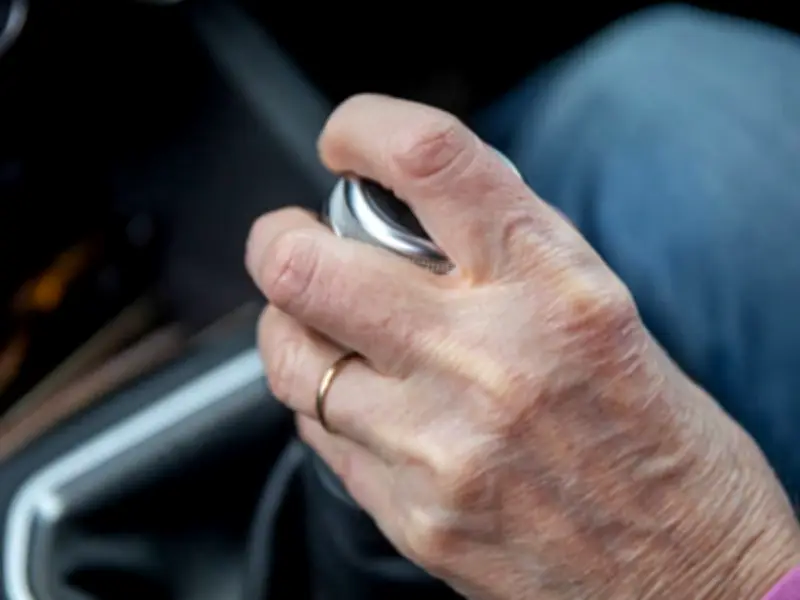
Andy Burnham's Government has unveiled a sweeping road safety strategy that will introduce mandatory eyesight tests for every driver aged 70 and over. The proposal is one of several measures designed to cut deaths and serious injuries on the nation's roads.
Under the planned system, any older motorist who fails the eyesight test will have their driving licence revoked immediately. They will no longer be allowed to get behind the wheel, as part of a tougher approach to age-related driving capability.
The Government is also actively considering the introduction of 'cognitive' tests for older drivers, aimed at assessing reaction times, concentration and mental agility. This follows a growing body of concern about the risks posed by declining cognitive function behind the wheel.

Existing system under fire
The plans represent a significant departure from the current rules, which rely heavily on drivers self-reporting medical conditions. Under the existing framework, over-70s are expected to notify the authorities of any health problems that might impair their driving, a system that experts have long argued is unsafe.
Many older drivers are unaware of deteriorating eyesight or slower reaction times, while others may be reluctant to voluntarily hand in their licences. The new requirements would replace subjective self-declaration with objective, mandatory checks.
Investigation reveals 10,000 licence revocations
The urgency of the reforms has been underscored by an investigation which found that more than 10,000 licences have been revoked or refused renewal since the start of last year. The figure demonstrates that a significant number of older drivers are already being deemed unfit to drive under the current flawed system.
Officials believe the tougher measures will flush out additional drivers who are not safe to be on the road but who have so far escaped detection. The strategy specifically addresses the need to improve safety outcomes for older drivers and other road users.
What the road safety strategy says
The road safety strategy sets out the Government's position clearly. It states: "To improve safety outcomes for older drivers and others on the road, several policy options are being explored. The Government is consulting on introducing mandatory eyesight testing for drivers over age 70 and will develop options for cognitive testing for older drivers."
It adds: "These measures aim to reduce deaths and injuries involving older drivers, without unnecessarily restricting their mobility and personal freedom."
How the eyesight tests would work
Under the proposals, the mandatory eyesight test would be carried out once a driver reaches the age of 70. The test is expected to assess visual acuity, peripheral vision and the ability to see clearly in various conditions, similar to the standards applied when a licence is first issued.
Drivers who fail the test would face losing their licence and being taken off the roads immediately. There would be no option to continue driving on a provisional basis while appealing or undertaking retraining.
Cognitive testing at later stage
The development of cognitive testing is still at an earlier stage. The strategy indicates that options are being drawn up, but it does not specify exactly what form these tests would take or when they could be introduced. Potential assessments could include reaction-time exercises, memory tests and scenarios that measure decision-making under pressure.
These would be designed to identify drivers whose mental faculties may pose a danger to themselves and others, even if their eyesight is perfect.
Consultation now open
A consultation on the mandatory eyesight testing proposals is now underway. This will give individuals, motoring groups, medical professionals and other stakeholders the opportunity to comment on the plans before they are finalised.
The Government has stressed that it wants to strike a balance between ensuring road safety and protecting the independence of older people. Driving is often essential for over-70s to maintain social connections, access healthcare and carry out everyday tasks, and officials say they do not want to impose restrictions without clear evidence of risk.

Broader impact
If enacted, the policy will affect hundreds of thousands of motorists who reach 70 each year. It will change the way older drivers are assessed, moving away from a system in which a driver's honesty is the only safeguard.
The move follows a number of tragedies involving older drivers in recent years, which have heightened public concern. While older drivers are among the most experienced and cautious on the roads, age-related decline can lead to fatal consequences if unchecked.
The Government's road safety strategy aims to prevent further loss of life by ensuring that all drivers remain fit to drive, regardless of age. The consultation and subsequent legislation will determine the precise requirements, but the direction of travel is clear: mandatory testing for over-70s is coming.