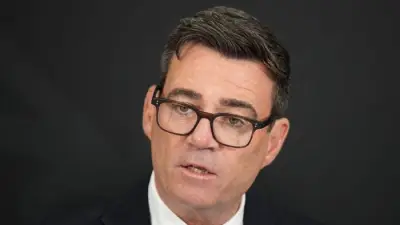
Lisa Nandy has been reappointed Culture Secretary as Prime Minister Andy Burnham announced his first cabinet appointments, and the full list of people entitled to free or reduced BBC TV licences has now been confirmed. Under the current rules, households can secure a licence for free — a saving of £180 — or at a discounted rate through one of six qualifying reasons.
Nandy, who has held the culture brief since Labour’s 2024 election victory, saw her title confirmed by Downing Street after Burnham’s reshuffle. Her reappointment places her at the centre of the BBC charter renewal debate, which is due to conclude by the end of 2027. The government is considering how to “future-proof” the corporation, and Nandy has already signalled she intends to approve a permanent charter.
Nandy’s commitment to the BBC
Speaking to a parliamentary committee last month, Nandy described the BBC as “one of the most important institutions in this country”. She went further, adding: “I would say it is one of the two most important, alongside the NHS. If the NHS is responsible for the health of our people, the BBC is responsible for the health of our democracy and our nation.”

Before entering parliament in 2010, Nandy worked for the homelessness charity Centrepoint and The Children’s Society, and she served as shadow charities minister from 2013 to 2015. Her reappointment signals continuity in cultural policy, particularly around public service broadcasting.
Free licence: who qualifies
The first route to a free TV licence applies to households where the licence holder is aged 75 or older and the licence holder or their partner living at the same address receives Pension Credit. TV Licensing notes that you can apply as soon as you turn 74, and payments will be adjusted automatically from your 75th birthday.
This concession alone represents a full £180 saving each year, a significant sum for older people on low incomes. Pension Credit is a means-tested benefit, so eligibility depends on income and savings, and the free licence is available regardless of how many people live in the household, as long as the qualifying conditions are met.
Reduced licence: five further categories
A reduced TV licence fee, typically a 50% discount, is available to residents of residential care homes, supported housing, and sheltered accommodation. Additionally, people who are blind or “severely sight impaired” can claim the same concession, provided they can supply the appropriate medical evidence. TV Licensing rules confirm that these five categories, together with the Pension Credit route for over-75s, make up the six total reasons for a lower or zero-cost licence.
The full list of six reasons
- You are 75 or older and receive Pension Credit (or your partner does).
- You live in a residential care home.
- You live in supported housing.
- You live in sheltered accommodation.
- You are blind or severely sight impaired.
- You qualify for a 50% concession under any of the above reduced categories (counted separately under TV Licensing rules).
It is important to note that the 50% concession is not an additional standalone category but rather the mechanism that applies to the care home and sight-related categories. However, in terms of the official list of reasons why a licence fee can be reduced, TV Licensing treats it as a distinct qualifying route, bringing the total to six.
Impact on households and the BBC’s future
For many pensioners and disabled people, the TV licence is a significant household cost. The savings offered through these concessions can make the difference between staying connected to public service broadcasting and missing out on essential news, educational programmes, and cultural content. With the BBC facing a challenging funding environment, these concessions also represent a cost to the corporation, yet they are underpinned by government policy.
The charter renewal process will determine how the BBC is funded after 2027, and Nandy’s reappointment suggests a sympathetic ear for the corporation. By backing a permanent charter, she could provide the stability that BBC executives have sought, while also ensuring that the licence fee remains affordable through targeted reductions.

As the political debate continues, households are urged to check their eligibility for these six discounts. Applying early, especially for those approaching 75, can ensure no one pays more than necessary. TV Licensing’s website provides further details, and applications can be made online or by post.
In summary, the combination of the free licence for Pension Credit recipients over 75 and the five reduced-fee categories offers a clear pathway for vulnerable groups to save on their television costs. With the BBC’s future still under discussion, these existing concessions are likely to remain a key part of the policy landscape.