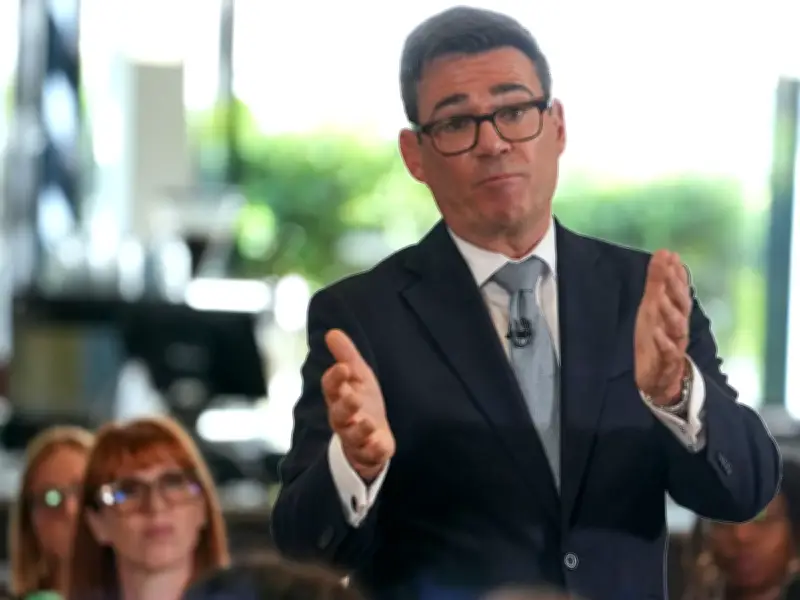
Prime Minister Andy Burnham has indicated he may scrap plans to restrict jury trials, a proposal inherited from the previous government under Sir Keir Starmer. Speaking on Friday, August 7, Burnham said he wants to examine the proposal in detail and is "probably looking for changes," raising the possibility of a significant policy reversal.
What the original plans proposed
The previous administration had announced plans to reserve jury trials only for the most serious cases, such as murder and rape, along with offences carrying a likely sentence of more than three years in prison. Under the proposals, defendants facing short prison sentences or involved in technical, lengthy fraud and financial cases would not have the option to choose a jury trial.
The government argued that these changes to the long-standing principle of jury trials in the UK would help ease the court backlog. According to official figures, the crown court open caseload more than doubled between 2019 and 2025.

Burnham's concerns and personal experience
Burnham told reporters he has "concerns about the plan to restrict jury trials," partly based on his "personal experience, particularly Hillsborough." An inquest jury in 2016 found that 96 Liverpool fans were unlawfully killed during the Hillsborough stadium crush in Sheffield. The jury, consisting of six women and three men, concluded that actions by the police and ambulance service on the day "caused or contributed to" the 1989 disaster. Andrew Devine was named as the 97th victim of the stadium crush when he died in 2021.
Burnham's comments echo his earlier stance on the early release scheme, as he stressed the need to "get inside these issues before I confirm any of the plans that I inherited."
Political fallout and opposition
The reforms, introduced through the Crime and Policing Bill, have faced stiff opposition, including from Labour backbenchers. Former barrister and Kingston upon Hull East MP Karl Turner had the Labour whip suspended at the end of March 2026 after opposing the plans. He described the jury-related measures as "completely unworkable, unpopular, unjust and unnecessary."
Turner and 38 other MPs signed a letter stating: "It is our belief that the public will not stand for the erosion of a fundamental right, particularly given that there are numerous other things the Government can do to more effectively reduce the backlog."
Path to reinstatement
Burnham revealed he has asked Chief Whip Anneliese Midgley to "agree a process" for Turner's return to the Labour Party. "I've asked the Chief Whip to speak to Karl and, sort of, agree a process that can be taken forward," Burnham said. "Obviously, addressing issues that the Chief Whip will need to discuss, but that's where we are."
Legal community responds
Mark Evans, president of the Law Society of England and Wales, called for the government to "move quickly to set out a comprehensive, whole-system plan" to address court backlogs, warning that the system was "under immense pressure." He added: "This should include sustained investment in people, infrastructure and technology. Any efforts to reduce court backlogs must not come at the expense of fundamental safeguards. Jury trials must be protected to ensure public confidence in our justice system."