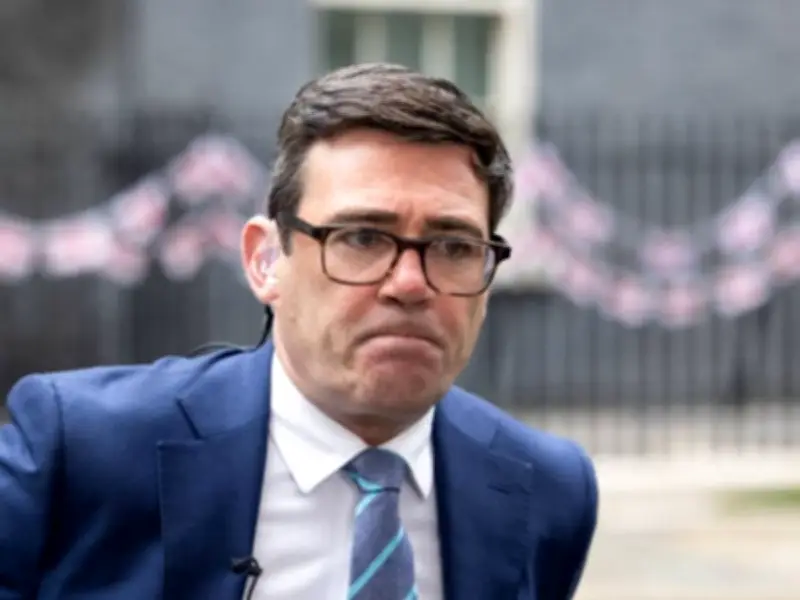
Andy Burnham, the newly elected Labour Prime Minister, has publicly backed a campaign by the group Fairer Share that calls for the replacement of stamp duty and council tax with a proportional property tax set at 0.48 per cent. This would mean an annual charge of £1,301 for the owner of an average UK home valued at £271,000.
Government Consideration and Labour Support
The i Paper has learned that the Government is currently evaluating two options for a new property tax system, with over 100 Labour MPs expressing strong support for major reform. The move is seen as an attempt to simplify the current property taxation regime, which critics argue is outdated and inefficient.
Charles Goodhart, a former Bank of England economist, stated: "I think the arguments in favour of a land tax are really overwhelming, irrespective of where you stand politically. The advantages are unquestionable."

Economic Opinions on Property Tax Reform
Goodhart, however, cautioned against a rapid implementation: "But the problem is getting from A to B. The transitional problems are really quite serious and severe." He warned that if such a tax were introduced suddenly, house prices would fall substantially, potentially triggering a financial crisis given that many financial relationships are collateralised on property. "You can't do this quickly, and you can't do it in a way that would make house prices collapse," he added.
Tim Leunig, a former adviser to Rishi Sunak and author of a report for the think tank Onward, offered a contrasting view. "Although it could go wrong and harm house prices, it is much more likely to help the housing market. That is the number one thing to say. Because stamp duty is an absolute killer," Leunig said. He stressed the urgency of reform: "I think the collapse in housebuilding in London means that whoever is the next prime minister will have to sit down and think about it very seriously. Because there is no good having a tax if it is a tax on virtually nothing."
Transitional Challenges and Market Impact
Daniel Reast, co-author of a May report for the Centre for London that called for a proportional property tax, noted a growing momentum: "There is a bit of a groundswell, certainly." The report argued that a proportional tax could be more equitable and efficient than the current stamp duty system, which deters mobility and distorts housing decisions.
The proposed 0.48 per cent rate would apply to property values, with no exemption for primary residences. This marks a significant shift from the current system, where council tax bands are based on 1991 valuations in England and stamp duty is charged only on transactions. Supporters argue that a proportional tax would be fairer and more transparent, while critics worry about the impact on homeowners with high-value properties but low incomes.
The Government is expected to consult on the proposals later this year, with any changes likely to be phased in over several years to avoid market disruption. The debate highlights the complex challenge of reforming property taxation in a country where housing wealth is deeply intertwined with household finances and economic stability.