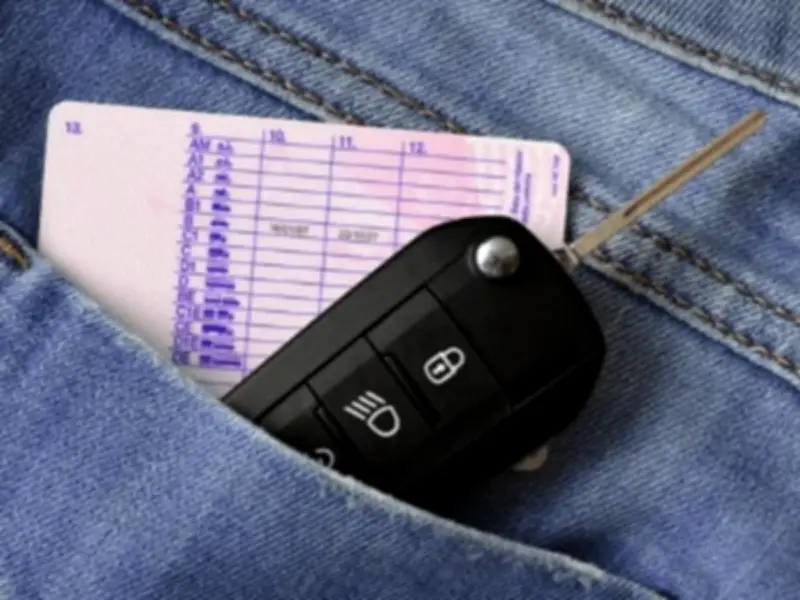
Sweeping enforcement powers enabling the Department for Work and Pensions (DWP) to recover welfare debt through court-ordered driving bans take effect in October. The measures, created by the PAFER Act, apply to claimants with outstanding balances above £1,000 who have deliberately refused to repay despite being able to do so.
The change was first outlined by the previous government led by Sir Keir Starmer, which called it "the biggest crackdown on welfare debt in a generation". It is now being implemented under Labour Prime Minister Andy Burnham.
Which benefits are targeted?
According to the DWP, the new powers will initially focus on the three benefits with the highest rates of fraud: Universal Credit, Pension Credit and Employment and Support Allowance (ESA). The department will be able to pursue money from people who have stopped claiming benefits but still owe outstanding debts.

DWP documentation states: "The new legislation modernised the framework to enable the Department for Work and Pensions (DWP) to recover debt more efficiently and create greater fairness in debt recovery."
When can a driving ban be imposed?
Carwow, a motoring advice platform, explained that losing a licence will not be automatic. The measure can only be considered where debts exceed £1,000, and courts must be satisfied that the individual has deliberately avoided repayment despite having the means to pay.
The driving ban is described as a measure of last resort. Alongside licence disqualification, the DWP will also be able to recover money directly from an individual’s bank account in the most serious cases.
Ministers defend the tough approach
Work and pensions minister for transformation Andrew Western said the measures are designed to protect honest taxpayers and recover money from those who deliberately refuse to pay what they owe.
"Hardworking taxpayers deserve a system that pursues those who deliberately dodge their debts, and that is exactly what these new powers deliver," Western said. "For those who can pay and won’t – we’re going further than ever before to claw back cash and crack down on fraud."
Western retained his brief after Burnham’s reshuffle, remaining in post as the Makerfield MP.
Cabinet Office Minister Satvir Kaur also backed the changes, saying: "Fraud against the public sector and unrecovered debt deny our vital frontline services of the funding they deserve. Under these new powers in the PAFER Act, this Government will deliver on its promise to protect hardworking taxpayers and clamp down on those who try to cheat the system."
How the new powers will be used
Under the updated framework, the DWP will be able to take a graduated approach to debt recovery. Lower-level cases may involve deductions or repayment plans, while the toughest action, including a court application for a driving ban, will be reserved for individuals judged to be deliberately avoiding payment.
The department has produced a Code of Practice that explains how it will use the new powers. The document sets out the circumstances in which the DWP can access bank accounts or approach a court for a driving disqualification.
From October, former claimants with outstanding balances on Universal Credit, Pension Credit or ESA will be subject to the strengthened enforcement regime.
Political context
The policy was originally introduced by the Starmer administration, but its enforcement falls to Burnham’s government. The new Prime Minister has kept the same minister responsible for transformation, signalling continuity on welfare policy.
Kaur described the crackdown as part of a broader effort to ensure that public money is protected. "Under these new powers in the PAFER Act, this Government will deliver on its promise to protect hardworking taxpayers and clamp down on those who try to cheat the system," she said.
The DWP says its aim is not to penalise those who genuinely cannot pay, but to target individuals with the means to repay who choose not to do so. The agency will have to win court approval before any driving licence is taken away.