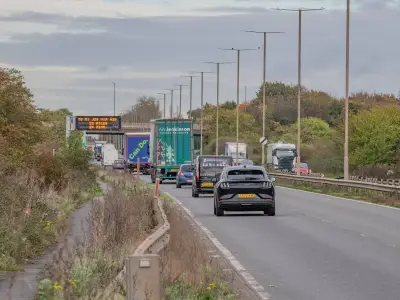
Drivers across the UK are being warned that new enforcement cameras could soon catch them using their mobile phones in ways that many still do not realise are illegal. The latest generation of camera technology is being gradually rolled out in parts of the country, and motoring organisations say it is likely to lead to a significant rise in fines for drivers who break the rules without knowing it.
Recent changes to motoring law have made the rules around phone use while driving far stricter than most people assume. While it has long been illegal to make calls or send texts behind the wheel, the law now goes much further. Touching a phone for almost any reason while driving is banned, even if the car is stationary at traffic lights or stuck in a queue of traffic.
Why Are More Drivers Being Fined?
Research suggests that a large number of drivers are not up to speed with the latest rules. The confusion is understandable because the legislation has evolved over recent years, and the public has not always kept pace with the changes. As a result, many motorists are still performing actions that are now against the law, such as checking messages, scrolling through social media, or changing music playlists on their phones while driving.

The tightening of the law came into effect to close loopholes that previously allowed drivers to argue they were not using the phone for communication. Under the current rules, any form of manual interaction with a mobile phone while driving is considered an offence unless the device is in a hands-free cradle and not being touched.
What Exactly Does the Law Ban?
The rules now prohibit drivers from holding a phone or any electronic device for any reason, including making calls, sending texts, taking photos, playing games, or using apps. This applies even when the vehicle is stationary at red lights, queuing in traffic, or temporarily stopped in a jam. The only exception is when the engine is switched off and the vehicle is safely parked.
Drivers are also required to ensure that any phone used as a sat nav is fixed in a holder before the journey begins. The device must be secured properly and must not block the driver's view of the road. Holding a phone to use as a sat nav is a common mistake and one that is explicitly against the law, even for experienced motorists.
Using a Phone as a Sat Nav
Many drivers rely on their phones for navigation, but the way they set them up can land them in trouble. The law makes it clear that phones should be placed in a cradle or mounted holder before the start of the journey. They must not be held in the driver's hand, passed to a passenger, or rested on the driver's lap while being used for directions.
Even if the phone is in a holder, the driver must not interact with it while the vehicle is moving. Setting the destination or adjusting the route should be done before setting off. Touching the phone to change the map display or enter a new address while driving is a criminal offence.
How Are the New Cameras Catching Offenders?
More advanced camera systems capable of detecting phone use are being introduced across the country. These cameras use high-resolution imagery and artificial intelligence to identify drivers who are holding a phone while at the wheel. The technology can operate in daylight and at night, and it is capable of capturing clear images through windshields even at speed.
Once a suspected offence is detected, the images are reviewed by enforcement teams before a fine is issued. Drivers caught by these cameras can expect a fixed penalty notice, which typically includes a fine and penalty points on their licence. In more serious cases, the matter can go to court, leading to higher penalties and even a driving ban.
Common Mistakes That Could Cost You
Despite the stricter laws, it is still common to see drivers looking down at their phones at traffic lights or during slow-moving traffic. Scrolling through social media, checking notifications, and selecting new music are all activities that are now banned under any circumstances while the engine is running.

Another frequent error is holding a phone to make a quick call while waiting at a drive-thru or at a level crossing. The law does not make exceptions for these brief moments of stopping. The same applies to traffic jams on motorways, where stationary vehicles are still bound by the mobile phone rules.
Why Is This Being Enforced More Strictly?
The increased enforcement comes in response to growing concerns about road safety. Usage of phones in cars is widespread and is a major factor in many crashes. Distracted driving has been shown to slow reaction times, reduce awareness, and increase the likelihood of collisions.
The new cameras are part of a broader effort to change driver behaviour and reduce the number of accidents caused by phone use. Campaigners and safety groups have welcomed the technology, arguing that it will help make roads safer for everyone. They point out that even a brief glance at a phone can result in a vehicle travelling the length of a football pitch without the driver's full attention.
What Drivers Should Do Now
Motorists are advised to review their habits and ensure they are fully compliant with the law. Phones should be stored out of reach or placed in a hands-free cradle before starting the engine. Any calls, messages, or navigation inputs should be dealt with before setting off or during a safe rest stop.
Drivers are also reminded that the law applies to all vehicles, not just cars. Motorcyclists, van drivers, and lorry drivers are subject to the same restrictions. The penalties for breaching the rules can have a lasting impact, including higher insurance premiums and potential disqualification.
As the rollout of advanced cameras continues, the likelihood of being caught is set to increase. Experts warn that drivers who continue to rely on outdated interpretations of the law are putting themselves at real risk of fines and points on their licence. The message from enforcement agencies is clear: if you are behind the wheel, your phone should stay out of your hand.