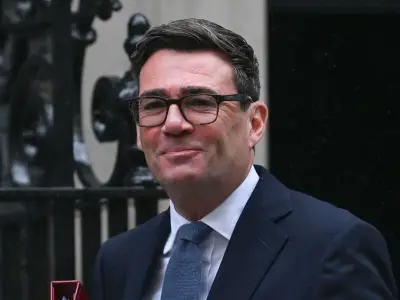
The think tank Compass has formally proposed a 2% annual wealth tax on net assets exceeding £10 million to Andy Burnham. The proposal, detailed in a new report titled Ending Business As Usual, comes from Compass, which is led by Neal Lawson, a key ally of the Labour Party Prime Minister. The report was published on Wednesday and outlines a tax that would impact only a tiny fraction of the population.
How the proposed wealth tax would work
Compass argues that the UK currently lacks a tax on net wealth. Income from wealth is taxed through Capital Gains Tax (CGT), while Inheritance Tax (IHT) taxes wealth passed on at death. Property wealth is taxed via Council Tax and Stamp Duty. However, taxes relating to wealth are unpredictable and infrequent: unless someone sells an asset, there is no CGT, and until someone dies, there is no IHT. There is no tax that targets someone’s assets in their entirety.
The proposed wealth tax would require individuals with assets exceeding £10 million to pay a 2% tax on the amount above the threshold. Wealth would be measured by the overall value of someone’s assets, minus any debts. For example, a person with net assets worth £11 million would pay 2% on the £1 million above the threshold, generating tax revenue of £20,000.

Impact on the population and revenue generation
Assessing its impact, Compass estimates that setting an annual wealth tax at a high threshold of £10 million would ensure that only a tiny proportion of the population would be impacted—just 0.03%, or 22,000 people, using 2021 data. This would make it simple for HMRC to administer, Compass added.
The think tank argues that the tax would raise significant tax revenue, around £24bn a year, which could be used to relieve the cost of living crisis and contribute toward improving public services. In the longer term, it would redistribute wealth and help tackle wealth inequality via government spending and investment that benefits the majority of the population, too, it says.
Background and expert evidence
The proposal draws on work from the Wealth Tax Commission, based at the University of Warwick and the LSE. The commission set out a detailed proposal for a wealth tax, with accompanying evidence from experience overseas, behavioural responses, and expected revenues at different rates and thresholds.
The report comes as Andy Burnham, the Mayor of Greater Manchester, considers fiscal measures to address regional inequality. The proposal is now with Burnham for consideration, though no formal response has been reported.