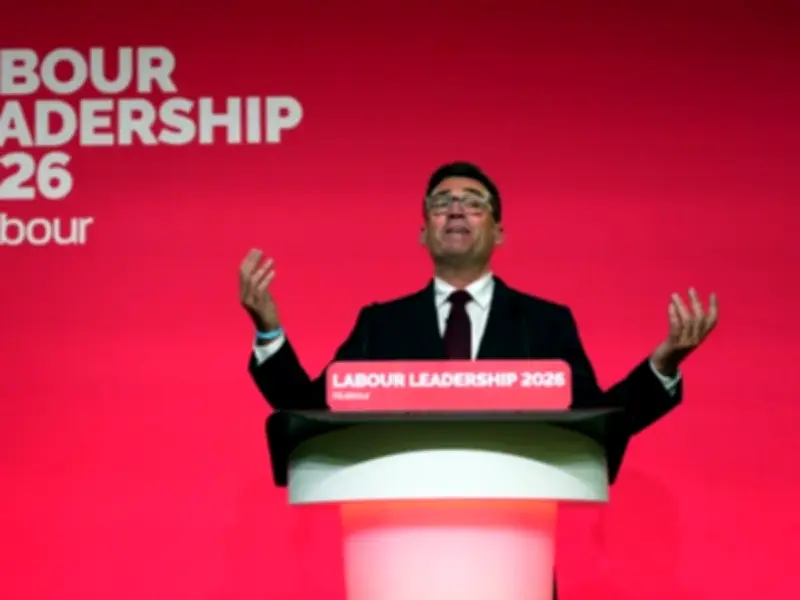
Prime Minister Andy Burnham is under renewed pressure from a close political ally to introduce a 2 per cent wealth tax targeting Britain's wealthiest individuals. The proposal, put forward by the Labour Party pressure group Compass, would apply a 2 per cent levy on net wealth exceeding £10 million, generating an estimated £24 billion annually from roughly 22,000 people – just 0.03 per cent of the population.
Compass proposal details
Compass, chaired by Neil Lawson – who also co-founded the Mainstream Labour group – argues that the tax would not only raise substantial revenue but also address growing inequality. The group additionally calls for capital gains tax to be aligned with income tax rates, which it claims would raise a further £11 billion from the very richest.
The proposal has gained traction among several Labour MPs, who see it as a way to fund progressive policies and signal the government's priorities. Neil Duncan-Jordan, MP for Poole, said Chancellor John Healey's first fiscal statement “needs to indicate a fundamental redistribution of wealth,” adding that such measures would “give people more money in their pockets and show a clear sense of direction as to whose side the Government is on.”

MPs voice support
Jon Trickett, MP for Normanton and Hemsworth, expressed backing for a “carefully calibrated wealth tax set sufficiently high as not to impact on the overwhelming majority.” He argued that the levy would “both raise significant funds to help achieve progressive policies but also help to resolve the moral outrage of uncontrolled inequality.”
Andy McDonald, a Labour MP, said: “We should seriously consider a wealth tax. It warrants proper analysis and investigation, as does a replacement of council tax.” His comments suggest that the tax could be part of a broader review of local taxation.
Prime Minister's response
When questioned by Gary Lineker before entering No 10, Mr Burnham addressed the possibility of a wealth tax, stating: “I'm not going to rule things out right now.” He expressed a desire for “a greater sense of fairness” but also cautioned against “creating new divisions” or being seen as “demonising one group.”
The Treasury has remained non-committal. Approached over similar proposals earlier this month, a spokesperson said tax decisions “are a matter for the Chancellor to set out at fiscal events, rather than routinely commenting on proposals made.”
Potential impact and next steps
If implemented, the 2 per cent wealth tax would affect only a tiny fraction of the population, but its revenue could be significant. The £24 billion annual yield would represent a major boost to public finances, potentially funding public services, infrastructure, or social programmes.
The proposal also raises questions about the future of capital gains tax and council tax, with some MPs suggesting a comprehensive overhaul of the tax system. However, any such changes would require careful design to avoid unintended consequences, as Mr Burnham has hinted.
As the government prepares for its first fiscal statement, all eyes will be on Chancellor John Healey to see whether these proposals gain official backing. The debate over wealth taxation is likely to intensify in the coming weeks, with supporters arguing that it is a matter of fairness and opponents warning of potential economic risks.