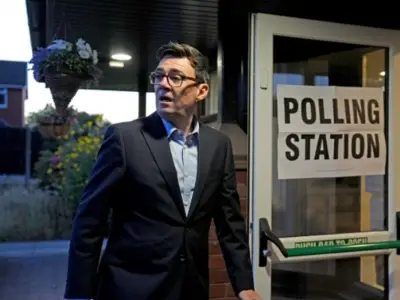
The government led by Andy Burnham is weighing up a mandatory new requirement for all category B standard driving licences, which could fundamentally alter how Britons learn to drive. The proposal, part of the wider 'Road Safety Strategy', aims to reduce accidents by ensuring new drivers gain more practical experience before hitting the road solo.
What the Consultation Proposes
The Department for Transport (DfT) launched a consultation earlier this year seeking views on introducing a minimum time period between passing the theory test and taking the practical driving test. The consultation, which closed in May, also explored mandating a minimum number of supervised driving hours, a structured learning syllabus, and alternative ways to conduct required learning.
According to the DfT, a 'Minimum Learning Period' (MLP) could take several forms: a minimum number of months a learner must remain in the learner stage, a minimum number of supervised practical driving hours, a logbook to record learning, or a structured syllabus covering various driving conditions.

Current Rules and Why Change Is Needed
Currently, there is no mandatory minimum period or number of hours between starting to learn, passing the theory test, and taking the practical test for a category B licence. This means a learner could pass their theory test and book a practical test almost immediately, potentially lacking real-world driving experience.
The government argues that more structured learning could improve road safety, particularly for young and novice drivers who are statistically overrepresented in crash statistics. The consultation's feedback is now being analysed, with a government update promised within three months of closure, meaning mid-August.
Political Context
This initiative falls under Andy Burnham's remit as Prime Minister and Labour leader, following his party's victory. The policy is part of a broader 'Road Safety Strategy' that has already made headlines. The DfT stated: "The Department for Transport (DfT) is seeking views on introducing a minimum time period between passing a theory test and taking a practical driving test. Our consultation covers driving tests taken for a category B licence, the standard licence used to operate a car."
Potential Impact on Learners
If implemented, the changes could mean learners must wait several months and complete a set number of supervised hours before being eligible for a practical test. This would likely increase the cost of learning to drive, as more lessons would be required, but could also lead to better-prepared drivers.
Driving instructors and road safety groups have expressed mixed views. Some welcome the move, arguing it will reduce accidents, while others worry about the impact on those who cannot afford extensive lessons. The government has not yet indicated what specific measures it will adopt, but the update in August will provide clarity.
For now, learner drivers should keep an eye on official announcements, as any changes could affect their plans. The consultation's outcomes will be crucial in shaping the future of driver training in the UK.