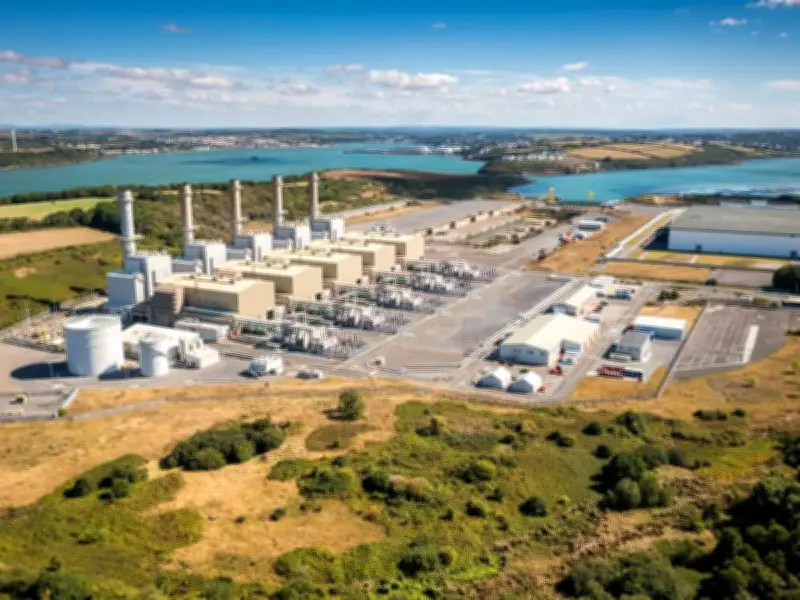
The first of a new wave of clean grid technologies begins operation this week at Pembroke Power Station, marking a significant step in Britain's transition to a renewables-led energy system. The synchronous condenser, built by RWE at its existing Pembroke site, is a large rotating machine designed to provide clean inertia—a critical service for maintaining grid stability.
What is inertia and why does it matter?
Inertia acts as a natural shock absorber for the electricity system, helping to resist sudden frequency changes after unexpected disturbances. This characteristic is essential for maintaining a stable and secure flow of electricity to homes and businesses. Historically, inertia was provided by large spinning generators at coal, gas, and nuclear power stations. With the shift to renewable sources like wind and solar, which do not naturally provide inertia, new solutions are needed.
The Pembroke project is the first of 16 synchronous condensers under the National Energy System Operator's (NESO) Stability Pathfinder programme. This initiative aims to deliver new ways to keep the electricity system reliable as more intermittent renewables come online.

Benefits: emissions cuts, security, and £9bn savings
According to NESO, these stability technologies will help cut emissions, strengthen energy security, and save consumers up to £9bn in system costs over the coming years. Matt Magill, Director of Engineering at NESO, said: "Projects like Pembroke will help reduce emissions, strengthen energy security, and save consumers up to £9bn as Britain moves towards a clean power system."
Magill added: "Through our world-leading Stability Pathfinder programme, NESO has pioneered new markets for technologies such as synchronous condensers and Britain's first grid-forming batteries. Together, they are helping replace services traditionally provided by fossil fuel power stations, while maintaining one of the world's most secure and reliable electricity systems."
RWE's role and the Pembroke Net Zero Centre
This is the fourth synchronous condenser to go live in Wales and the first built by RWE at its Pembroke Net Zero Centre. The site brings together battery storage, carbon capture, and green hydrogen projects alongside the existing gas-fired power station. Nikolaus Valerius, Chief Executive Officer of RWE Generation SE, commented: "The successful commissioning of our new synchronous condenser at Pembroke is an important milestone for the project and for the wider electricity system."
Valerius continued: "As more renewable generation connects to the grid, technologies like this will play an increasingly important role in maintaining a secure and reliable electricity network, supporting the Government's ambition to deliver a clean power system while strengthening resilience."
Programme expansion and impact
The Stability Pathfinder programme currently provides 17.2 GVAs (gigavolt-ampere seconds) of inertia to Britain's electricity network. The next phase will add a further 26.9 GVAs, more than doubling the amount of clean stability available on the system. This expansion is crucial for accommodating the growing share of wind and solar power, which are variable by nature.
With the Pembroke synchronous condenser now operational, NESO and RWE are demonstrating that clean grid technologies can effectively replace services traditionally provided by fossil fuels, ensuring that Britain's electricity system remains among the most secure and reliable in the world.