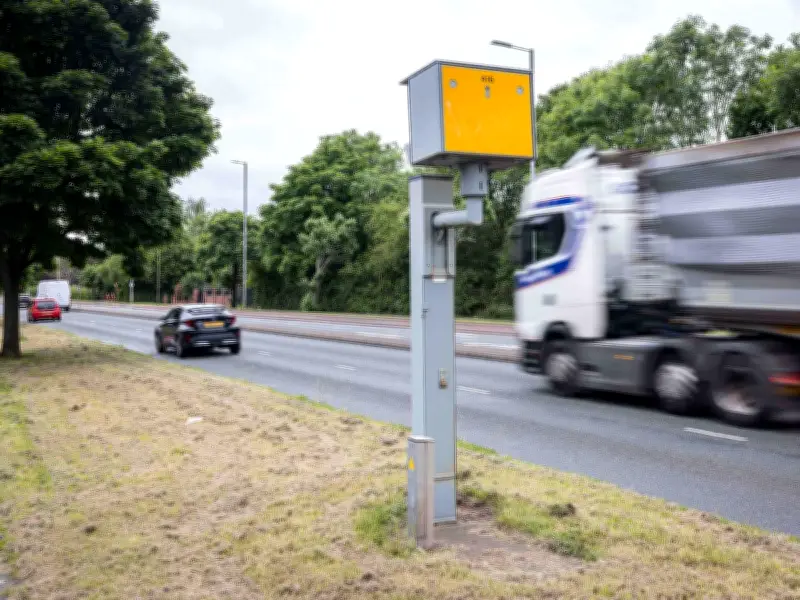
The government is considering a major overhaul of speed camera rules that could close a loophole allowing some drivers to evade justice. The Department for Transport (DfT) has proposed changing the 6-month statutory time limit (STL) for bringing speeding offences to court, as part of its new Road Safety Strategy.
Currently, for offences detected by speed or red-light cameras, the case must be brought before a magistrates' court within 6 months of the offence. The DfT argues that this period is open to abuse, as some drivers deliberately delay identifying themselves to run down the clock and avoid prosecution.
Proposed Change to the 6-Month Rule
The consultation document states: "For offences detected by speed or red-light cameras, the law gives a 6-month statutory time limit (STL). This means the case must be brought before a magistrates' court within 6 months of the offence. There will be clear digital or photographic evidence of the offence. This STL period includes the registered keeper providing details to the authorities of who the driver was at the time. This is open to abuse and delaying tactics and can result in offenders avoiding justice. We propose that this should be changed, so that the 'clock' starts when the details of the driver are provided to the authorities."

This change would mean that the 6-month period would begin only after the registered keeper provides driver details, closing the loophole that has allowed some offenders to escape prosecution.
Extended Time Limits for Serious Cases
The government also proposes extending the STL for the most serious cases, such as those involving death or serious injury caused by unlicensed, uninsured, or disqualified drivers. This would allow police more time to investigate complex cases and potentially charge offenders with 'failing to stop' if appropriate.
The DfT said: "In the most serious cases involving someone being killed or seriously injured by an unlicensed, uninsured or disqualified driver, the government feels that there should be an extended STL. This will enable the police to effectively investigate complex cases and have the option of charging 'failing to stop' if prosecutors feel that is the most appropriate charge."
Tougher Penalties for Unlicensed and Uninsured Driving
Ministers are also considering increasing penalties for driving without a licence or without insurance. Currently, driving without a licence or not in accordance with one can result in a fine of up to £1,000, 3 to 6 penalty points, and a potential driving ban. The government argues that those who drive without ever passing a test are equally culpable as those who drive while disqualified, who face a maximum 12-month custodial sentence.
The consultation says: "It is arguable that an individual who drives on the road without ever passing a test, is equally culpable as an individual who continues to drive after being disqualified, so should face similar penalties. The penalties for the offence of driving while disqualified include a maximum 12-month custodial sentence."
For driving without insurance, the current penalties include an unlimited fine, 6 to 8 penalty points, and possible disqualification. However, the fixed penalty fine is £300 with 6 penalty points if accepted. The DfT stated: "It is arguable that the level of the fixed penalty and the points on the licence do not reflect the seriousness of driving uninsured, or act as a deterrent to driving uninsured."
Government's Road Safety Concerns
Parliamentary Under-Secretary of State for Local Transport Lilian Greenwood MP highlighted the need for change: "Having met with the families and friends of some of those who have been killed or seriously injured, I have some sense of the devastation road danger can have on their lives. In 2024, there were 1,602 deaths on our roads – an average of around 30 a week, or 4 to 5 per day. There were also 27,865 serious injuries on our roads. Although the UK has some of the safest roads in the world, these figures remain far too high, and this government does not accept that these deaths and serious injuries are inevitable."
She added: "With the number of UK road deaths having plateaued since 2010, it's clear that strong, decisive action is long overdue."

Next Steps
The consultation on the Road Safety Strategy concluded last week, with responses set to be published in August. The government will then move to amend the legislation later this year. Andy Burnham's new administration will have to decide whether to proceed with the proposed changes.
The DfT said a summary of responses will be published this month, ahead of the government moving to 'amend the legislation later this year'.