Prime Minister Andy Burnham has pledged to stick to Labour's 2024 manifesto commitment not to raise income tax, VAT or National Insurance. However, ahead of his first Autumn Budget on October 28, a range of other taxes remain under consideration, including land value tax, capital gains tax changes, a bank windfall tax and a wealth tax.
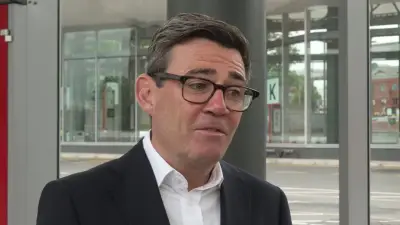
Mr Burnham, the Makerfield MP, will deliver his first Autumn Budget alongside Chancellor John Healey. Speaking to ITV News, he said: "I will always take a careful approach to things. I won't take risks with people's jobs or livelihoods or their family finances."
He added: "I will try to help them in whatever way I can and we have already done some things that will help them going forward. I will do what I can, but I won't be unrealistic and people need to understand that. We are in a challenging position. Whatever I do will be carefully thought through. It will be funded. That is exactly what I have done so far but there will be more to come as we go into the autumn."

Land tax and stamp duty reforms
Rumours suggest the Treasury is considering scrapping stamp duty and council tax, replacing them with an annual land value tax (LVT) charged at roughly 1.3 per cent. A family with a home worth £2.6m currently pays just over £4,000 a year in council tax; under an LVT regime at 1.3 per cent, that bill would rise to £30,534.
The potential shift would represent a significant change to how property is taxed in the UK, with implications for homeowners and the housing market.
Capital gains tax alignment
Health Secretary Wes Streeting, rumoured to be in the running for Chancellor, has proposed aligning Capital Gains Tax (CGT) with income tax bands, suggesting the move could raise billions for the Exchequer. However, analysis by IG using HMRC's own published methodology suggests the opposite: once taxpayer behavioural responses are taken into account, equalising CGT with income tax rates would reduce Treasury revenues by approximately £7.8bn annually. The loss is primarily driven by the fact that higher CGT rates discourage investors from selling assets.
Louise Haigh, who managed Mr Burnham's Makerfield by-election campaign and is expected to secure a senior Cabinet role, has also said CGT should be "brought closer" to income tax rates. Writing in the left-wing publication Renewal, Ms Haigh argued the changes should form part of a "fundamental redesign" of the tax system.
Business rates, vape shops and bank windfall tax
Mr Burnham announced his intention to cut business rates for pubs, clubs and live music venues. He said this would partly be funded by "reviewing reliefs for businesses that do not make a positive contribution" like vape shops. Business rates expert Gerry Schurder has been brought in to review how the charge is levied on pubs and hotels.
Trade unions have urged the government to impose a windfall tax on banks after lenders' half-year results showed strong growth in profitability. On Thursday, the Green Party urged Mr Healey to impose a 38% windfall tax to fund tax cuts for smaller businesses. Britain has retained a number of bank-specific taxes, including the bank levy and surcharge, since the 2008 financial crisis, which the sector argues makes the country less competitive than rival financial centres.
Pension lump sum, wealth tax and stamp duty loophole
Scrapping the pension tax-free lump sum could raise as much as £2bn a year, it has been suggested. Ex-trader, economist and campaigner Gary Stevenson has long called for Mr Burnham to introduce a wealth tax. Questioned in the Big Issue, Stevenson said he didn't "want to jeopardise" Burnham's willingness to work with him. "I really want Burnham to be good," Stevenson said, "Because if he is not, then Nigel Farage will win the next election. Even if we just talk about the economy and inequality, Farage is going to cut taxes on the rich and it's going to be devastating for living standards."

Stevenson said people from Labour, who had been ignoring his emails previously, had got in touch with him and been meeting with him in the last few weeks to talk about a wealth tax. "I have to be careful what I say about Burnham – I don't want to jeopardise his team's willingness to work with me," he said. "There is a realistic chance because if they don't talk to me, then what are they going to do? But I suspect we won't get the seriousness we need on top-level inequality."
On stamp duty, the Annual Tax on Enveloped Dwellings (ATED) was introduced in 2013 to stop buyers avoiding Stamp Duty Land Tax (SDLT) by purchasing company shares rather than the residential property itself. Tax Policy Associates' Dan Neidle said: "We all pay stamp duty land tax if we buy residential property. Commercial property is also subject to stamp duty, at the lower rate of 5%. But in practice it's often avoided by the simple method of putting the property in a company, and selling the company instead of the property."
Neidle added: "People used to use the same 'loophole' when buying residential property, until it was somewhat closed in 2013. I say 'somewhat' closed because, instead of simply charging stamp duty when people bought a company containing residential property, such 'enveloped' real estate became stung with an annual tax – the 'annual tax on enveloped dwellings' (ATED). But there's a quirk: ATED is only slightly proportional to property values. This is effective at discouraging 'enveloping' for relatively low value real estate, but not at all once we get into seriously valuable property."
Panmure Liberum's Simon French has called for Mr Burnham to extend the scope of national insurance. As it stands, employee national insurance only covers income derived from being an employee. Bringing other sources of income – be that from investment, property or pensions – "reduces incentives to save and invest", French said, adding: "This remains the area most targeted for additional tax revenue."