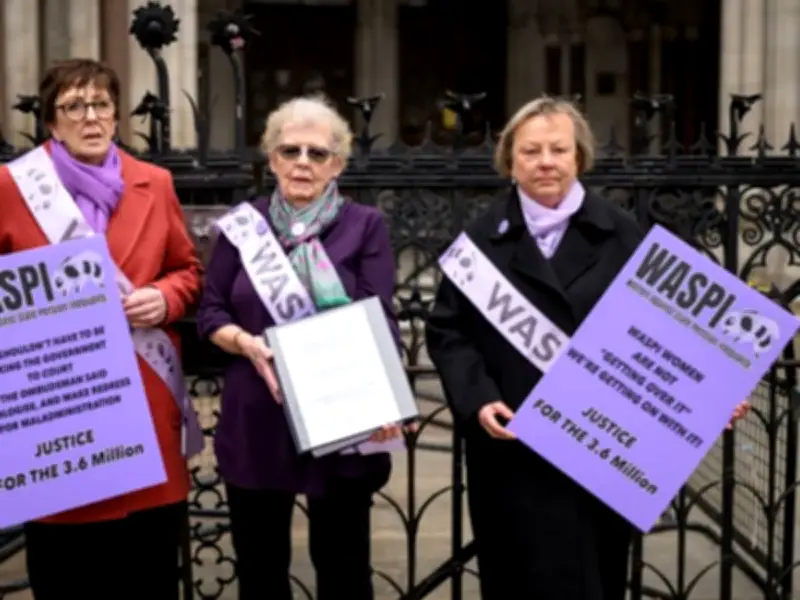
WASPI campaigners have told Prime Minister Andy Burnham and Chancellor John Healey that the millions of women affected by state pension age changes cannot be “left with nothing”. The demand comes as the campaign, representing more than three million 1950s-born women, presses the Labour government to deliver on promises of redress.
Campaign chair calls for urgent talks
Angela Madden, chair of the WASPI campaign, said she is asking the Prime Minister, alongside the Chancellor, to “make good on that promise” and sit down with representatives to determine what redress for 1950s-born women should look like. The 72-year-old told the Daily Mail she believes Mr Burnham is in “listening mode” and that “if he can do something, he will”.
“Us Waspis can't be left with nothing,” she said. “When he said that, what he was really saying is that he would do something for us, but he didn't know what that 'something' would be,” she insisted. “The Prime Minister has a golden opportunity to prove he is a man of the people if he works with us.”

Redress options on the table
Ms Madden said the next step is to “sit around a table with Government and talk about what the options are”. While acknowledging that Mr Burnham “might not be able to deliver 100 per cent of what we want”, she stressed that some form of redress was essential.
“What we now need to do is sit around a table with Government and talk about what the options are,” she added.
Background of maladministration ruling
In 2024, the Parliamentary and Health Service Ombudsman found the Department for Work and Pensions (DWP) guilty of maladministration for failing to give many women adequate and timely information about the increase in their state pension age.
The increases were triggered initially by the 1995 Pensions Act, which paved the way for the state pension age for women to rise in steps from 60 to 65 between 2010 and 2020. The subsequent 2011 Pensions Act then brought forward the qualifying age of 65 for women to 2018. Six years ago, the state pension age for both men and women increased to 66.
Government response and next steps
In 2024, the ombudsman followed up its report by recommending the compensation that should be paid. This week, Mr Burnham’s government said it had accepted maladministration and given an “apology to the women affected”. It added that the DWP had learned lessons from the ombudsman’s investigation and had published an action plan in the pursuit of “effective, timely and modern communications on the state pension”.
The campaign now awaits a formal response from the government on the shape and scale of any compensation package, with Ms Madden insisting that the three million women affected cannot be left without some form of redress.