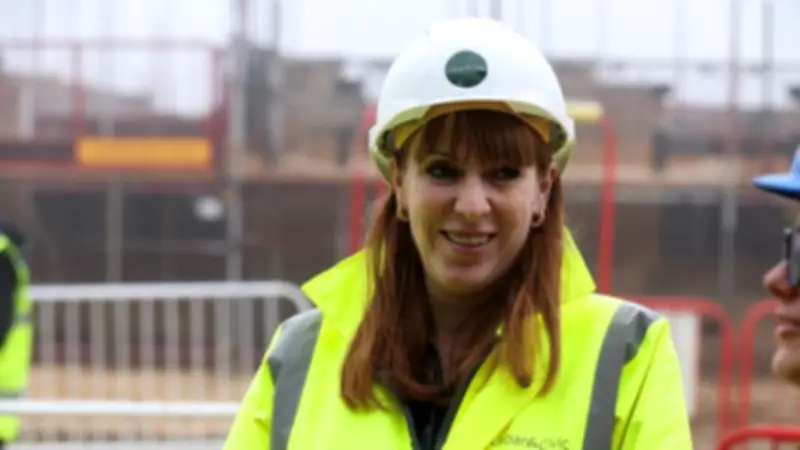
The Government has announced a major overhaul of planning rules that will make it easier to build thousands of homes near railway stations, while also introducing new protections to prevent pubs from being converted into flats or shops. Housing Secretary Angela Rayner said the move to a 'default yes' approach for developments around transport hubs is designed to help 'tackle the housing crisis and raise living standards'.
The changes come as ministers push to meet their target of building 1.5 million homes in England within five years, with current progress just over a quarter of the way there after two years. Under the updated National Planning Policy Framework, published today (Monday, August 17), developments within a 'reasonable walking distance of well-connected stations' will be more likely to get the green light, making it easier to build homes in high-demand areas.
Unlocking homes around transport hubs
Ms Rayner said: “A safe, secure home is the foundation of opportunity, but too many people are being priced out of the communities where they want to live and work. By unlocking thousands of homes around well-connected transport hubs, we’re helping people live closer to work, school and the services they rely on, while backing local businesses and driving growth in our communities. That’s how we’ll tackle the housing crisis and raise living standards for people in every corner of the country.”

The reforms also mean that where local objections clash with national planning policies, they may carry less weight, a move that has already sparked criticism from opponents who say it weakens local control. At the same time, ministers say pubs and music venues will be better protected under the new rules. Developers will now have to prove there is no realistic prospect of keeping a pub running before it can be converted for other uses. Officials said these venues are 'the lifeblood of communities' and should not be lost without good reason.
Streamlining the planning system
The shake-up is also intended to streamline the planning system by reducing bureaucracy. Some organisations will no longer be automatically consulted on every application. Under the new system, Sport England will still advise on 'significant' developments, while the Gardens Trust and Theatres Trust will only be notified when applications are directly relevant to them.
Chancellor John Healey said the reforms are part of a wider push to support home ownership and economic growth. He said: “We want to drive growth in every postcode and help more working people into home ownership. A secure home is the heart of all our lives, helping people put down roots, plan for the future and build a good life for themselves and their families. This is about creating opportunity, prosperity and stronger communities across the country.”
Progress and criticism
Latest figures show that 392,400 net additional homes have been delivered in England between July 2024, when Labour came into office, and June 14 this year. To stay on track for the 1.5 million target, around 600,000 homes would have needed to be built in the first two years, although ministers believe the new planning rules will help speed up delivery.
However, the proposals have drawn sharp criticism. The Gardens Trust said it was 'devastating news' that it will no longer be a statutory consultee, warning the change could put parks at risk. Chairman John Watkins said: “This devalues these special places and makes them vulnerable to poorly informed development.”
James Cleverly, the shadow housing secretary, said Labour was 'failing abysmally' to meet its housing target. “To try to fix their own mess, Labour are planning a power grab, seizing control from local communities and forcing them to accept development in the wrong areas because Labour won’t build in the right areas,” he said. Sir James added that Andy Burnham 'is going to overrule councils on green belt development and launch a new campaign of garden grabbing'.

Richard Tice, deputy leader of Reform UK, also criticised the reforms. He said: “These reforms are in direct contradiction of Andy Burnham’s devolution agenda. Far from empowering local councils who actually know their communities, they strip power from the people who live there and hand it to Whitehall so ministers can ram through major housing developments while sidelining residents and ignoring the infrastructure that already can’t cope.”
Ministers insist the changes will strike the right balance between boosting housebuilding and protecting communities, but with strong views on all sides, the debate over how and where new homes should be built looks set to continue.