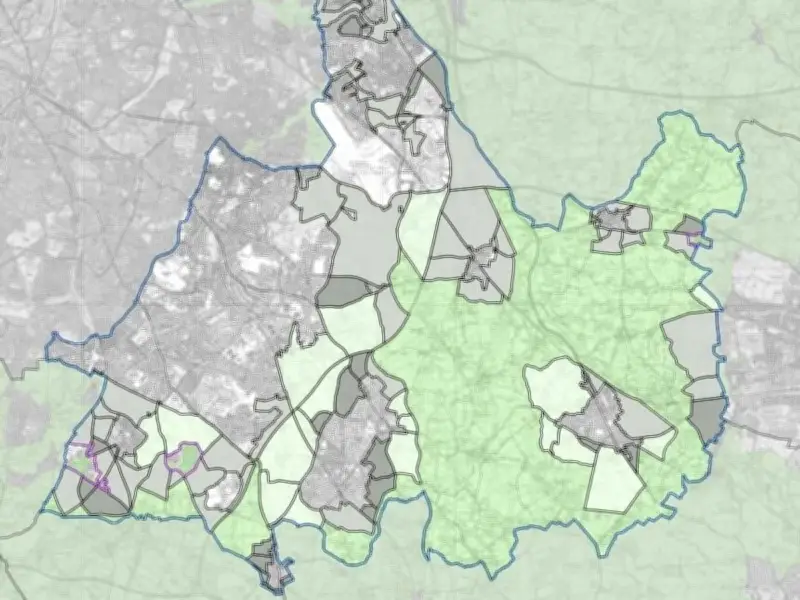
More than 70 green belt sites in Solihull have been identified as potential 'grey belt' areas in a new assessment by consultants Arup, commissioned as part of the council's work on a new local plan. The report, which evaluates the quality and value of protected green belt land, found 72 parcels that could be considered lower-quality and potentially suitable for development, primarily around inset villages.
What is Grey Belt?
Grey belt is a designation introduced by the Labour government to identify lower-quality portions of the green belt that could be developed to help meet national housebuilding targets, including the goal of 1.5 million new homes. Solihull has been set a government target to build 8,500 new homes by 2029, and the assessment is a key evidence document for shaping where that growth might occur.
However, Solihull Council has stressed that identification as potential grey belt does not automatically mean sites will be developed. Councillor Andy Mackiewicz, cabinet member for climate change and planning, said: "This updated GBA is needed as an evidence document to inform our emerging local plan – it should not be viewed as setting council policy."

Assessment Findings
In addition to the 72 potential grey belt parcels, the Arup assessment identified 66 parcels that make a strong or moderate contribution to green belt purposes, meaning they are unlikely to be considered for development. Four areas were flagged as having 'fundamental importance' within Solihull's green belt, offering the highest level of protection.
The assessment used a range of criteria to evaluate each parcel, including its contribution to checking unrestricted urban sprawl, preventing neighbouring towns from merging, and preserving the setting and special character of historic towns. The findings will now inform the council's emerging local plan, which will set out policies for future development in the borough over the coming years.
Next Steps in the Local Plan Process
The assessment is just one piece of evidence in a longer process. The local plan will undergo public consultation, giving residents and stakeholders the opportunity to comment on proposed development sites. After that, the plan will be reviewed by an independent government-appointed inspector as part of the examination process.
Councillor Mackiewicz emphasised that the grey belt assessment is not a decision-making tool in itself. "Decisions on any potential development will be made through the local plan process, with full public consultation," he added.
Context and Impact
Solihull's green belt covers a significant portion of the borough, and any potential release of land for housing is a sensitive issue. The council's target of 8,500 new homes by 2029 is a challenging one, and the grey belt designation could provide a way to meet it while protecting the most valuable green spaces.
The assessment by Arup is part of a wider trend across England, as councils grapple with new government guidance on grey belt. The Ministry of Housing, Communities and Local Government has said that grey belt land should be prioritised for development before considering other green belt releases, but only where it does not conflict with the purposes of the green belt.
For Solihull, the next steps will be crucial. The council is expected to publish a draft local plan for consultation later this year, which will include specific site allocations. Residents will then have the chance to have their say before the plan is submitted to the Planning Inspectorate for examination.