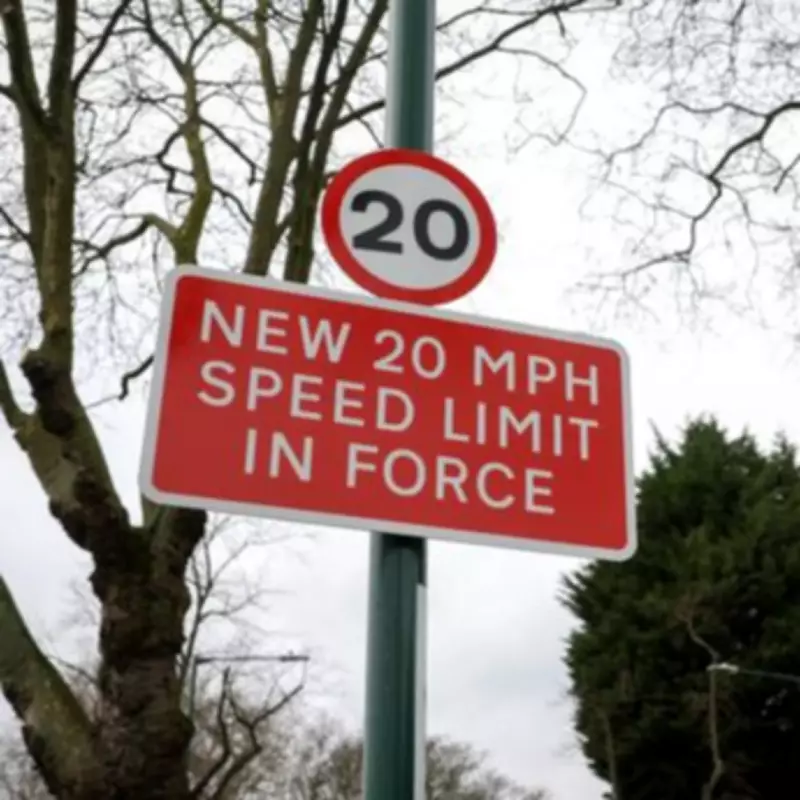
It was not long ago that Birmingham, regardless of political affiliation, appeared united in addressing the unacceptable danger on the city’s roads. Yet, at a recent Birmingham Live hustings, almost every candidate seemed to change their stance, unable even to commit to a modest, proven measure: a 20mph limit on residential streets.
This does not mean 20mph everywhere, nor on main roads or dual carriageways like most roads in London. The focus is solely on residential streets—roads never designed for high traffic volumes or high speeds.
Background of the Policy
The rollout of 20mph zones in residential areas has been Birmingham Labour Party policy since 2012. Last year, the administration declared a Road Safety Emergency after 80% of casualties occurred on roads with a 30mph limit. In a single year, the region recorded 52 deaths and 1,020 serious injuries, with around half of the fatalities in Birmingham.
In November 2024, the council went further, requesting permission from the Department for Transport to install boundary signs at the city limits, enabling a 20mph default across all 1.1 million residents at a fraction of the usual cost. Yet, on a public stage, the same administration’s candidates suddenly could not back the policy they had championed.
Evidence of Effectiveness
The evidence is not theoretical. Wales implemented a 20mph default on built-up roads and reported 882 fewer casualties in the first eighteen months—a 25% reduction. Insurance claims dropped so sharply that eSure cut premiums for Welsh drivers and committed to doing the same elsewhere as new 20mph areas are introduced.
We are not asking candidates to support something untested; we are asking them to support a measure that is demonstrably saving lives in a comparable nation. The proposal specifically targets residential streets—where children walk to school, older people cross to shops, and families live.
A Shocking Audience
What made the hustings even more shocking was the audience the candidates addressed. Babiker Yahia asked them how they would improve road safety. Babiker’s daughter, Mayar, was four years old when she was killed by a driver in April 2024. She was walking home along the pavement on Upper Highgate Street with her family. The driver was convicted of causing her death by careless driving.
Disappointing as it may be, the candidates’ responses might not be surprising. Researchers call it pluralistic ignorance: when the public privately supports a policy, but politicians believe the opposite because loudest voices dominate the conversation. Polls consistently show majority public support for lower urban speed limits, yet candidates triangulate against an opposition that exists only in the comments section, not in numbers.
Popular Support and Misperception
The reality is that 20mph limits are popular with residents. They can get caught in the crossfire from a vociferous lobby that wants to drive through someone else’s neighbourhood from out of town, but local people want slower speeds. This is not a party-political fight; schemes to reduce residential speeds have been delivered across the political spectrum in the West Midlands.
Enforcement vs. Responsibility
The fallback we heard at the hustings was that candidates would back enforcement, as if road safety is solely a matter for the police. It is not. Police enforcement is part of the system, but a councillor’s job is to set speed limits, allocate funding, and demand engineering that makes compliance the default rather than the exception. Hiding behind enforcement is hiding from the role.
Birmingham did not declare its road safety emergency lightly. It declared it because vulnerable people are dying on streets that should be the safest in the city. Babiker Yahia’s questions deserve a better answer.
Adam Tranter is the former West Midlands Cycling and Walking Commissioner.