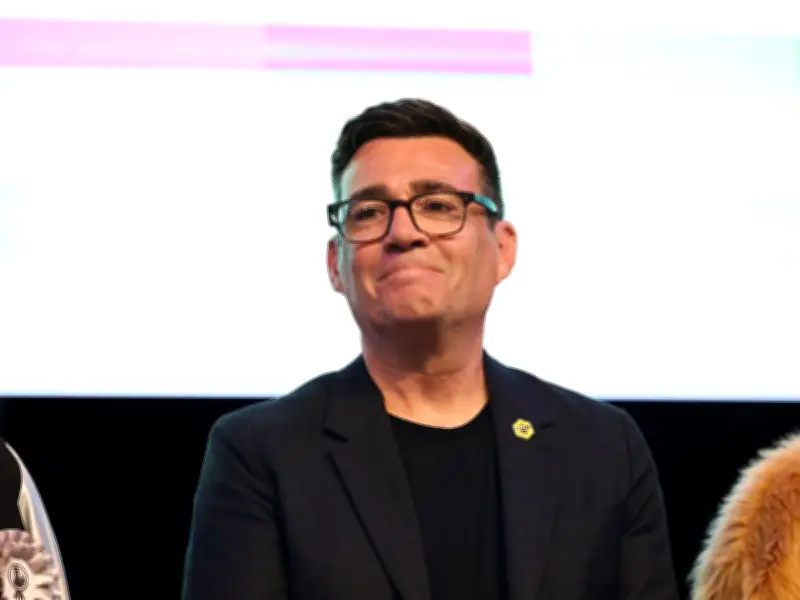
Andy Burnham has secured a landslide victory in the Makerfield by-election, with all eyes already on his next move. After the new Labour Party MP won the Makerfield seat by a large majority over Reform UK, Burnham used his victory speech to frame the moment as a definitive mandate for national change.
He said: "This result tonight could be a turning point... People have voted for change, they have voted for more power for the north and everywhere forgotten by Westminster."
"This is Labour's final chance to change. There will be no second chance, but it is a chance now from this result tonight to build a new politics based on unity and hope, turning away from the path that takes us to a divided politics of the kind we see in the United States."

"We must now take this up and put this country back on the right path and bring people back together and get things working properly."
Has Andy Burnham formally launched a leadership bid?
During a televised BBC Question Time debate in Makerfield, Burnham explicitly stated his intention to join the contest, pointing to moves already made by other cabinet figures like Wes Streeting. He said: "I think Wes Streeting seems to have launched a leadership contest, so if that is running, I would seek to join it."
Burnham's allies indicate that while his by-election victory secures the Westminster seat he needed to run, they intend to give Keir Starmer a brief window to set out a timetable for an orderly departure rather than immediately forcing a chaotic collapse of the government. However, with both Burnham and Wes Streeting openly positioning themselves, a formal leadership contest is widely anticipated.
How quickly could Andy Burnham become Prime Minister?
If Starmer refuses to step down voluntarily, Burnham will have to trigger a formal challenge, or Starmer may agree to a managed exit that concludes by the end of the summer.
Gather 81 MP nominations
Under Labour Party rules, a challenger needs the written backing of 20% of Labour MPs to force a contest. Burnham will need to secure roughly 81 signatures as soon as he is sworn into Parliament.
The MP elimination rounds
If multiple candidates stand (such as Wes Streeting, Angela Rayner, or Starmer himself), Labour MPs will vote in sequential rounds to whittle the ballot down to the final two candidates.
The Membership vote
The final two candidates go to a postal and online ballot of the wider Labour Party membership. This is where Burnham holds a massive advantage, with polls showing he is highly popular among the grassroots.
Audience with the King
Once the ballot closes and Burnham is declared winner, Starmer would travel to Buckingham Palace to formally resign, and King Charles III would immediately invite Burnham to form a government as prime minister.
The closest precedent for replacing a mid-term Prime Minister via a party contest is the race to replace Boris Johnson in 2022, which took exactly eight weeks. Several Labour MPs have already urged that any process should be completed by the Labour Party Conference in September.
What would Andy Burnham's policy platform for Downing Street look like?
Andy Burnham’s pitch for Downing Street is explicitly designed to win back disillusioned working-class voters who shifted to Reform UK.
Control public utilities and transport
The centrepiece of Burnham's agenda is reversing key parts of 1980s-style privatisation, taking major public services out of the hands of purely private interests.
Tax relief and 'cost of living' measures
Despite pledging to stick to Chancellor Rachel Reeves's broader fiscal borrowing rules, Burnham has proposed a series of targeted tax shake-ups to ease the burden on lower-income families, including increasing the personal income tax allowance and a review of the controversial national insurance (NICs) increase for employers.
Redesigning social care
Burnham has stated he "would not flinch" from the social care crisis that has stalled successive governments. He has proposed bringing forward the publication of the national Casey Review on social care to late 2026. His long-term goal is to replace inheritance tax entirely with a progressive, universal "care levy" to fully fund a National Care Service.