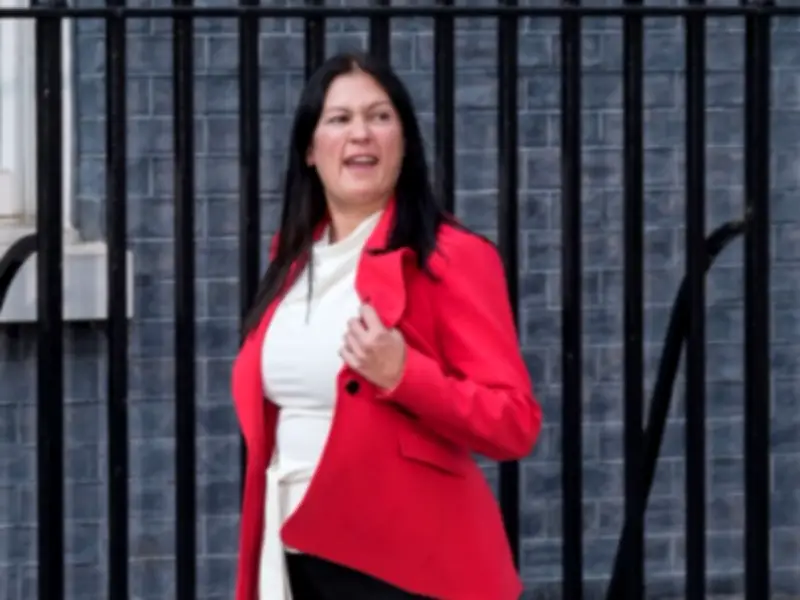
Culture Secretary Lisa Nandy has launched a government consultation on the future of Freeview, confirming that a support package will be created to help households move from digital terrestrial television (DTT) to internet-based IPTV. The announcement follows her reappointment to the role and sets out a plan to eventually withdraw Freeview, allowing broadcasters to cut costs and free up radio spectrum for next-generation mobile internet.
Consultation outlines four key challenges
In the consultation document, the Labour government states: 'As part of this plan, and regardless of the eventual transition timeline, the government expects a structured support package will be needed to help audiences move from DTT to IPTV smoothly and with confidence.' The paper identifies four challenges any transition plan must address: universality, reliability, innovation, and public service media (PSM) sustainability.
The government adds that interventions will be 'co-designed with industry and other partners' to ensure the switch-over is managed effectively. While no specific timeline has been set, the move is seen as part of a broader shift towards internet-only television, with 2034 previously cited as a potential target date by industry observers.

Rural communities raise concerns
The Countryside Alliance has voiced strong concerns about the impact on rural areas, warning that households could be forced to pay for broadband to access services that are currently free-to-air. The group argues that many rural dwellings still lack sufficiently fast and reliable internet connections, undermining the principle of universal access to public service broadcasting.
'For many who live in the countryside, television remains an essential source of news, information and companionship, particularly for vulnerable and older residents, and those facing social isolation,' the organisation said in a statement. 'Requiring households to pay for broadband simply to access services they currently receive free-to-air also involves significant extra costs.'
Survey shows strong opposition to switch-off
To gauge public sentiment, the Countryside Alliance launched a survey in March seeking views on the future of Freeview. According to the group, more than 1,000 people have already responded, with the 'overwhelming majority' believing Freeview should be retained beyond 2034 and that no switch-off should occur until fast, reliable broadband is universally available.
The government consultation is expected to run for several months, with stakeholders invited to submit responses. Nandy has committed to ensuring that no household is left behind during the transition, but rural campaigners argue that more concrete guarantees are needed before any switch-off is enacted.
Support package details remain vague
While the consultation promises a 'structured support package', specifics on what this would entail have not yet been released. The government has indicated that measures could include subsidised broadband connections, equipment upgrades, or transitional assistance for vulnerable groups. However, critics point out that similar support schemes for digital switchovers in the past have faced delays and budget constraints.
The move to phase out Freeview represents a significant shift in how UK households access television. Currently, millions rely on the free-to-air service via an aerial, particularly in areas where cable or satellite options are limited. The transition to IPTV would require not only robust broadband infrastructure but also consumer education and hardware updates.