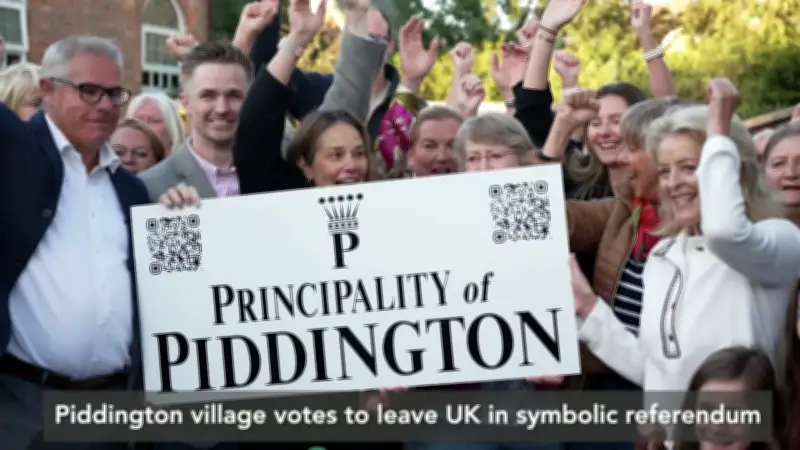
Residents of Piddington in Oxfordshire have voted overwhelmingly in a symbolic referendum to secede from the UK, in protest at Government plans to house 1,256 male asylum seekers at a nearby former military base.
The non-binding vote, dubbed the "Battle for Britain", saw 285 villagers support "independence" on a turnout of approximately 92 per cent. Just 26 residents opposed the motion, with one spoiled ballot. The result was declared by a returning officer outside the village hall on Wednesday morning, as dozens of journalists and residents gathered to hear the outcome.
Village votes for symbolic secession
A pennant reading "Battle of Britain 2026" was displayed outside the hall, alongside another commemorating the date of the World War II military campaign on 15 September 1940. The village, home to approximately 350 residents, has been flooded with media representatives covering the vote, with large numbers of journalists congregating in the village hall within the otherwise peaceful settlement.

Herbert Owen, known locally as Herbie, previously maintained the referendum "isn't just about Piddington". After casting his vote, Mr Owen told the Press Association: "It means everything our grandparents, our parents fought for – today is the Battle of Britain. This isn't just about Piddington, this is about our whole country. This Government is destabilising our country. Wherever they put these people, in camps, in HMOs, or whatever, they're ruining people's lives."
Residents voice safety concerns
Mr Owen, 76, described Piddington as a "wonderful little village", which has changed little since he first settled there 33 years ago. He said: "We need the media to support us. We've got more publications and more TV than any marches, riots. But if the Government doesn't do something, I'm afraid for the country. I don't know what's going to happen. I feel for the country, for the people."
Mr Owen's wife, Jennifer, told PA she believed residents' concerns have been dismissed by the Government, which initially neglected to put the proposals forward for public consultation. "It's like we're nobody. The village is nobody, according to the Government," she said.
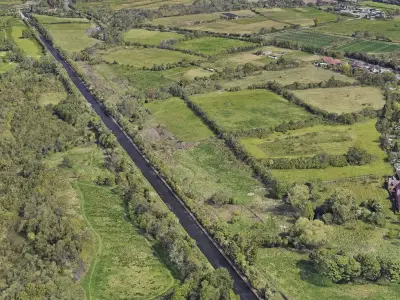
The boundary of the proposed site borders the tree line of a village green in Piddington, which is owned by the parish council and features children's play equipment and a fitness trail. Mrs Owen voiced concerns that the location was unsuitable and raised worries about the safety of youngsters and dog walkers who regularly use the space.
She said: "I'm an old-age pensioner, but I fear for the women and the children in the village. They won't be safe to go out in the village, not on their own, they'll have to have their husbands with them. It will wreck children's lifestyle, their livelihoods."
Mrs Owen observed that most Piddington residents know one another and converse when they're out and about, or while attending the occasional pop-up bar at the village hall. She maintained the site would "change our lives forever" should it be approved. When asked about casting her vote in the symbolic ballot, Mrs Owen remarked: "Bit of sense of power. We can't actually leave the United Kingdom, but it just brings things out in the open more for the country as a whole. All the parish councils in the country should do the same thing."
Infrastructure and safety objections
Parish councillor Mike Nixon emphasised that the proposed site has no pedestrian access, with the Government proposing asylum seekers be given high-visibility jackets for safety while walking along a busy road. He told PA: "The nearest path is about a mile and a quarter away, down a very busy road that's unlit. Their (the Government's) own document says it's not recommended that pedestrian access is used, so they're proposing that residents would use the shuttle bus service from the site. And to further discourage them, they're suggesting that should they walk, they would be issued high-vis jackets, and that's the only mitigation for the residents' safety. The road itself, the B4011, is a busy road, 50-mile-an-hour speed limit, but vehicles will regularly go in excess of that, so it is likely that there would be significant risk of road traffic collisions, injury, or even death, should the plan go ahead."

Mr Nixon also highlighted that the suggested location was vulnerable to surface water flooding, while additionally experiencing an inadequate foul water drainage system and insufficient power supply. He stated: "The site itself is wholly inadequate in terms of its infrastructure – so insufficient power, not enough water, no sewerage, prone to flooding. Apart from that, it sounds pretty good."
In the travel plan submitted alongside the Government's proposals, the location is described as having "limited" pedestrian access, with travel on foot "not recommended". Cycling and public transport alternatives may be made available, the document noted.
Political reaction and Government response
Rupert Lowe MP, leader of the Restore Britain party, spoke to members of the media outside the hall on Tuesday evening, while residents gathered at a parish council meeting. He said: "I think what they're doing is to be lauded, I think if we're going to stop this, the people have to rise up and say they've had enough, and they're not going to put up with this." When pressed on his party's alternative approach, Mr Lowe stated, "They should be deported immediately", before adding: "Worst case, we take them to an island offshore, build a tented camp, put them in there until they decide they want to go home."
A Home Office spokesman said: "The Government is closing every asylum hotel, saving taxpayers over £1 billion on asylum support since the election. We are working to fairly house asylum seekers across the country, moving asylum seekers into alternative accommodation, including former military sites which are designed to be self-contained to reduce impact on the local community. As part of the process, we engage with local authorities and police forces to ensure the safety and security of those in the surrounding area."