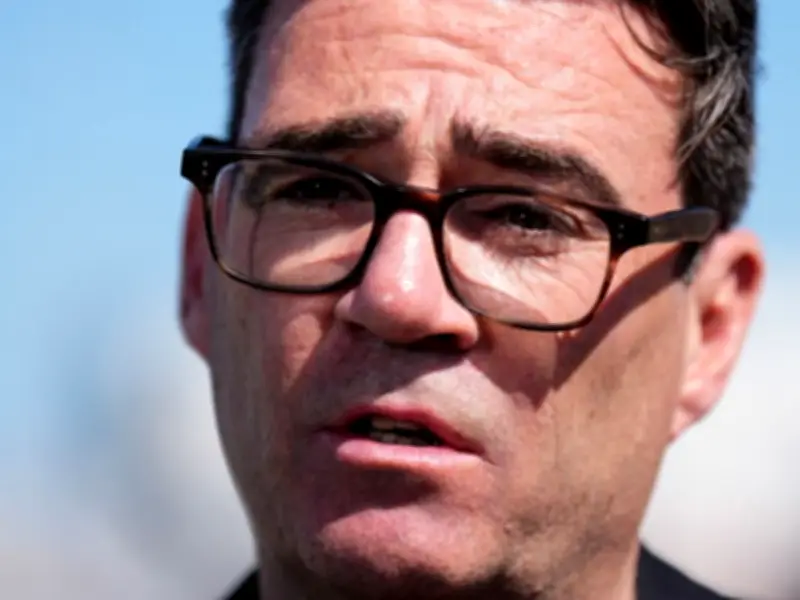
Andy Burnham, now serving as Prime Minister and Labour Party leader, has stopped short of dismissing a controversial 10% "death tax" on estates to fund social care. The levy would affect an estimated 650,000 families each year, according to claims from Nigel Farage speaking to The Sun.
Political Fallout Over Social Care Funding
The Makerfield MP and former Greater Manchester Mayor was questioned about his previous support for a levy on deceased persons' estates to generate revenue for social care. Burnham did not explicitly rule out such a measure, instead emphasising the need for cross-party collaboration.
"No party is in a position where they've got the high ground – we've all failed on this issue over decades and the pressure now on the National Health Service as a result of that failure is huge," Burnham stated.

Farage, reacting to the proposal, said: "If the Prime Minister wants to raid people's life savings he should do the decent thing and call a general election." He claimed the tax would drag 650,000 hard-working families into death tax liabilities annually.
Opposition Reactions
Conservative leader Kemi Badenoch insisted that funding for social care must come from reduced current spending, not new taxes. "You must rule out any tax rises, or increased borrowing that will ultimately fall on the next generation to pay for," she said. "The last thing Britain needs is further tax increases to pay for social care."
Badenoch also stressed that money should be found by cutting existing expenditure rather than imposing fresh burdens.
Proposed Cross-Party Talks
Burnham has called for a new approach to politics, aiming to solve problems rather than score points. He credited leaders Kemi Badenoch and Ed Davey for reaching out over the weekend to engage in talks. "I would like to see if we could arrange talks, cross-party talks, to build that spirit of collaboration from the start," the Prime Minister said. "This issue requires a solution that is lasting, cross-party, and is one that the country can support."
Liberal Democrat health spokesperson Helen Morgan criticised the Conservatives for obstructing reform for two decades. "Consistently they have chosen to play party politics rather than get around the table and look for a solution," she said. "We firmly believe that you can solve social care without raising taxes on working people, but we also believe that you cannot do it without all the parties working together."
Impact on Families and the NHS
The proposed 10% levy would apply to estates above a certain threshold, potentially increasing the number of families subject to inheritance tax. The 650,000 figure cited by Farage indicates a significant expansion of the death tax net. Burnham's refusal to rule out the measure leaves the door open for a policy that could generate substantial revenue but also spark public backlash.
The Prime Minister reiterated that no party has the moral authority on social care, acknowledging collective failure over decades. The mounting pressure on the NHS, exacerbated by delayed hospital discharges and unmet care needs, underscores the urgency of a sustainable funding solution.
As cross-party discussions loom, Burnham's stance on the death tax remains a critical point of contention. Families across the UK now await clarity on whether their inheritance will be targeted to shore up social care finances. While Burnham has dismissed other potential tax alterations, he has left the death tax on the table, signalling that no option is off the cards in the search for a lasting settlement.