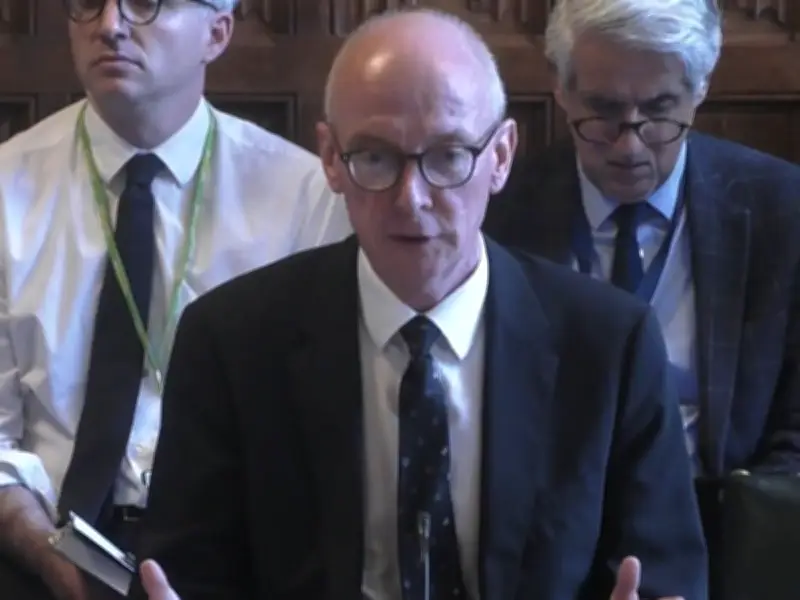
A senior DWP minister has provided an update regarding an ongoing review of the state pension age, discussing how people approaching retirement can have very different life experiences, particularly those in his Wolverhampton constituency.
The qualifying age for the state pension is currently rising from 66 to 67, with plans already in place for a further increase from 67 to 68. The transition from 66 to 67 is scheduled between April 2026 and April 2028, while the move from 67 to 68 is planned for 2044 to 2046. However, Labour announced in 2025 that there would be another independent review of the state pension age policy.
The last government-commissioned review took place in 2023, recommending that the move from 67 to 68 be brought forward. The forthcoming review will be conducted by Dr Suzy Morrissey and will examine several key areas, including linking the state pension age to life expectancy, the possibility of automatic mechanisms for determining the state pension age, and how such systems have functioned in other countries.
According to the 2014 Pensions Act, the government is required to commission an independent review every six years. Since the last review was published in March 2023, the next one must be completed by March 2029.
'That is the timescale'
Work and Pensions Secretary Pat McFadden was questioned by the Work and Pensions Committee on Wednesday, June 17, about whether the next review is on track to meet the March 2029 deadline. He told the committee: "There are periodic reviews of this built into the process. The state pension age has been rising in the last couple of decades. I don't want to pre-empt anything but that review is built into the process. That is the timescale. I have no changes to announce on that here this morning."
Committee member Damien Egan informed Mr McFadden that the group had spoken with people in their 60s nearing retirement who are being affected by the rise from 66 to 67. He noted that some advocates argue that the most financially disadvantaged within this group should receive "additional support" through greater social benefits. He highlighted statistics revealing that half of 60- to 66-year-olds in the lowest income brackets are "already frail" and may find it difficult to remain in employment.
Mr McFadden responded with an upbeat outlook, saying: "I'm an optimist about growing older. I hope people see a productive working life well up in years. The increase in the state pension age has been accompanied by increasing rates of employment in people close to state retirement age."
'It can feel very different'
However, he acknowledged that people can have contrasting experiences, looking at the experiences of older residents in his own constituency of Wolverhampton South East. The minister said: "That's one part of the story. But you're right, there's another part of the story, where being 67 or 68 years old can feel very different in different parts of the country. I represent a working class Black Country constituency with a tradition of physical work.
"I know that it can feel quite different for somebody to be 67 or 68 in my constituency compared to leafier parts of the country. So we have to bear this in mind, and consider all these aspects when thinking about the state pension age in the future, so we have a system that's fair to everyone, is sustainable financially and does the best job it can to give people security in retirement."