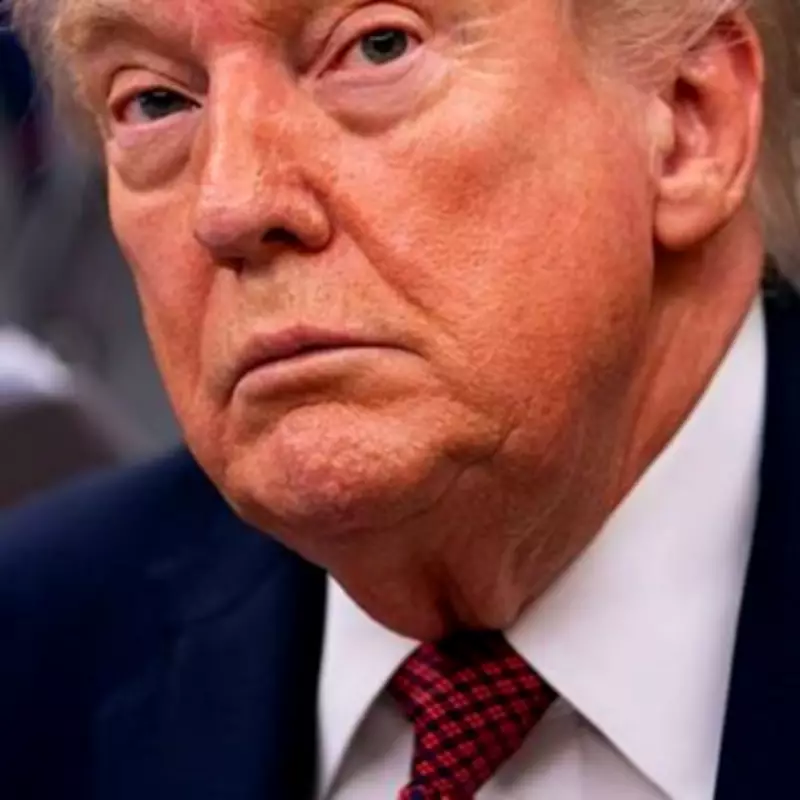
Trump Warns of Renewed Iran Strikes as Ceasefire Deadline Approaches
Donald Trump has declared that the United States is prepared to resume military strikes against Iran if significant progress is not achieved during last-minute peace talks in Pakistan. The American president emphasized that the US military is "raring to go" as the deadline for a two-week ceasefire with Tehran rapidly approaches.
Ceasefire Extension Unlikely Amid Tense Negotiations
In an interview with CNBC, Trump explicitly stated his reluctance to extend the current ceasefire, which is set to expire imminently. He asserted, "I don't want to do that. We don't have that much time." Instead, he expressed confidence that the United States would ultimately secure a favorable agreement, claiming, "We're going to end up with a great deal."
The president highlighted the US's strong negotiating position, citing military successes that have allegedly weakened Iran's capabilities. "We've taken out their navy, we've taken out their air force, we've taken out their leaders," Trump remarked, further suggesting that current Iranian leadership is "much more rational" following what he described as regime change.
High-Stakes Talks Amid Regional Tensions
Uncertainty surrounds the upcoming negotiations in Islamabad, exacerbated by the ongoing tense standoff in the Strait of Hormuz. This critical maritime route has experienced significant disruptions to international shipping, effectively causing a global economic shock and driving energy prices to unprecedented levels.
UK Foreign Secretary Yvette Cooper, engaged in discussions to safeguard the strategic waterway, characterized the situation as "a critical diplomatic moment" in the escalating crisis. The United States delegation will once again be led by Vice President JD Vance, while Iran is expected to appoint parliament speaker Mohammad Bagher Qalibaf as its chief negotiator.
Iran's Firm Stance Against US Threats
Qalibaf has vehemently rejected Trump's combative approach, accusing the American president of attempting to transform the negotiating table into "a table of surrender." In a social media post, he declared, "We do not accept negotiations under the shadow of threats," and indicated that Iran is preparing to "reveal new cards on the battlefield."
The timing of the Islamabad talks remains unconfirmed, with the White House noting that Vice President Vance was still in Washington as of Tuesday afternoon. This ambiguity adds to the mounting pressure as the ceasefire deadline draws nearer.
International Response and Contingency Planning
Prime Minister Sir Keir Starmer has convened the Middle East Response Committee to address the conflict's impact on public pressures. Government discussions have focused on several critical areas:
- Ongoing contingency planning with fuel suppliers and airlines
- Diplomatic efforts to support US-Iran negotiations
- Military planning for post-war missions to keep the Strait of Hormuz open, in collaboration with France
- Measures to weaken the link between gas and electricity prices
As the world watches these developments unfold, the potential for renewed conflict hangs in the balance, with Trump's warning echoing through diplomatic channels: "Well, I expect to be bombing because I think that's a better attitude to go in with. But, you know, we're ready to go."