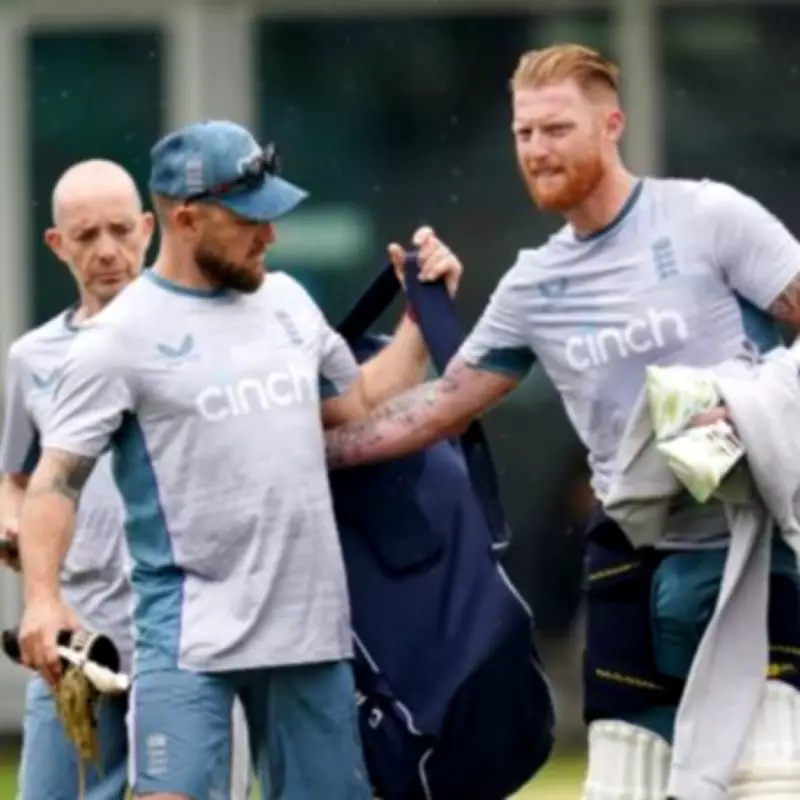
England's post-Ashes reckoning moves from theory to practice in a fortnight's time. Bazball 2.0. Or is it 3.0? 4.0? Who knows. Whatever version we are entering into, England host New Zealand for a three-Test series - with Brendon McCullum, Rob Key and Ben Stokes still in charge, having survived that Ashes review - from June 4.
Much of what England have put in place since January's chastening finale in Australia warrants genuine credit. The latest development arrived only last week, with confirmation former England women's wicketkeeper Sarah Taylor will take charge of fielding drills, her appointment adding further expertise to an increasingly expansive backroom structure.
The 36-year-old is the first woman to coach an England men's side in a major sport, and she boasts 226 caps in all three formats at international level for England, playing no small part in the World Cup victory in 2017.

Fielding Concerns Addressed
England's fielding standards came under heavy scrutiny during the winter. The criticism was sharpened by the absence of a specialist fielding coach on tour, and the sense McCullum was overseeing a deeply unserious cricketing culture. Instead, Baz leaned on his assistants, Jeetan Patel and Marcus Trescothick, both of whom were dispatched time and time again to explain another Harry Brook brain fart or Ben Duckett's average of 16.16 with the air of reluctant emissaries. Think of them as cricket's equivalent to Babs and Bunty being sent to the factory to be turned into meat pies in Chicken Run.
Alongside Taylor, England's pre-series camp at Loughborough University will welcome Mike Yardy, the England Under-19s head coach, and Durham's Will Gidman. Troy Cooley, meanwhile, will join preparations before the first Test, having been appointed over the winter as national pace bowling lead. Oh, and Tim Southee continues in his role as bowling coach.
A More Professional Environment
England's determination to cultivate a more polished, professional environment in the wake of the winter has extended as far as the kitchen, with the squad now set to be accompanied by a full-time chef. The problem? There is an odd man out. And that man is McCullum.
One of Baz's first decisions after taking charge in 2022 was to remove nutritionist Emma Gardner from the day-to-day setup as part of a broader trimming of backroom staff, the intention being to simplify the environment and reduce the noise around players. Now, however, the pendulum appears to have swung back towards greater specialisation.
An advert for the newly created role of "Performance Chef Consultant" states the successful applicant will be expected to "plan and execute menus that support training adaptation, match performance and recovery" - the language of marginal gains returning to a dressing room once sold on freedom and informality.
It is hard to know what Baz makes of all this. After the fifth Test Down Under, the 44-year-old insisted he was "keen" to remain in his job, but it would "depend what changes" are imposed upon him. McCullum said: "I'm not against evolution and not against progress. However, you need to stand for something. You need to believe in your methods and you need to believe in how you go about things."
McCullum's Philosophy
Well, we know what McCullum stands for. When he assumed control of England's Test side in 2022, he was baffled to discover bacon sandwiches were banned. To McCullum, it epitomised a culture he believed had become overly prescriptive. One of the earliest symbols of his looser, player-led regime was therefore the salvation of the bacon butty - a small act, perhaps, but one presented at the time as evidence that enjoyment and performance need not exist in opposition.
There are countless other examples: dispensing with the two senior analysts, Nathan Leamon and Freddie Wilde, to place less emphasis on data, the players being encouraged to take more responsibility for preparation and performance, a reduction in the number of support staff on match days to declutter the dressing room, fewer team meetings.

When grilled on the outfield in Sydney, McCullum suggested he would be open to tweaks in a post-Ashes world, yet his actions since have sat awkwardly against those sentiments. Baz has missed all 54 County Championship fixtures staged so far this season, choosing instead to arrive in the country this week - a mere fortnight before the Test summer begins. Sure, the selections - James Rew, Emilio Gay, Sonny Baker - have given credence to the theory this England management are treating the County Championship with more respect. But 54 YouTube live-streams are not a substitute for attendance. And that is even if Baz has bothered to pay the £20 to Lancashire to access theirs.
Stokes' Growing Influence
So where does that leave England? Perhaps at a point where, more than at any stage since this regime began, the team feels increasingly Stokes' rather than McCullum's. You would bet money on Gay, Stokes' Durham teammate, opening the batting with Duckett at Lord's next month, a selection in which the captain's influence is likely to be considerable. Stokes' respectful approach to the domestic game does not end there, either, with the talismanic skipper doing the hard yards in Division One, taking the new ball and opening the bowling in a bid to rediscover rhythm and resilience alike. There have been - I am sure you have read - rumours of a divergence between Stokes and McCullum in their approach to the Test team. If reports of the chasm hold water, consider a Stokesian coup underway.
There has long lingered the suspicion that England's summer could veer badly off course this summer. Having survived the post-Ashes reckoning despite considerable public scepticism, Key, Baz and Stokes were always destined to begin this next chapter under intense scrutiny, with little margin for further error - whether in performance on the field or presentation away from it.
As it stands, two members of England's leadership triumvirate have fireproofed themselves to the best of their ability. New Zealand are no slouches, and cricket remains a sport that delights in making confident forecasts look foolish by September. We will see where Stokes and Key are at the end of the summer. For McCullum, though, there is an emerging sense - fair or otherwise - that England are already beginning to evolve beyond him.