Economy Minister Adam Price has described Cardiff Airport as "mission critical" for boosting Welsh economic competitiveness. The Plaid Cymru minister, who holds the portfolios for Economy, Connectivity and Energy, stated that the loss-making airport has significant potential to follow the example of its nearest rival, Bristol Airport, by increasing passenger numbers and achieving profitability.
Government Support and Legal Challenges
The Rhoose-based airport was acquired by the Welsh Government in 2013 for £52 million from Spanish firm Abertis. Since then, including the acquisition price, the airport has received £200 million in government support, with a substantial amount of repayable debt converted into equity. In March, the former Labour Welsh Government successfully defended a legal challenge from Bristol Airport at the Competition Appeal Tribunal, which ruled that a subsidy package of £205 million over the next decade did not breach state aid rules. Approximately £20 million has already been utilized, though Bristol Airport is considering an appeal. Around £100 million of the subsidy is earmarked for route development.
Passenger Growth and Diversification
Long-term, Cardiff Airport aims to return to two million passengers annually, following a nearly 9% increase last year to just under one million. In 2019, pre-pandemic, the airport attracted 1.6 million passengers. The subsidy support will also help diversify revenue streams beyond passenger-related activities, including aviation maintenance, repair and overhaul (MRO) and freight services. Plaid Cymru is also pressing for the devolution of air passenger duty, though successive UK governments have rejected this proposal over the past decade.
Minister's Vision
Mr Price emphasized the importance of global connectivity: "Having direct global links through an airport, and certainly in this case Cardiff Airport, is absolutely mission critical to closing the prosperity gap. Having a globally connected airport is well correlated with regions and nations that have experienced accelerated economic growth." He outlined a strategy focusing on scaling up Welsh firms, attracting foreign direct investment, and building supply chain linkages. "A very basic level investors every day are looking at options across the world and one of the first things they'll do is go on Skyscanner. If they find that they actually can't fly directly easily to your country, then they're going to maybe go somewhere else," he added.
New Transatlantic Route
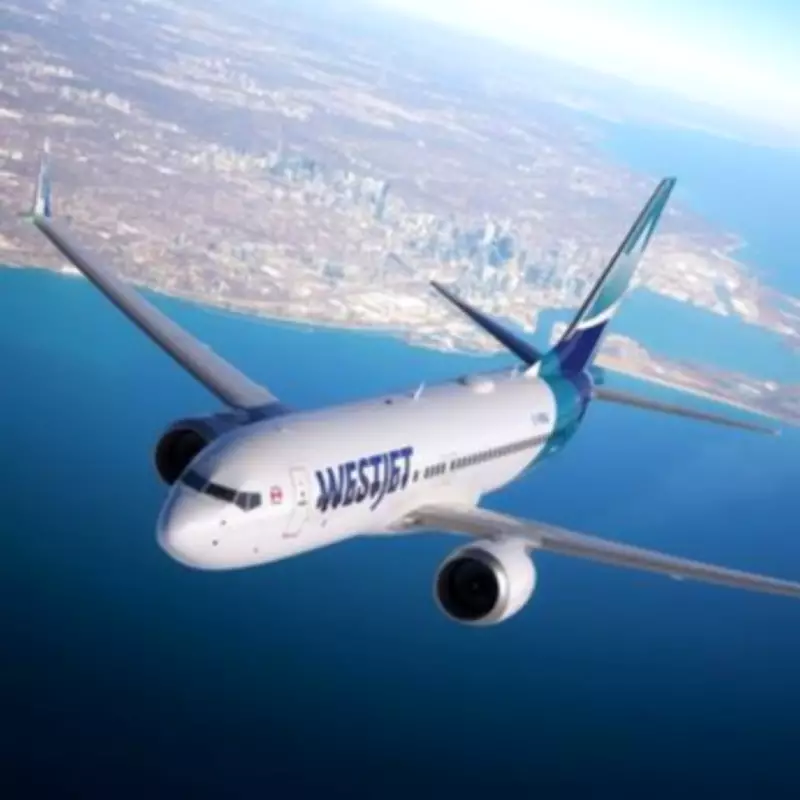
This week, Cardiff Airport launched a new direct scheduled service to Canada, operated by WestJet. The seasonal service to Toronto Pearson International Airport will run four times a week, offering around 30,000 tickets. Toronto Pearson is a major hub with over 100 connecting destinations across North America. Mr Price hailed the route as "a powerful signal to the world that our nation is open for business. Direct transatlantic connectivity like this is exactly what Welsh businesses need to reach new markets, attract investment and grow." Jon Bridge, chief executive of Cardiff Airport, stated: "The arrival of WestJet's direct service gives customers easier access to Toronto and onward destinations across North America; it firmly strengthens Cardiff Airport's position as the international gateway for Wales." Chris White-DeVries, WestJet senior manager hub strategy and airport affairs, added: "The launch of service between Cardiff and Toronto is an exciting milestone both for WestJet and the communities the route serves. Cardiff plays an important role in our growing transatlantic network."
Financial Performance
In its last financial year to March 2025, Cardiff Airport reported revenues of £19.8 million, up from £19.33 million the previous year. On a pre-Ebitda basis, excluding exceptional items, it posted a positive £5.7 million. However, after accounting for an £11.8 million Welsh Government grant linked to a post-Covid recovery plan, Ebitda turned negative at £5.57 million. Since acquisition, the airport has accumulated losses of around £60 million. In contrast, Bristol Airport attracted 10.8 million passengers last year, with around two million from South Wales. Its 2024 revenues grew to £204.4 million, with pre-tax profit rising to £12.2 million. Bristol's largest revenue source was car parking at £75.6 million, more than three times Cardiff's total revenues.
Collaboration with Bristol?
Mr Price acknowledged that Bristol Airport has demonstrated that airports can expand profitably while serving as vital economic gateways. When asked about potential collaboration with Bristol, owned by Macquarie Asset Management, he said: "Let's for now just say I think there's huge latent potential there (Cardiff) if we get that right, following Bristol Airport's growth pathway by expanding passengers and connections. That's the kind of pathway we want to go on with Cardiff Airport. How do we get there? I think I need to have some conversations with some of the board and the commercial leadership, but it is certainly something that we think is really important."