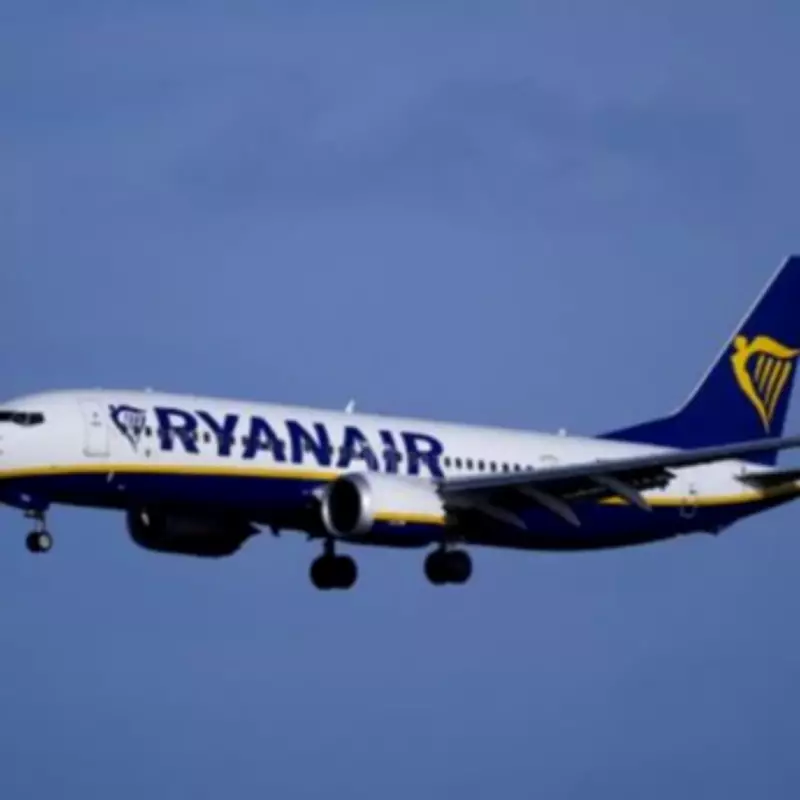
Ryanair CEO Slams 'Shambolic' EU Border System Impacting UK Tourists in Spain
The chief executive of Ryanair has launched a scathing attack on the European Union's newly implemented Entry-Exit System (EES), describing its rollout as chaotic and directly impacting British tourists traveling to Spain. Michael O'Leary branded the system "a shambles" that has created significant disruption at border crossings across Europe.
New Border Controls Create Travel Chaos
Europe's airports and airlines began implementing the Schengen Entry-Exit System on Friday, April 10, 2026. The computerized system replaces manual passport stamping for non-EU nationals, including UK travelers, by electronically recording passport details and biometric information such as facial images and fingerprints at participating borders.
Olivier Jankovec, Director General of ACI EUROPE, and Ourania Georgoutsakou, Managing Director of Airlines for Europe (A4E), have warned that passengers entering the Schengen area face potentially longer wait times at border control during the Easter period due to ongoing operational challenges with the EES implementation.
Brexit Connection Alleged
Michael O'Leary has explicitly linked the border chaos to Brexit, suggesting the European Union is punishing Britain for its departure from the bloc. In comments to The Times, O'Leary stated: "There's a bit of Brexit in this too. Here, you voted for Brexit - join the queue."
While the EES affects all non-EU travelers entering the Schengen Area, industry experts express particular concern about its impact on Spain, which remains the top destination for British tourism within the European Union. Palma Airport in Mallorca, one of Spain's most popular airports, has confirmed the system monitors entries and exits of non-EU nationals visiting for short periods.
Industry Calls for Suspension Flexibility
ACI EUROPE and A4E leaders have reiterated their call for the European Commission and member states to extend the possibility of fully or partially suspending the EES where operationally necessary throughout the entire 2026 summer season. They argue this flexibility has proven vital in preventing catastrophic operational disruptions during the system's progressive rollout.
The industry groups further recommend that if technical and operational issues with the EES remain unresolved, this suspension flexibility should continue to be available during future peak travel periods, including the winter 2026/2027 season. Their statement emphasizes that without such measures, travelers face potentially severe delays and disruptions at border control points across popular European destinations.
The controversy highlights growing tensions between airline operators and European authorities over border management systems that directly affect tourism flows, particularly between the UK and popular Mediterranean destinations like Spain's Balearic Islands.