Labour Ministers Face Intense Parliamentary Scrutiny Over EV Tax Expansion Fears
Labour government officials have been subjected to rigorous questioning in Parliament amid growing concerns that a newly introduced pay-per-mile tax for electric vehicles could serve as a precursor for extending similar charges to petrol and diesel cars. The debate has ignited fierce political clashes, with opposition MPs warning of severe consequences for rural areas.
Conservative MP Issues Stark Warning Over Rural Impact
Conservative Party MP Harriet Cross delivered a forceful critique, arguing that applying pay-per-mile taxes to conventional vehicles would have devastating effects. "It would cripple rural communities, rural families, and rural businesses," she asserted during the parliamentary session.
Ms Cross elaborated on the potential repercussions, describing the government's approach as a "slippery slope" that began with EVs. "If the system progresses to cover petrol and diesel vehicles, it will be a hell of a lot worse for a lot of people," she cautioned, highlighting the practical challenges faced by her constituents.
She pointed to the daily realities of rural life, noting that many residents undertake lengthy commutes. "Perhaps Treasury Ministers cannot imagine having to do a 77-mile round trip to get to work, but that is what my constituents do, and they are being penalised for it," Ms Cross told fellow MPs.
Labour Minister Responds to Motorist Concerns
In response to the mounting anxiety among road users, Labour Party Exchequer Secretary Dan Tomlinson addressed the issue directly. He emphasized that petrol vehicles already contribute through existing mechanisms. "Petrol cars do pay fuel duty, which, because it is on a litre of petrol, is a charge that is determined by how much someone drives," Mr Tomlinson stated, aiming to reassure drivers concerned about additional levies.
Tory Shadow Minister Accuses Labour of "Salami Tactics"
The political tension escalated as the Conservatives' Shadow Transport Secretary, Richard Holden, launched a scathing attack on the government's strategy. He accused Labour of employing "salami tactics" with the pay-per-mile tax, suggesting a piecemeal approach to increasing charges.
Mr Holden criticized the planned introduction of the tax at a rate of 3p under the new eVED system, alongside other seasonal charges he dubbed a "back to school tax" in September, a "Christmas shopper tax" in December, and "springtime for taxes" in March. He painted a vivid picture of governmental coordination, remarking, "The truth is that the Department for Transport and the Treasury working together is more like watching an episode of 'Hustle'. The con is on."
Minister Cites Global Factors Behind Tax Decisions
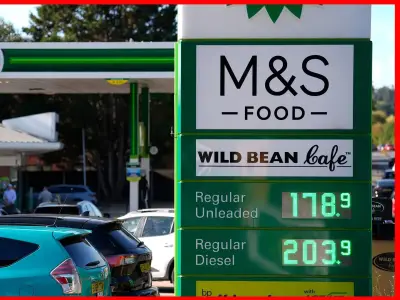
Amid the heated exchanges, Mr Tomlinson pointed to broader economic and geopolitical factors influencing the government's decisions. He referenced ongoing conflicts, such as the war in the Middle East and Iraq, as contributors to fuel price volatility. "Rapid de-escalation remains the best way to protect people from further fuel price increases," he informed the Commons, linking international stability to domestic tax policies.
The parliamentary session underscored deep divisions over transportation taxation, with Labour defending its EV-focused measures while facing persistent fears of broader application. The debate highlights the ongoing struggle to balance environmental goals with economic realities, particularly in rural regions where driving distances are substantial.