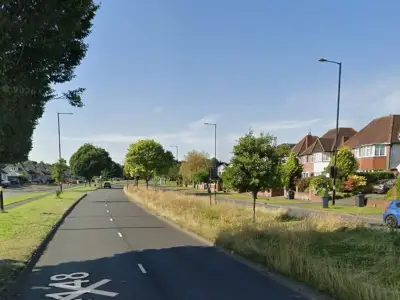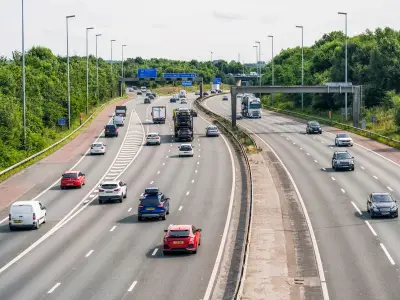
Lisa Smart MP recently led a debate in Parliament on the importance of rail freight, arguing that improving the UK's rail freight network would dramatically reduce congestion in areas like Stockport. She noted that roads are packed locally and that more needs to be done to shift vehicles from roads to tracks.
Benefits of rail freight for communities
According to Smart, rail freight can deliver real benefits such as cleaner air, less congested roads, new homes, and a more resilient economy. She emphasized that rail freight is not a niche industry concern but should be a national infrastructure priority.
However, the UK currently moves only around 7 percent of its freight by rail, less than half the European average, according to the Rail Freight Group.
Case study: Tarmac site in Bredbury
Smart highlighted a Tarmac site in Bredbury, which receives daily freight trains carrying construction materials from the Peak District, North Yorkshire, and South Wales. She visited the site last year and noted the tangible benefits: a single train delivery can provide enough materials to build up to 30 new homes while removing around 60 HGV movements from the A6 and surrounding residential streets.
"That's 60 fewer lorries on roads that my constituents use every day to get to work, to school, to the shops," Smart said.
Challenges facing rail freight
Smart pointed out that the UK has consistently prioritized passenger services, squeezing freight around them. The fundamental problem is the speed differential: freight trains typically run at 60-75 miles per hour, a limit set in the 1960s, while intercity passenger trains run at 100-125 miles per hour. This gap causes practical problems in integrating the two services.
Additionally, nearly all rail freight in the UK is diesel-hauled, requiring a clear path to electrification across the network to get more electric freight trains on tracks.
Impact on roads and housebuilding
Rail freight reduces road damage by replacing HGVs that cause disproportionately more wear on road surfaces than other vehicles. It also supports key industries like housebuilding, which rely on rail freight for key components. The materials needed to deliver new homes can move by rail at scale, unlike road haulage, which adds to gridlock on roads like the A6, Bents Lane, or Stockport Road.
Smart warned that the Railways Bill, which creates "Great British Railways," gives it the duty to reserve capacity for its own services without explicit protections for freight. This could reduce the amount of freight on tracks instead of increasing it.
"Anyone who has been stuck in traffic on the A6, or near the Bredbury roundabout, knows that we need to do something dramatic to reduce congestion, and this could be a real improvement to people's lives in our area," Smart concluded.