£130 Billion 'Northern Loop' Mega-Train Proposal Submitted for UK and Ireland
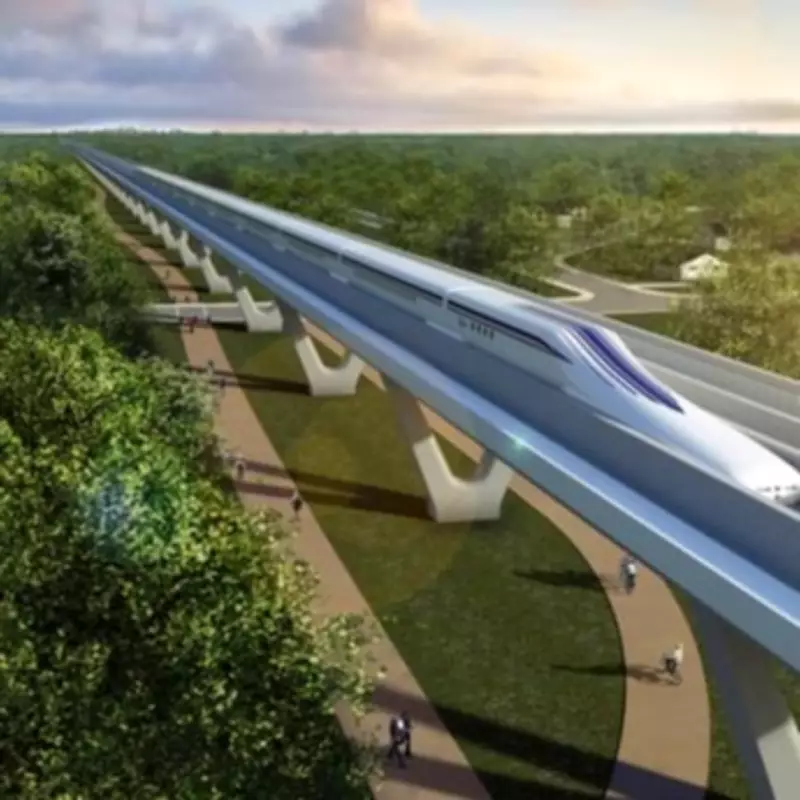
Groundbreaking plans for a futuristic £130 billion mega-train project, designed to link the British Isles in an entirely novel configuration, have been officially submitted. This high-speed rail network, dubbed the "Northern Loop," would connect nine major cities across England, Ireland, Wales, and Scotland via an elevated viaduct system.
Connecting Key Urban Centres in a Northern Arc
The proposed route would create a direct, non-stop rail link between Liverpool, Manchester, Leeds, Newcastle, Edinburgh, Glasgow, Belfast, Dublin, and Bangor. This ambitious infrastructure plan aims to revolutionize inter-city travel across the region, fostering greater connectivity and economic integration.
The concept has been put forward by Chris Williamson, president of the Royal Institute of British Architects (RIBA), who submitted it as a proposal for this year’s Royal Academy summer exhibition. The project envisions trains operating at exceptionally high speeds, with a proposed top velocity of 480km/h (298mph).
Technical Details and Expert Scrutiny
Rail consultant William Barter has raised important questions regarding the technical feasibility of certain aspects of the proposal. He highlighted that the suggested speed of 480km/h significantly exceeds the 360km/h (223mph) planned for the HS2 line, potentially challenging traditional wheel-on-rail systems.
In response, Mr. Williamson indicated that magnetic levitation (Maglev) technology is a viable option, citing recent Japanese systems as a benchmark for the project's ambition. "The speed reflects that ambition," he stated, emphasizing the need for innovative solutions.
Another point of discussion is the train length. The proposed 50-metre trains are considerably shorter than the approximately 400-metre trains anticipated for HS2. Mr. Williamson argues that "frequency is the key issue rather than train length," explaining that shorter trains could enable higher service frequency and more compact, efficient station designs.
This mega-train initiative represents one of the most substantial and visionary transport infrastructure concepts in recent years, aiming to reshape regional travel dynamics across the British Isles. The submission marks the beginning of what will likely be extensive technical, financial, and environmental evaluations.