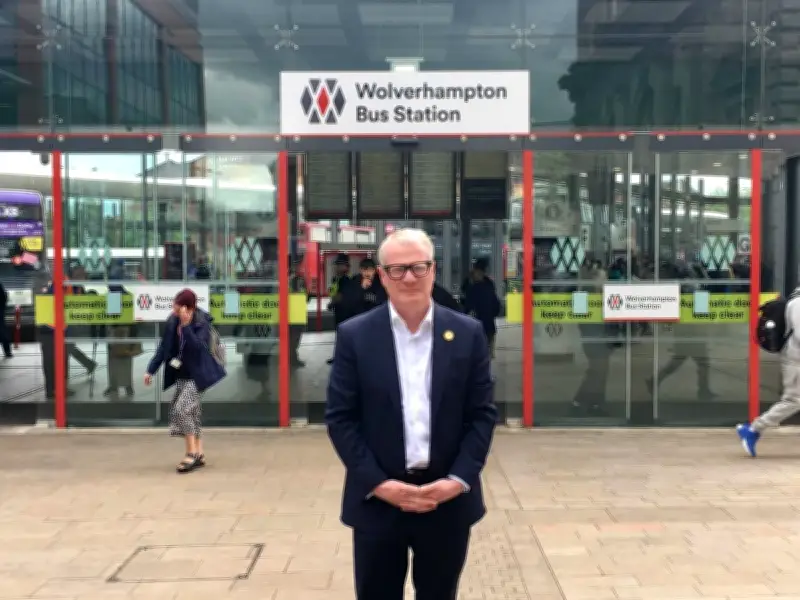
The Mayor of the West Midlands has said not buying National Express's entire bus operations for the region would have been "catastrophic" for passengers. Richard Parker said he could not understate the importance of the Government-backed acquisition, announced on Tuesday (August 18), in terms of saving thousands of jobs and hundreds of services.
Mr Parker said the move will also help build towards his long-stated ambition of bringing the full network under public control. The £24 million sale was confirmed by Mobico Group, the parent company of National Express West Midlands, which added it was "de-risking" the company from the uncertainty of the franchising move.
Protecting services and jobs
Mr Parker said: "I'm really pleased. A lot of hard work has gone into what we've announced and I don't think anyone can understate its importance. What we did today, a big decision, was all about ensuring we protect bus services and jobs because there was a real risk hundreds of buses would have been withdrawn, thousands of jobs would have been put at risk and frankly the private operator wanted to withdraw from the market."
"We know how important bus services are to people in this region, whether they are getting to work, school or hospital appointments and they depend on the buses. National Express have got a near monopoly here and the impact for this region would have been profound, it could have been catastrophic. We had to make this intervention and, by doing so, it makes our transition to the next stage of franchising more straight forward and, having protected the market, it allows us to properly effectively plan for the future."
Transition to franchising
The Mayor said the move means West Midlands Combined Authority will be directly operating services for a short period of time. But he added the franchise model would move forward and ensure public control of the fares, services and timetables.
Mr Parker said: "The reason we did what we did was not just because the loss of buses would have been so devastating, but also secures our path for franchising. We have that objective which was put in place as soon as I got elected. We start that process, operating franchised services next Spring next year. What we did was about protecting both services and jobs but also the path to franchising. We've got absolute confidence that is the right thing to do for this region and we're building on the success they've had in Manchester."
Government support and passenger benefits
Simon Lightwood, Minister for Buses and Local Transport, added: "If you look at Greater Manchester's Bee Network what you've seen there is a 14 per cent increase year on year on passenger numbers in the areas first franchised. People are literally voting with their feet because they can trust the buses are going to get them where they need to get to, they are going to be affordable, they are going to be safe. They are looking at buses again which is really important."
"Passenger satisfaction nationally is around 65 per cent. In Greater Manchester it's 75 per cent so you're starting to see these very early days of franchise the difference it makes when local leaders are given the powers and the money to shape bus services around the needs of their community. I commend the actions of Richard in safeguarding those 4,800 jobs, countless hundred bus services serving six million people across the region. It's a really important intervention."
Mr Lightwood added: "Nationally, the £2 bus fare cap coming back into place in January and we also announced today that from April next year those time limits on concessionary bus passes for disabled people will be removed so they can use them 7 days a week."