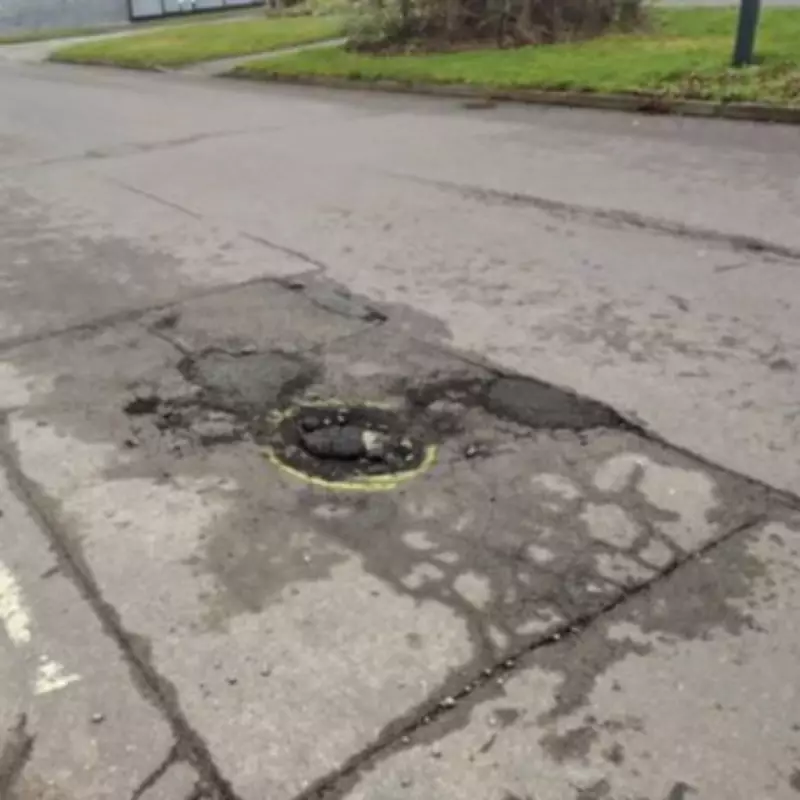
Warwickshire Highways Director Defends Temporary Pothole Repairs as 'Necessary Evil'
Warwickshire County Council's director of highways has insisted that crude short-term pothole fixes are a necessary evil, even while acknowledging that public complaints about them are justified. Richard Fenwick described a difficult few months for the county's road network, with snow, ice, and prolonged wet weather leaving many roads in tatters.
Surge in Pothole Reports and Emergency Response
The county requested 4,962 pothole fixes across the first two months of this year, nearly triple the 1,678 raised during the same period in 2025. To address this crisis, more than 30 gangs have been working seven days a week since Christmas, trying to catch up with the backlog.
Fenwick told the council's communities overview and scrutiny committee that for the sake of speed and hazard mitigation, over half of current repairs involve little more than a dollop of tarmac as a temporary measure. He acknowledged that some of these quick fixes break away within days, but emphasized the safety imperative.
The Tough Choice Between Speed and Permanence
"Doing it right first time is best for value for money and means fewer revisits, but the permanent saw-cut fixes take significantly longer to do," Fenwick explained. "We have to choose between getting there in time to try to save people's wheels from being broken or worse, even though we know we might have to go back, or leaving the hole there for longer."
The temporary fix method involves simply sticking hot tarmac into the hole as it is, while a permanent patch requires:
- Cutting into the road surface
- Removing debris under proper conditions
- Filling the prepared area
- Pressing it into the road surface
Current Challenges and Future Outlook
Warwickshire currently has a backlog of 1,624 permanent repairs, including revisits to temporary fixes. Fenwick noted that the council aims to keep temporary fixes between 10 and 20 percent of overall jobs, but the current rate stands at 56 percent - "not where we want to be."
He attributed the dramatic increase in potholes primarily to weather conditions rather than sudden deterioration of the road network. "The road network certainly hasn't got that much worse in one year, it is very much down to the weather conditions with a few freezes in between," he said.
Balancing Safety, Cost, and Practical Considerations
Fenwick highlighted several factors that complicate the repair process:
- Sometimes cutting into a weak road for permanent repairs can make surrounding areas deteriorate further
- In some cases, it's not sensible to spend money on permanent repairs when wider planned works will address the area later
- The potential for insurance claims, vehicle damage, or injuries from unrepaired potholes must be weighed against the time needed for permanent fixes
"We are in a time of needs-must and we don't always get that right," Fenwick admitted. "Sometimes they fail within a few days rather than a few weeks, but the insurance claims, damage or injury that can come from not responding as fast as we can to make it safe is something that has to be considered."
Despite the challenges, Fenwick remains hopeful that the backlog will decrease as weather conditions improve, allowing crews to focus more on permanent repairs that provide better long-term value and road quality.