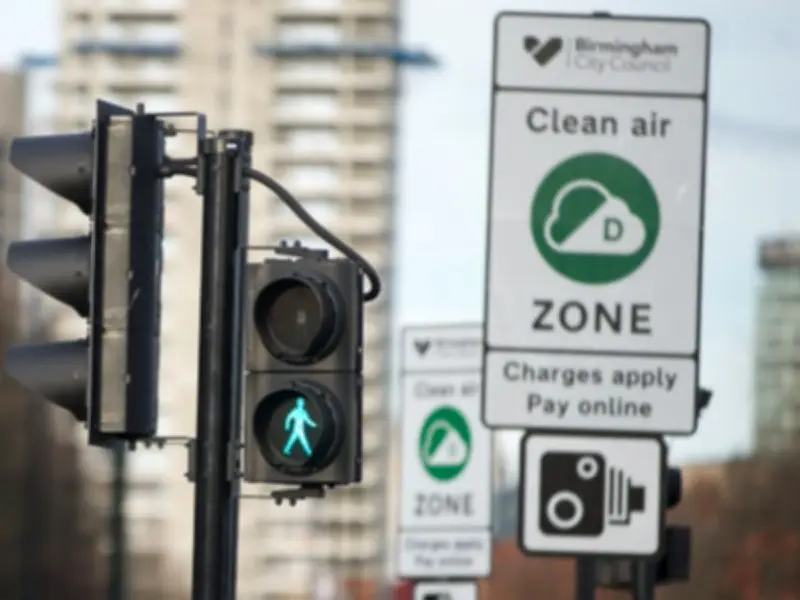
The House of Lords has approved new regulations that will double the fees local authorities pay for processing Clean Air Zone transactions, effective from September 2026. The fee will increase from £2 to £4, and the charging period will be extended from March 2027 to March 2031.
Seven Clean Air Zones Affected
Seven Clean Air Zones currently operate across England, covering Bath, Birmingham, Bradford, Bristol, Portsmouth, Sheffield, and Tyneside. Transport Minister Lord Hendy of Richmond Hill defended the changes as necessary to move towards full cost recovery for the Labour government's central payment processing service.
Hiking the fee to £4 will achieve an estimated 90 per cent cost recovery over the service's lifetime from 2020-21 to 2030-31, while the remaining 10 per cent will come from general taxation, he said.
Criticism from Opposition
Conservative Party peer Lord Moylan slammed the fee increase as "another stealth tax on motorists." Earl Russell, speaking for the Liberal Democrats, warned that doubling the central service fee "directly reduces the resources available for local transport investment."
How Clean Air Zones Work
Each local authority sets their level of charge for vehicles entering a zone. The local authorities for each zone have slightly different rules. If your vehicle meets the minimum emission standard or higher, it can enter any Clean Air Zone without a charge. You can find your vehicle's emission standard in your logbook (V5C) or from your vehicle manufacturer.
If you do not pay the charge within the 13-day payment window, local authorities will issue a Penalty Charge Notice for all non-compliant vehicles that fail to pay on time. The zones operate 24 hours a day, seven days a week, every day of the year. The charge period runs from midnight to midnight. The maximum payment that can be made in a single transaction is £5,000. Payments exceeding this amount need to be split into separate transactions.