Police officers conducting a motorway patrol on the M6 were left utterly stunned by a dangerous discovery made during a routine traffic stop. The incident, which unfolded in the West Midlands, has highlighted critical road safety concerns and led to immediate enforcement action.
A Suspicious Vehicle Draws Police Attention
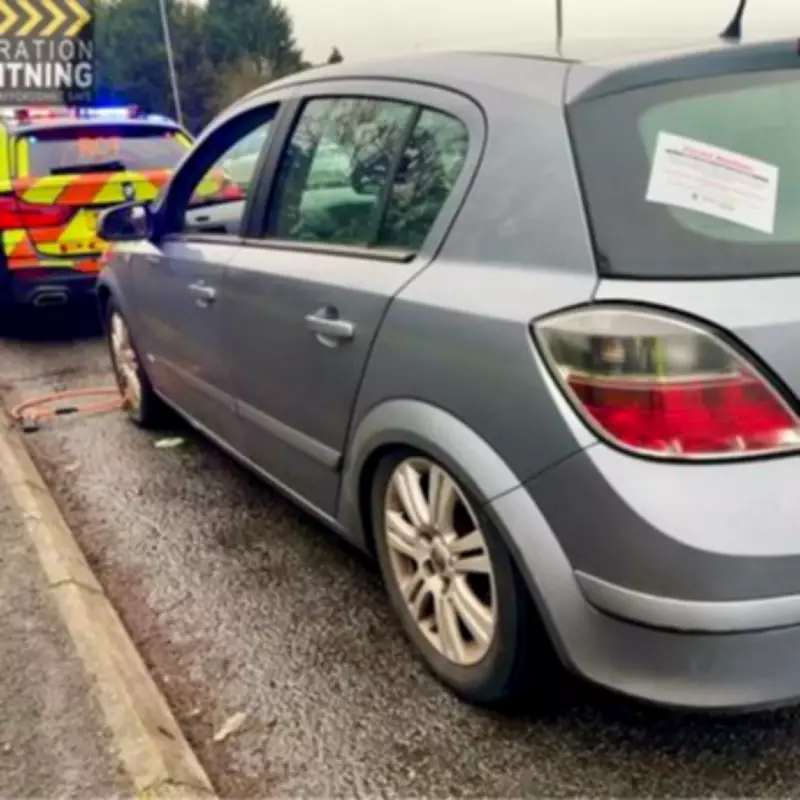
A grey-coloured Vauxhall initially caught the attention of vigilant officers from Staffordshire Police due to an apparent issue with its suspension system. The vehicle appeared to be sitting unusually low, particularly on the rear wheel, prompting the decision to pull it over for a closer inspection on the busy M6 motorway.
Shocking Discovery Under the Car
Upon conducting a thorough examination of the vehicle's underside, officers discovered that the coil springs were severely deformed. This critical component of the car's suspension system was in such a compromised state that it presented a significant safety risk, not only to the driver but to all other road users sharing the motorway.
Immediate Enforcement Action Taken
In response to this dangerous finding, police had no choice but to issue an immediate prohibition order on the vehicle. This legal measure effectively bans the car from being driven any further due to its unsafe condition. Additionally, the driver was formally reported for the offence.
Police Share Warning on Social Media
Staffordshire Police's operational account, StaffsRCT, subsequently shared details of the incident on X (formerly Twitter), accompanied by two revealing photographs. One image clearly showed the vehicle sitting abnormally low on its rear wheel, while the other provided a close-up view of the deformed coil spring that had caused such concern.
The police statement accompanying the images read: "This Vauxhall was stopped on the M6 as there appeared to be an issue with his suspension. On examining the vehicle the coil springs appeared to be deformed. Vehicle has been prohibited and driver reported."
Understanding Vehicle Prohibition Orders
When police issue a prohibition order, it represents a serious enforcement action typically reserved for vehicles deemed too dangerous to remain on public roads. Such orders usually mean the car cannot be driven until extensive repairs have been completed and the vehicle has passed appropriate safety inspections, serving as a crucial protective measure for all road users.
This incident serves as a stark reminder of the importance of regular vehicle maintenance and safety checks, particularly for critical components like suspension systems that directly affect handling and stability at motorway speeds.