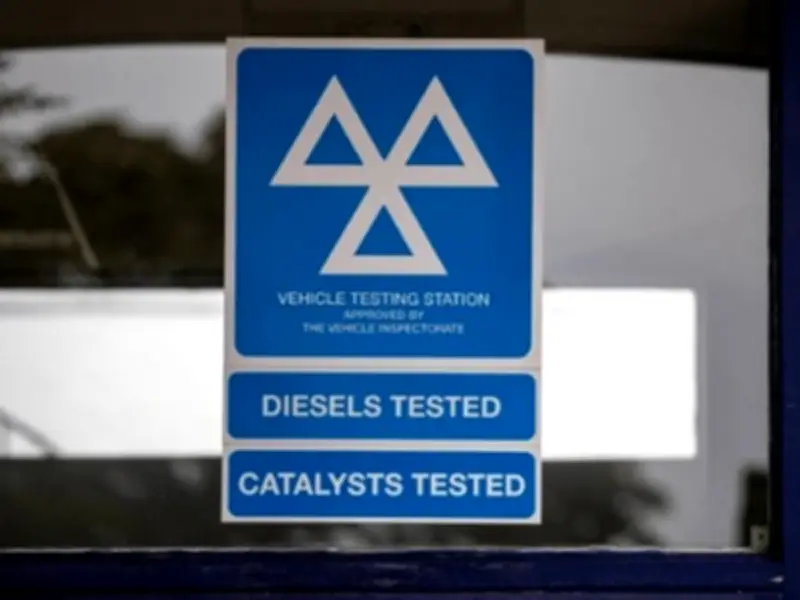
Motorists face a trio of changes on Britain's roads this August as Prime Minister Andy Burnham enters his first full month in office. The most immediate shift comes from the Driver and Vehicle Standards Agency (DVSA), which is rolling out a new MOT testing feature nationwide.
From 3 August 2026, MOT testers will be able to take and upload a photograph of a vehicle at the time of its test using a smartphone, tablet or other compatible mobile device. The photos are sent directly to the MOT testing service and are not stored on the device's camera roll or photo gallery, providing additional evidence that a vehicle was physically present at the garage.
The feature arrives after two successful trials involving 311 garages across Great Britain. The DVSA reports that tester feedback during these trials was overwhelmingly positive. "Many reported that the feature was straightforward to use and that it had little or no impact on overall testing times," the agency said. "The trials also helped us identify opportunities to improve the service. As a result, we were able to improve the photo upload process to improve performance, reliability and the overall user experience."
MOT photo upload: how it works
The national rollout will initially give around 2,500 garages access to the photo-upload feature, marking the first phase of a wider expansion. The DVSA stressed that taking and uploading a photo is entirely optional. Testers can continue an MOT test without capturing an image by selecting the most appropriate reason within the service, and no test result will be blocked solely because a photo could not be taken or uploaded.
This move aims to strengthen the integrity of the MOT scheme, which checks the roadworthiness of vehicles over three years old. According to the DVSA, the new visual evidence will help confirm that a vehicle has actually attended a test, making it harder for dishonest operators to issue certificates without a proper inspection.
Road Safety Strategy: 18 new vehicle technologies
Beyond the MOT update, the Labour government has also been progressing its Road Safety Strategy, introduced earlier this year. At the start of 2026, five public consultations were launched, but so far the Government has responded to only one of them. The Department for Transport (DfT) has confirmed it intends to mandate 18 vehicle safety technologies for mass-produced vehicles through Great Britain type approval.
Those consultations concluded in May, and the DfT indicated it hoped to publish its official response within five months, meaning an announcement could land as early as August. While specifics have not been fully disclosed, the mandated technologies are expected to include advanced driver assistance systems such as automatic emergency braking, lane-keeping assistance and intelligent speed adaptation, which could significantly reduce collisions and fatalities.
Driving licences: GOV.UK App update
Drivers can also expect changes to how they access their licence and vehicle information. The Government Digital Service (GDS) recently announced it is working to introduce a Chat feature to the GOV.UK App, the same platform where digital driving licences will be stored. Working alongside the DVLA, the GDS confirmed that motorists would soon be able to view their driver and vehicle details directly within the app, making it easier to check endorsements, expiry dates and vehicle tax status.
The new Chat feature is designed to provide instant answers to common driving-related queries, reducing the need to call helplines or visit physical offices. This digital push aligns with the government's wider ambition to modernise public services and make motoring admin more convenient.
What these changes mean for drivers
For the millions of motorists across Great Britain, August 2026 brings a blend of innovation and regulation. The MOT photo upload enhances transparency without adding burden to the average driver, since it is optional and conducted by the tester. The potential road safety technologies, if adopted, could save hundreds of lives each year by preventing common types of crashes. Meanwhile, the GOV.UK App improvements promise to simplify everyday tasks like checking a licence or taxing a vehicle.
Andy Burnham, who became Prime Minister in July after the Labour Party's general election victory, has made road safety and digital public services central themes of his early agenda. As his first full month in office draws to a close, these three changes signal a proactive approach to motoring policy. Motorists are advised to stay informed as the DVSA, DfT and GDS release further details in the coming weeks.