British Dubai Influencers Face Backlash for Glossy Posts During Regional Turmoil
British influencers residing in Dubai have encountered severe criticism for continuing to share polished, idyllic content on social media platforms while missile strikes and escalating conflict rage in the surrounding region. This controversy has emerged as more than 100,000 British citizens found themselves stranded in the United Arab Emirates following airspace closures across the Gulf.
Escalation of Conflict and Stranded Britons
On February 28, the United States and Israel launched airstrikes targeting Iran, triggering a sharp escalation of tensions across the Middle East. Iran retaliated with missile strikes, forcing the closure of airspace across the Gulf region, including the UAE. This development left over 100,000 British nationals stranded in Dubai as missiles and debris fell from the sky, creating a significant consular crisis for the UK Foreign Office.
Falling wreckage from the conflict sparked a fire at Fairmont The Palm, injuring four people, while additional blasts damaged Dubai International Airport and ignited another fire at Jebel Ali Port. Despite these dangerous developments, many British influencers continued posting their typical luxury lifestyle content, drawing accusations of being tone-deaf and insensitive to the unfolding crisis.
Influencer Responses Vary Widely
Prominent British figures living in Dubai, including former Love Island contestant Arabella Chi, have been specifically criticized for glossing over the reality of the situation. Chi and others have continued sharing sun-drenched photographs, fitness content, and luxury lifestyle updates while tensions mounted across the Middle East.
Some influencers briefly acknowledged the conflict before removing their concerned posts. Petra Ecclestone and Kate Ferdinand both uploaded expressions of worry online before taking them down. However, other content creators adopted starkly contrasting approaches to the crisis.
Controversial Statements from Influencers
British creator Mitchell Armstrong ridiculed those attempting to leave Dubai in a video posted on February 28, questioning reports of bombs and explosions in the city. Armstrong claimed his routine hadn't changed, stating: "As long as I've still got my sauna and I've still got my G-Wagon and I still live in my $2.1 million mansion on the Palm, I don't really care . . . I can't really hear anything over the sound of success."
Armstrong further suggested that wealthy individuals were profiting from the situation, adding: "All the rich guys, all the guys making money, printing bread either profited off the war or made more money because we are more locked in." He dismissed concerns about the conflict, asserting that Dubai had experienced "no bombs, no crackles, no nothing, no missile interceptions" for four consecutive days.
Meanwhile, influencer Soudi Al Nadak offered a more serene perspective to her 1.3 million TikTok followers, stating: "As you can see, it is very quiet and peaceful in Dubai at the moment, but for those people who want to leave, let them leave. I just think they are very ungrateful." On March 4, she added that she felt safe because "we know who protects us," prompting one follower to question whether she was being paid to post government propaganda.
Arabella Chi's Content During the Crisis
Arabella Chi has maintained her typical content schedule throughout the conflict, often posting flawless luxury content mere minutes away from where incidents have occurred. On March 3, just three days after flames ripped through the iconic Burj Al Arab, she uploaded images of a romantic meal at Asia Asia with the caption: "A forever kind of love."
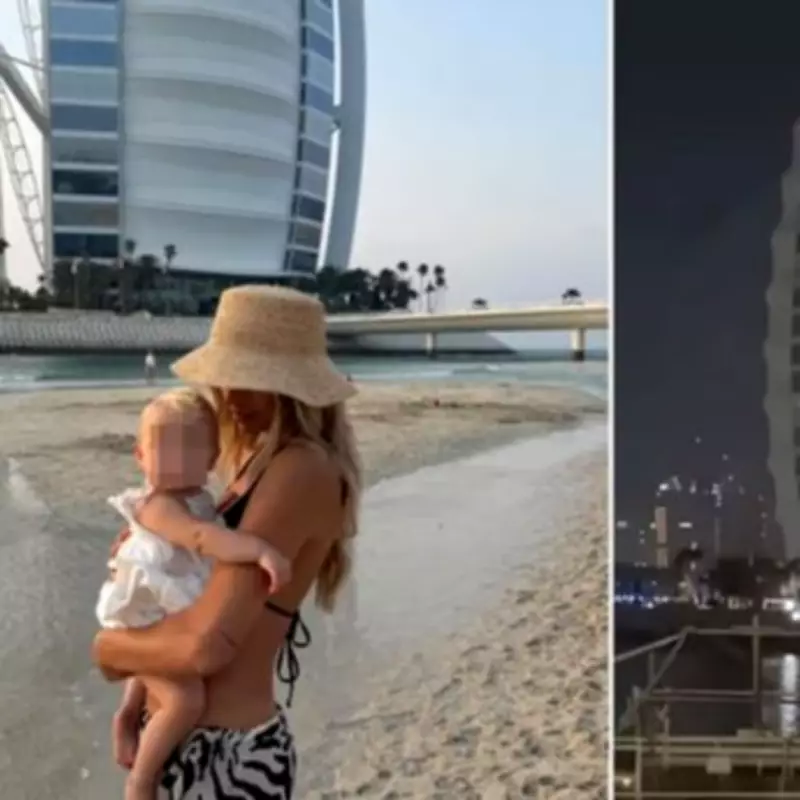
Days later, Chi shared seaside photographs with her 10-month-old daughter Gigi, captioned "Sandy toes," displaying a peaceful, sun-soaked coastline despite the turmoil developing nearby. Followers quickly noticed the disconnect, with one commenting: "Stay safe, that beach looks so quiet," while another questioned: "Did everyone leave Dubai?"
On March 9, when drones struck close to the airport and wreckage hit a waterfront tower, igniting a fire and prompting evacuations, Chi's social media feed instead highlighted a luxury jewellery partnership. Similarly, on March 13, when debris struck a building in the Dubai International Financial Centre, sending smoke billowing across the city, she posted from Jumeirah Beach, posing in a bikini with her daughter.
Social Media Regulations in the UAE
The United Arab Emirates maintains some of the world's most stringent social media regulations, with authorities cautioning against "publishing or circulating rumours and information from unknown sources" following the outbreak of hostilities. Influencers operating in Dubai must possess government-issued licenses to publish paid content, directly linking their earnings to compliance with these regulations.
Material considered to provoke panic or damage the nation's reputation can lead to substantial fines, imprisonment, or deportation. This regulatory environment creates significant pressure for influencers to maintain positive portrayals of life in Dubai, even during times of regional conflict and crisis.
The controversy highlights the complex relationship between social media influencers, their content creation responsibilities, and the reality of living in a region experiencing geopolitical tensions. As the conflict continues to unfold, the debate over appropriate social media conduct during crises remains heated among both influencers and their followers.