An Accrington woman who lost her husband just seven months ago, after what seemed like ordinary hiccups and heartburn turned out to be terminal cancer, is sharing her devastating story as part of a new campaign for International Widows Day.
Sam Leonard was only 50 years old when her husband Chris died from cholangiocarcinoma, a rare and aggressive bile duct cancer, only weeks after his first symptoms appeared. This left her to face life without the man she had spent more than three decades loving and a future they believed was only just beginning.
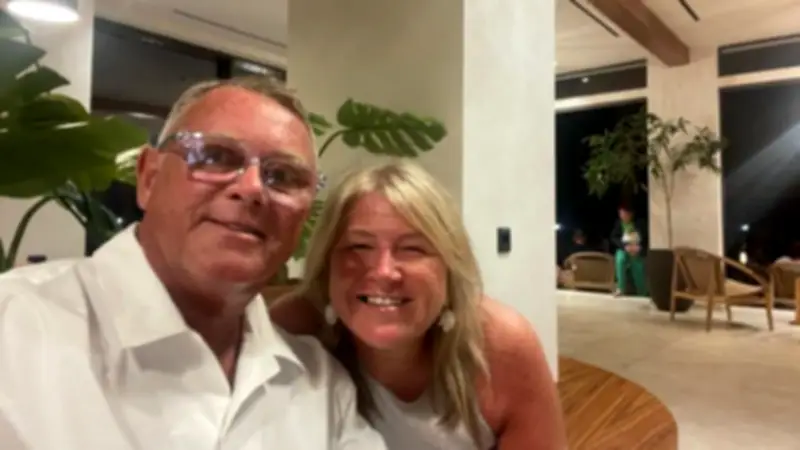
The 51-year-old met Chris in 1993 and quickly realised she had found the person she wanted to spend her life with. They married in December 1999, welcomed their son Cade, and created what Sam describes as a close-knit family unit that did everything together.
Chris was a lifelong Blackburn Rovers supporter, a devoted husband and father, and a much-loved character known for his colourful glasses, sense of humour and ability to light up a room. Having retired early in 2023, he and Sam were looking forward to spending more time together and enjoying the next chapter of their lives after more than three decades side by side.
Sam said: "Chris was my soulmate and my best friend, we did everything together. We travelled together, spent time with family together, and supported Cade through everything he did. He was incredibly proud of our son and talked about him all the time."
"We had built a wonderful life together and genuinely believed we had years ahead of us. We were looking forward to retirement, travelling more and seeing what the future would bring. Losing him didn't just mean losing my husband, it felt like losing the future we had planned together."
In September 2025, shortly before the couple were due to travel to Greece, Chris began suffering from persistent hiccups and heartburn. Neither of them imagined the symptoms were anything serious and, despite Sam's concerns, they decided to go ahead with their holiday. What should have been a relaxing break quickly became overshadowed by worry. Chris struggled to eat, drank very little and seemed increasingly unwell throughout the trip.
Looking back, Sam remembers feeling frustrated that he appeared so poorly during a holiday they had both been looking forward to, never imagining the symptoms were the first signs of a terminal illness.
When they returned home, Sam insisted Chris make an appointment with his GP. There were no appointments available for a week and, during that time, his condition deteriorated further. By the time he was finally seen, he had begun developing jaundice.
Blood tests were taken and the following day doctors urgently called him back to the surgery before directing him straight to hospital. Initially, the family believed he might have gallstones or hepatitis, but instead, scans revealed cholangiocarcinoma, a rare and aggressive form of bile duct cancer.
Within days, Chris underwent surgery to fit a stent and further tests were carried out to determine the extent of the disease. Although discussions began about palliative chemotherapy, his condition deteriorated rapidly and he was soon rushed back to hospital by ambulance after developing a serious infection.
Sam and Cade were then given devastating news that neither of them had expected. Chris only had days left to live and there was nothing more that could be done to stop the cancer. Determined to spend whatever time remained together, Sam and Cade brought him home and cared for him themselves with support from district nurses. Knowing how much Chris loved Christmas, they put up the Christmas tree early so he could enjoy it while he was still alive, and friends and family began bringing Christmas cards, chocolates and presents weeks ahead of schedule so that he could experience one final Christmas surrounded by the people he loved.
Ten days later, Chris died at home aged 58, with Sam and Cade by his side.
Sam said: "Everything happened so quickly that it never felt real. We went from thinking he had heartburn to being told he had cancer, and then being told he only had days left to live."
"There wasn't time to sit and process any of it because every ounce of energy went into making the most of whatever time we had left together. I remember thinking we still had years ahead of us. We had plans, we were looking forward to retirement, travelling more and seeing what life would bring next. Suddenly all of that disappeared."
Although surrounded by friends and family, Sam soon found herself facing a challenge she had never anticipated. At the age of 50, she did not know a single widow her own age and struggled to find people who truly understood what she was experiencing. She added: "One of the hardest things was realising that life had suddenly become something I didn't recognise. Everything we'd planned and expected was gone overnight."
"Most widows I knew were much older than me and I struggled to find people who understood what it felt like to lose a partner at this stage of life. You suddenly find yourself in a world you never expected to join and it can feel incredibly lonely."
It was through searching for support that Sam discovered The Widowed Collective, where she connected with other widows and widowers navigating life after loss and realised she was not alone in what she was experiencing.
While grief remains a part of her life, Sam made a conscious decision not to let widowhood define the rest of it. Just weeks after Chris' death, she booked a solo New Year trip to Fuerteventura.
Since then, she has travelled to Palma, Malaga and Ibiza, rebuilding confidence and proving to herself that life could still contain joy alongside grief.
She continued: "I will always love Chris and I will always miss him, but I don't believe losing somebody means your life ends too. There are still memories to make, places to see and experiences to have. That's not moving on from Chris, it's learning how to carry him with me while continuing to live my life."
Now, just seven months after losing her husband, Sam is sharing her story publicly for the first time as part of The Widowed Collective's '#WidowedAndForgotten' campaign, launched to mark International Widows Day on Tuesday, June 23. The campaign highlights the hidden loneliness experienced by many widows and widowers long after the funeral has ended and support from others has faded.
Sam said: "When Chris died, people were incredibly kind and supportive, but what I wasn't prepared for was how quickly life seemed to move on around me. That's what the '#WidowedAndForgotten' campaign is all about.
"Widowhood doesn't end when the funeral is over and grief doesn't disappear after a few months. For many people, the hardest part is learning how to rebuild a life they never expected to be living. Sometimes the smallest acts of kindness, a message, a phone call or simply asking how somebody is doing, can make a bigger difference than people realise."
Natalie Bolton, co-founder of The Widowed Collective, said: "Many people assume widowhood only affects older people, but thousands of people find themselves losing a partner in midlife and often feel overlooked by traditional support services.
"Widowhood can be incredibly isolating at any age, but for many people in their forties, fifties and sixties there can be an added sense of feeling caught between worlds. They are often too young to identify with traditional perceptions of widowhood, yet may struggle to find others who truly understand what they are experiencing.
"Through the '#WidowedAndForgotten' campaign, we want to shine a light on the realities of widowhood and ensure nobody feels alone simply because the rest of the world has moved on. Every widow and widower deserves understanding, connection and support, no matter how long ago their loss happened."
The Widowed Collective provides free peer-to-peer support for people who have lost a life partner. Through its online community, practical guidance, events and lived-experience support network, the organisation helps widows and widowers navigate life after loss and find connection with others who understand.
For more information about the '#WidowedAndForgotten' campaign, or to join The Widowed Collective for free, visit www.TheWidowedCollective.com.