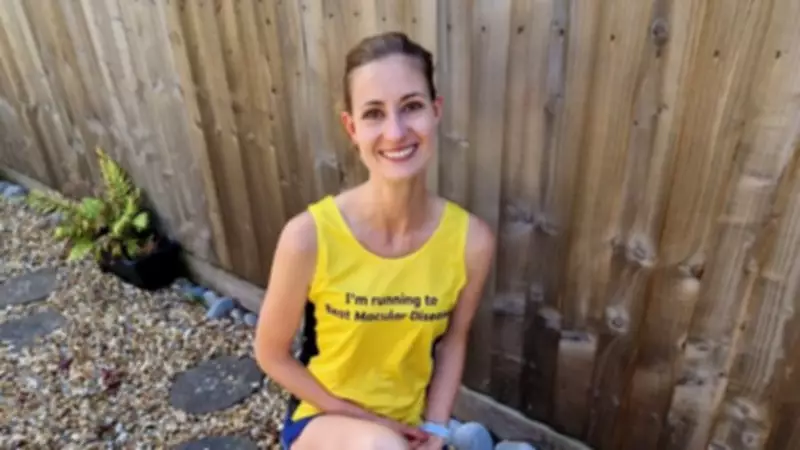
From Despair to Marathon: Cardiff Musician's Inspiring Journey with Macular Disease
In a remarkable story of resilience, Lucy, a 38-year-old musician from Cardiff, is set to run the London Marathon after being diagnosed with macular disease four years ago. This condition is the leading cause of sight loss in the UK, but Lucy has turned her struggle into a powerful mission to fundraise for the Macular Society, aiming to support research and inspire others living with similar challenges.
A Personal Challenge for a Greater Cause
"It will mean so much to cross the finish line," Lucy said. "I’m not just going to be running for myself, but for the Macular Society and that means so many people affected by macular conditions. It’s a huge community who are going to benefit from money which is being raised." Reflecting on her journey, she added, "I think back to 2022 and the depths of despair I was in. If I knew then that there was someone out there fundraising to make a difference, I would have been so grateful and encouraged by that as well. It's going to be a huge personal challenge but at the same time I'm doing this for other people too, who are desperately wanting a cure for their eye condition."
The Diagnosis and Initial Struggles
Lucy first noticed a floater in her vision, which led to an OCT scan at her opticians revealing fluid buildup in the back of her eye. She was referred to hospital and diagnosed with macular oedema. "I was told it was fairly small, that I would be monitored but I was still so anxious and really quite distraught to be suddenly going through that," Lucy recalled. "I found myself not wanting to go outside, I hated the light and everything was blurry. It was all very anxiety inducing."
She described how her love for the outdoors was overshadowed by her condition: "I'm someone who has always loved going outdoors but suddenly, I just couldn’t bear it. I wore dark glasses all the time, even indoors and I changed my décor so it was darker to make living in my home more bearable." The emotional toll was severe, with Lucy expressing, "That was just horrendous. I thought ‘this is my life, this is my vision now and I can't enjoy life in the way that I could before all these vision changes started to occur.’ That was so hard."
Adapting to a New Reality
The first year and a half were particularly difficult as Lucy struggled to adapt both physically and mentally. "I’ve improved a lot, but those first 18 months I really struggled," she said. "The floaters flying around were such a daily distraction, and blocked my vision. I’ve had to learn to live with this change and that’s been the hardest thing."
Lucy realized that while she couldn’t change her condition, she could change her response to it. "I've adapted in various ways. I tend to use dark mode now on any digital devices, I filter out the blue light on my laptop and my phone. People are always very surprised at just how yellow my screens look but that works well for me," she explained. She emphasized the mental shift: "I’ve adapted physically, but I think the biggest shift for me has been mentally. Again, changing my reaction to having this diagnosis has been the biggest thing."
Finding Support and Motivation
Lucy found counselling to be a positive experience, inspired by her brother Matthew, who had accessed similar support through the Macular Society after his diagnosis with wet age-related macular degeneration (AMD). "I knew about the charity because of Matthew, and going through the changes myself I was so anxious, confused, desperate, frustrated and lonely. And there was this sense of where is the cure? Where is the research?" she said.
Discovering the Macular Society was a turning point: "It was such a breath of fresh air when I looked at the Macular Society website and I realised that there is actually a charity out there which recognises the need for macular-related research, and is funding all sorts of projects to find a cure for people who are suffering from such worse eye conditions than I am."
Fundraising Efforts and Running Journey
Motivated by this support, Lucy has set a fundraising target of £4,000 for the Macular Society. In 2025, she organized a cake sale at work, Christmas carolling, and a concert in February. On Sunday, April 26, she will run the London Marathon for the first time. Her running journey began when a friend encouraged her to start, leading her to complete the Cardiff Half Marathon in 2023.
"Before I had my eye problems I was not a runner at all. I didn't even own a pair of running shoes, although I loved walking, particularly hill walking," Lucy explained. "As I said, after my diagnosis I really didn't want to go outside because of the black mass in my central vision. I had the best time running the Cardiff Half in 2023, it was an amazing race in my home city. I had very much caught the running bug and it was such a mental relief. I continued to sign up for other races, Parkrun and all these things have allowed me to change my mindset and have made me feel physically fitter too."
She added, "Then I thought, could I run the London Marathon, and why not fundraise for the Macular Society at the same time? That gave me such a feeling of excitement, even before I had filled out an application. Now I’ve been selected and the rest is history. I can’t wait for it."
The Impact of Macular Disease
Macular disease, which causes loss of central vision, is currently incurable and has a devastating impact on physical and mental wellbeing. Often likened to bereavement, it steals independence and the ability to see loved ones' faces, leading to social isolation and loneliness. Nearly 1.5 million people in the UK are affected, with many more at risk. The disease can leave individuals unable to drive, read, or recognize faces, and most types remain untreatable. AMD is the most common form, affecting over 700,000 people, typically those over 50.