Eid 2026 Dates Spark Accuracy Calls Amid Moon Sighting Controversy
Eid ul Fitr 2026 has become the center of fresh calls for accuracy as doubts over legitimate moon sightings have led to significant uncertainty among worshippers worldwide. With countries not starting Ramadan on the same day, the traditional 29th day of Ramadan for moon observations varied globally, resulting in three different potential dates for the celebration: March 19, 20, and 21.
Conflicting Reports and Scientific Doubts
Astronomical forecasts had already determined that the crescent moon would not be visible anywhere on Wednesday and would be difficult to spot in most locations on Thursday. Despite this, Afghanistan declared a sighting on Wednesday, marking Eid on Thursday, March 19, making it the only nation to do so. This has raised questions about the validity of such reports, especially when science suggests visibility was impossible.
In Saudi Arabia, officials admitted that some earlier reports of visible crescents were based on false sightings, likely caused by bright stars, planets like Venus, or airplane contrails near the western horizon. This highlights the challenges in accurate moon observation and the need for rigorous verification.

Expert Insights from Birmingham
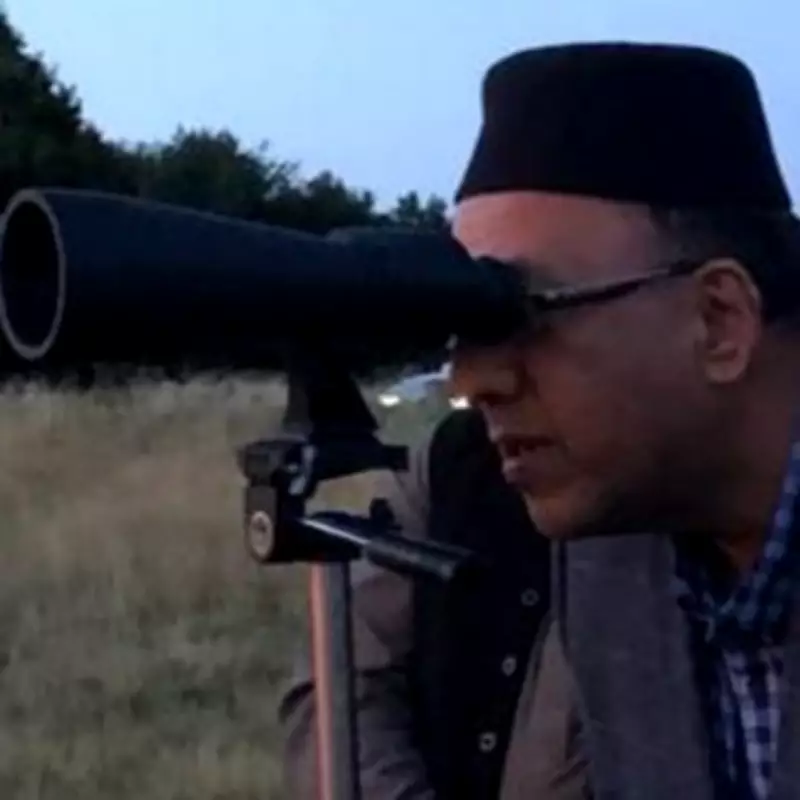
Dr. Zahid Nawaz, a West Midlands-based moonsighting expert with experience since the late 1980s, advises Birmingham Islamic channel Noor TV on key dates and events. He emphasizes the importance of following scientific principles in moonsighting to avoid confusion and chaos. Dr. Nawaz explains that actual moonsighting must consider multiple factors, including the moon's age, lag time, crescent illumination, altitude, and elongation, rather than relying solely on predictions or visibility maps.
He criticized the reports from Afghanistan, noting that astronomically, the moon had already set below the horizon before the announcement, making a sighting impossible. Dr. Nawaz stated, "Moonsighting is not an exact science, and misidentifications are common. That's why rigorous calculations exist to guide us and challenge such false claims."
Decision-Making Process in the UK
In the UK, Birmingham's Noor TV moonsighting board, led by Pir Noor Ul Ariffeen Siddiquee, will deliberate with leading scholars across the country. The Manchester moonsighting board will then review all claims before making a final decision by 8 pm tonight. Dr. Nawaz stresses that accuracy and evidence are essential, even as communities prepare to celebrate Eid.
Based on UK moon sightings, Eid ul Fitr is likely to be on Saturday, March 21, but could shift to Friday, March 20, if the crescent is ultimately seen. Dr. Nawaz reminds everyone of the spirit of Eid: supporting communities, helping those in need, and following local guidance amidst the ongoing discussions.