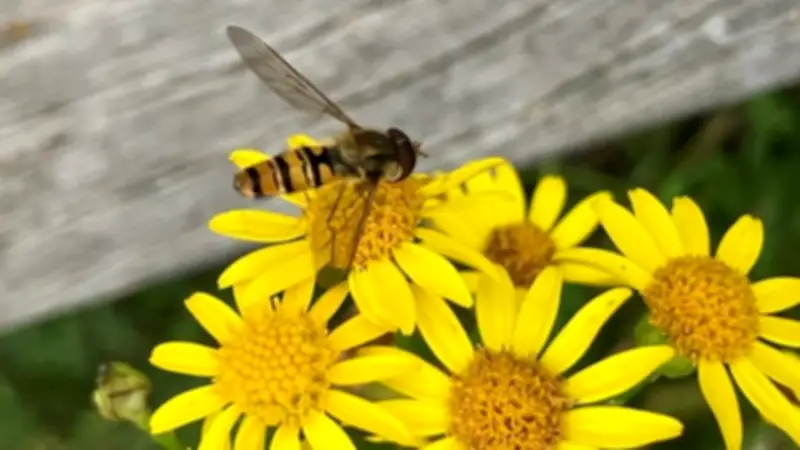
Have you ever felt like you are being watched? In my garden, there is a constant buzz, and when I step outside, certain insects keep a close eye on me. I am talking about hoverflies. These stripy insects with large brown eyes hover in the air, observing our every move. It is almost as if they are suspended on a string, lifting slightly if you get too close. They are impossible to capture with my phone camera, adding to their mystery.
Are Hoverflies Really Spies?
Are these beautiful insects actually spies? Someone seems keen to know my garden activities—what I am planting and what goes into my recycling bin. It is not that interesting, but clearly I am planting the right flowers to attract insects.
My favourite among the 270 hoverfly species is the marmalade hoverfly, named for its orange and black bands. It gets its name from the orange colour and the varying black bands: thin cut and thick cut, just like marmalade. It is also our most common hoverfly, found almost anywhere in our region.
Other Remarkable Hoverflies
That is not to dismiss other hoverflies like the hornet hoverfly, bumblebee hoverfly, footballer hoverfly, and the batman hoverfly. They are equally wonderful, but every time I take a photo, it identifies as a marmalade variety.
This insect feeds on flowers like tansy, ragwort, and cow parsley in gardens, hedgerows, parks, and woodlands, and appears on sunny days. They feed on nectar, and their larvae are predators of aphids, making them great for your garden.
Safe and Beneficial
While their vivid colours make hoverflies resemble bees and wasps, they carry no sting. So, though they may be cheeky and stare at you, they are quite safe. And how can anyone resist those big, beautiful brown eyes?
Attracting Hoverflies to Your Garden
To attract insects like the marmalade hoverfly, create areas where they can feed and pollinate. Easily set up nectar cafes in your garden, in pots, or window boxes. With the right flowers and herbs, pollinators will come, wherever you are.
Discover more about wildlife gardening on the Lancashire Wildlife Trust website. It offers opportunities to make your garden more exciting and nature-friendly. On sunny days, enjoy marmalade sandwiches outside and look for hoverflies. One thing is for sure: they will be watching you.
By Alan Wright for The Wildlife Trust for Lancashire, Manchester and North Merseyside. To become a member, visit the website at www.lancswt.org.uk or call 01772 324129. For more information about Cheshire Wildlife Trust, call 01948 820728 or go to www.cheshirewildlifetrust.org.uk.